Tube Laser vs Saw and Drill: Cost per Part, a Worked Example and a Calculator
By Casper Geng, Sales Manager, PCL Group · Updated 2026-10-29
Short answer
- On a tube part with holes, notches or mitres, most of the cost on a saw-and-drill route is handling: marking, re-clamping, deburring and moving between machines.
- In the worked example a 600 mm frame tube takes about 6.5 minutes by saw and drill and under one minute on a tube laser.
- Cost per part = minutes per part ÷ 60 × hourly cost of that route; the calculator below does it with your own numbers.
- For plain cut-to-length work with no features, a band saw is still the cheaper tool.
On this page
The question behind the purchase
Most tube shops that look at a tube laser already own a band saw, a drill press or two and a notching tool. The machines are paid for, so the laser has to beat them on cost per part, not on technology. The way to answer that is a time study: take one real part, list every operation on the current route, and compare it with the laser. This page does that for a typical frame tube, then gives a calculator for your own parts.
The example part
A 600 mm length of 40 × 40 × 2 mm square tube for a welded frame: 45° mitres at both ends, four Ø8 mm holes on two faces, and one V-notch so the frame can be bent. It is the kind of part found in furniture, fitness equipment, racking and machine guards.
Time study: saw and drill route
| Step | Operation | Minutes per part |
|---|---|---|
| 1 | Load bar, cut two 45° mitres on the band saw | 1.5 |
| 2 | Mark hole positions and the notch | 1.0 |
| 3 | Drill two holes, turn the tube, re-clamp, drill two more | 2.0 |
| 4 | Cut the V-notch on a notcher or by hand | 1.0 |
| 5 | Deburr ends and holes | 1.0 |
| Total | 6.5 |
Only step 1 is actually cutting. The rest is handling, measuring and finishing, and every step is a chance for a hole in the wrong place or a notch on the wrong face. The times are typical shop figures for a manual route; your own will differ, which is why the calculator takes them as an input.
The same part on a tube laser
| Step | Operation | Minutes per part |
|---|---|---|
| 1 | Load a 6 m bar (about nine parts per bar), shared across the bar | 0.1 |
| 2 | Cut mitres, holes and notch in one clamping, common-line cuts between parts | 0.6 |
| 3 | Unload and stack | 0.05 |
| Total | 0.75 |
No marking, no second machine and, on 2 mm tube cut with nitrogen, no deburring. The program is written once and repeats the part exactly next month.
Cost per part
Cost per part = minutes per part ÷ 60 × cost per hour of that route.
| Saw and drill | Tube laser | |
|---|---|---|
| Minutes per part | 6.5 | 0.75 |
| Cost per hour (example) | 25 | 40 |
| Cost per part | 2.71 | 0.50 |
| 20,000 parts per year | 54,200 | 10,000 |
The laser hour is more expensive, because it includes the machine, electricity, gas and the operator. It still wins by a wide margin because it spends far fewer hours on each part. The saw route also carries costs that do not show in a time study: jigs and templates for each part, rework when a hole is drilled on the wrong face, and floor space for several machines and the tube waiting between them.
Calculator: your own numbers
Figures are in any currency. Defaults are the worked example on this page; replace them with your own.
A quick way to get your saw-route time: stand at the saw with a stopwatch for one batch and divide by the number of parts. For laser times, send us the drawing and we will run it through the nesting software and return the cycle time with a test cut.
When the saw still wins
- Plain cut-to-length with no holes or shaped ends: a band saw with a bar feeder is cheap and fast.
- Very heavy sections beyond the laser’s chuck or power, where sawing is the practical method.
- Very low volumes of simple parts, where the saw is already there and paid for.
Many shops keep the saw for these jobs and move everything with features to the laser.
From single machine to tube processing line
Search results for tube processing often show complete lines that saw, chamfer, deburr and bundle. A tube laser replaces several of those stations at once: the cut-off, the holes, the end shape and, on thin tube, the deburring. Chamfers and weld bevels are cut with an optional bevel head. Loading can be automated with a chain or bundle loader, which turns a single laser into a compact line for long production runs.
| Station on a traditional line | On a tube laser |
|---|---|
| Bar loading and feeding | Chain or bundle loader |
| Sawing to length, mitres | Laser cut-off, any angle |
| Drilling, punching, slotting | Same clamping |
| Notching and coping | Same clamping |
| Chamfering, weld bevels | Optional bevel head on the LT3 |
| Deburring | Not needed on most thin-wall tube |
Choosing the machine
For frame tube like the example, the LT240 tube laser with 1.5-3 kW is the usual choice. Where annual volume runs to tens of thousands of identical parts, add the automatic loader; where material cost matters, the zero-tail LT3. Joint design for parts like the example is covered in square tube laser cutting.
Have a cutting job in mind? Send the section size, wall thickness and a drawing, and an engineer will tell you which method or machine fits.
Ask on WhatsAppMachines mentioned in this article
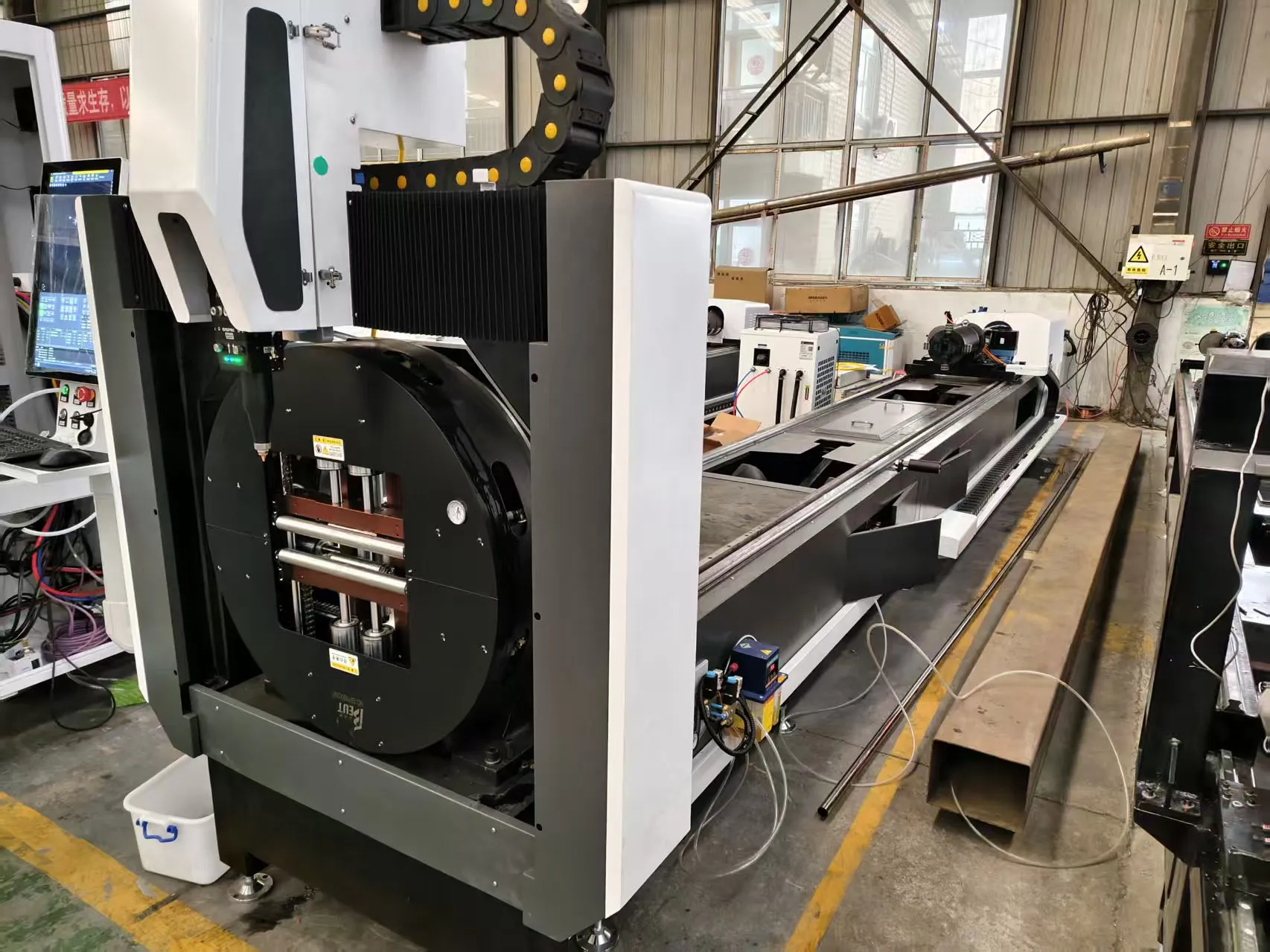
LT Series Tube Laser
The machine in the example.
Compare all models →
Automatic Loading Tube Laser
Turns one laser into a line.
View machine →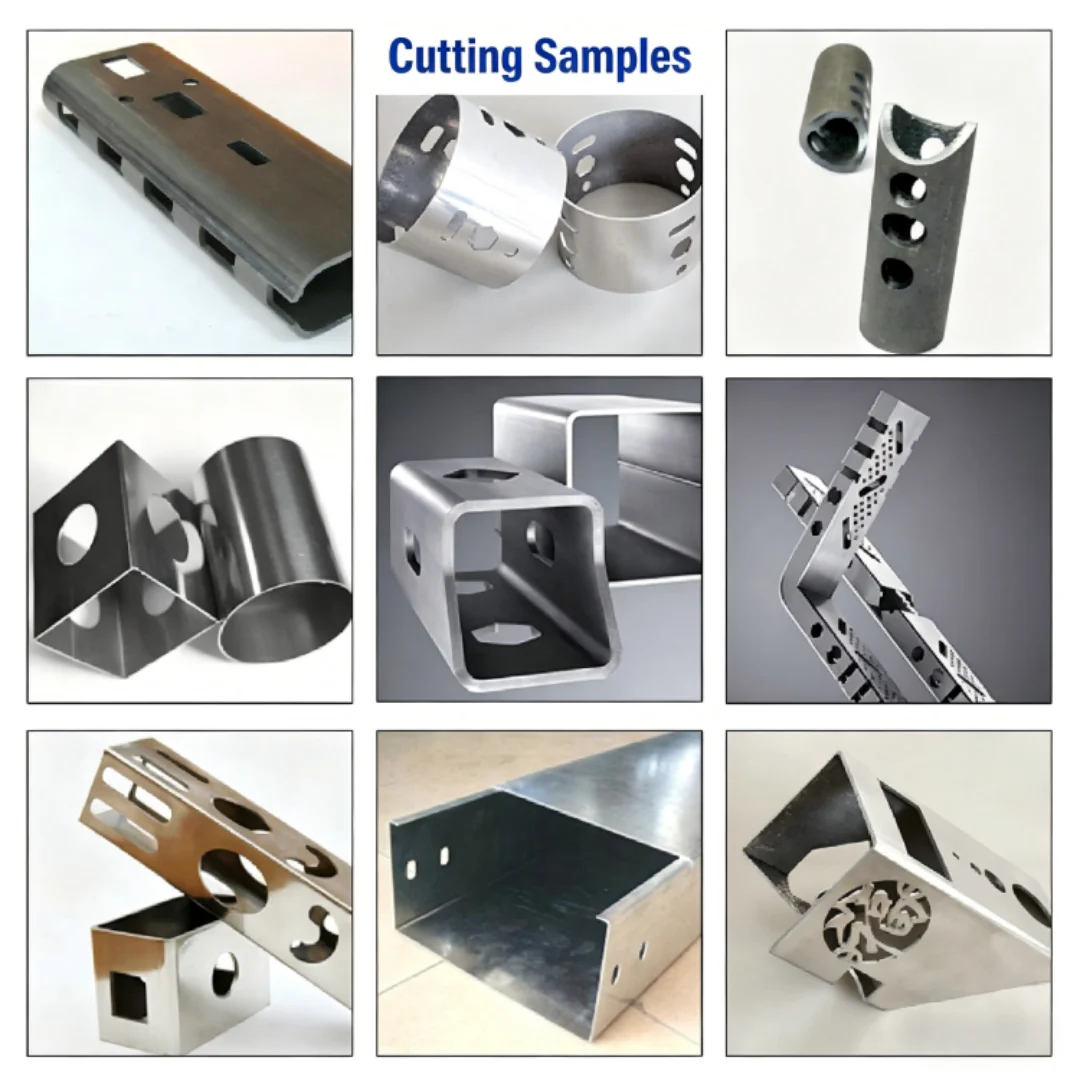
Square Tube Laser Cutting
V-notches, mitres and joints.
View machine →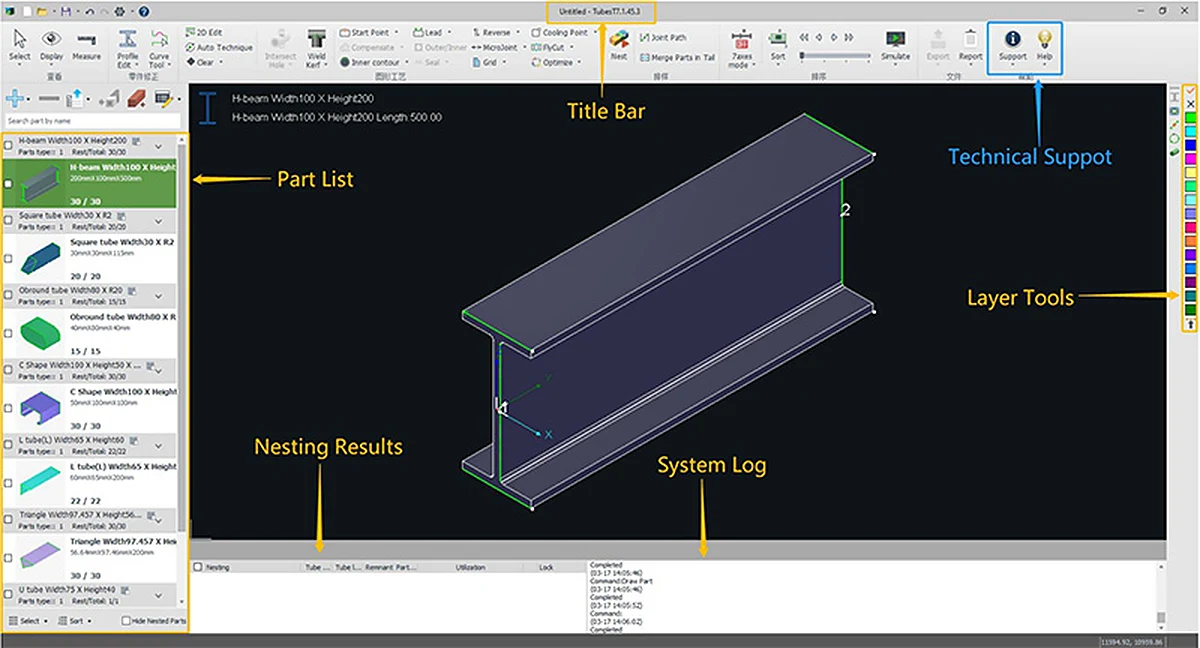
CNC Tube Cutting Software
Nesting and cycle times.
View machine →FAQ
Is a tube laser cheaper than a saw and drill?
For parts with holes, notches or shaped ends, usually yes: the laser does in one clamping what takes several machines and manual steps on a saw route. For plain cut-to-length, a saw is cheaper.
How do I calculate cost per part?
Minutes per part divided by 60, times the hourly cost of the route. Add jigs and rework for the saw route.
How long does a tube laser take per part?
For a 600 mm frame tube with mitres, four holes and a notch on 40 × 40 × 2 mm tube, under one minute including loading.
What is included in the laser hourly cost?
Machine depreciation, electricity, assist gas, consumables and the operator’s time.
Does laser cutting remove the need for deburring?
On most thin-wall tube cut with nitrogen, yes. Thick walls may need light edge cleaning.
Can a tube laser replace a tube processing line?
It replaces the cut-off, drilling, slotting, notching and most deburring; with a bundle loader and bevel head it also covers loading and chamfering.
When should I keep my band saw?
For plain cut-to-length work, very heavy sections and occasional simple parts.
How do I get a cycle time for my part?
Send the drawing or 3D file. We nest it, return the cycle time and can cut a sample.