Field Report: Integration of 30kW Fiber Laser Technology in Houston Structural Operations
Introduction: The Shift from Conventional to High-Power Laser Processing
In the heavy industrial landscape of Houston, the demand for rapid-turnaround structural steel—driven by the oil and gas sector and massive infrastructure expansion—has pushed traditional mechanical and plasma cutting to their limits. This report evaluates the field implementation of the 30kW Fiber Laser 3D Structural Steel Processing Center. My primary objective over the last six months was to bridge the gap between high-precision laser profiling and the downstream Automated Welding cells. Historically, “steel welding” in structural shops has been a manual-heavy process plagued by fit-up inconsistencies. The introduction of 30kW fiber power has fundamentally altered our fabrication logic by providing the precision required to treat heavy structural members with the same tolerances as thin-gauge sheet metal.
The 30kW Fiber Laser 3D Structural Steel Processing Center: Technical Performance
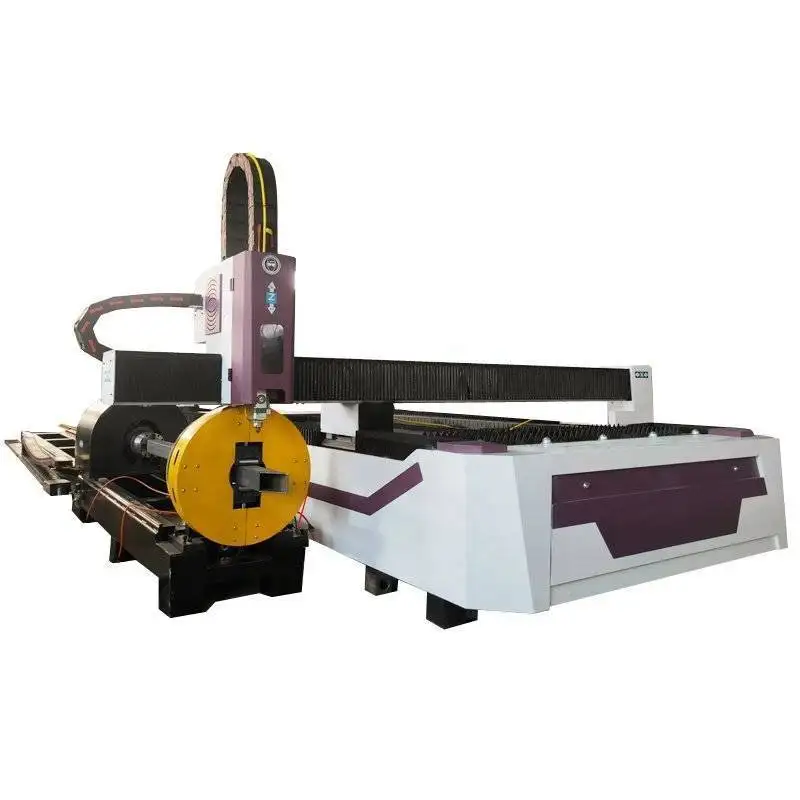
The centerpiece of the Houston facility is the 30kW 3D processing unit. Unlike flatbed lasers, this center utilizes a multi-axis head capable of processing H-beams, I-beams, C-channels, and heavy-walled RHS (Rectangular Hollow Sections) in a single pass. At 30kW, the power density allows for “oxygen-free” nitrogen cutting on thicknesses up to 20mm, and high-speed oxygen cutting on carbon steel up to 50mm.
Cutting Speeds and Edge Quality
During our baseline tests on ASTM A36 and A572 Grade 50 steel, the 30kW source achieved cutting speeds 300% faster than our older 12kW units on 25mm plate. However, speed is secondary to the 3D capability. The 3D Structural Steel Processing Center allows for complex 45-degree bevels and “Saddle Cuts” on pipe-to-beam connections that are ready for immediate assembly. The edge quality exhibits a surface roughness (Rz) significantly lower than plasma, which is critical for the “Steel welding” phase. We observed a drastic reduction in the Heat Affected Zone (HAZ), which minimizes the risk of martensitic grain structures that lead to weld cracking in high-stress Houston humidity conditions.
Mechanical Accuracy and Repeatability
The 3D center uses a laser-monitored chucking system that compensates for the natural “bow and camber” found in structural steel sections. By scanning the material profile before the first cut, the software realigns the 3D cutting path to the actual geometry of the beam, rather than the theoretical CAD model. This ensures that every bolt hole and weld prep bevel is within a ±0.1mm tolerance. This level of precision is the non-negotiable prerequisite for Automated Welding.
Synergy: Why 3D Processing is the Engine of Automated Welding
In most Houston workshops, the bottleneck is not the weld time, but the “fit-up” time. Traditional Steel welding requires a fitter to manually grind, shim, and tack pieces together because the parts don’t fit perfectly. When we integrated the 30kW Fiber Laser 3D Structural Steel Processing Center, we eliminated the “grinder and shim” culture.
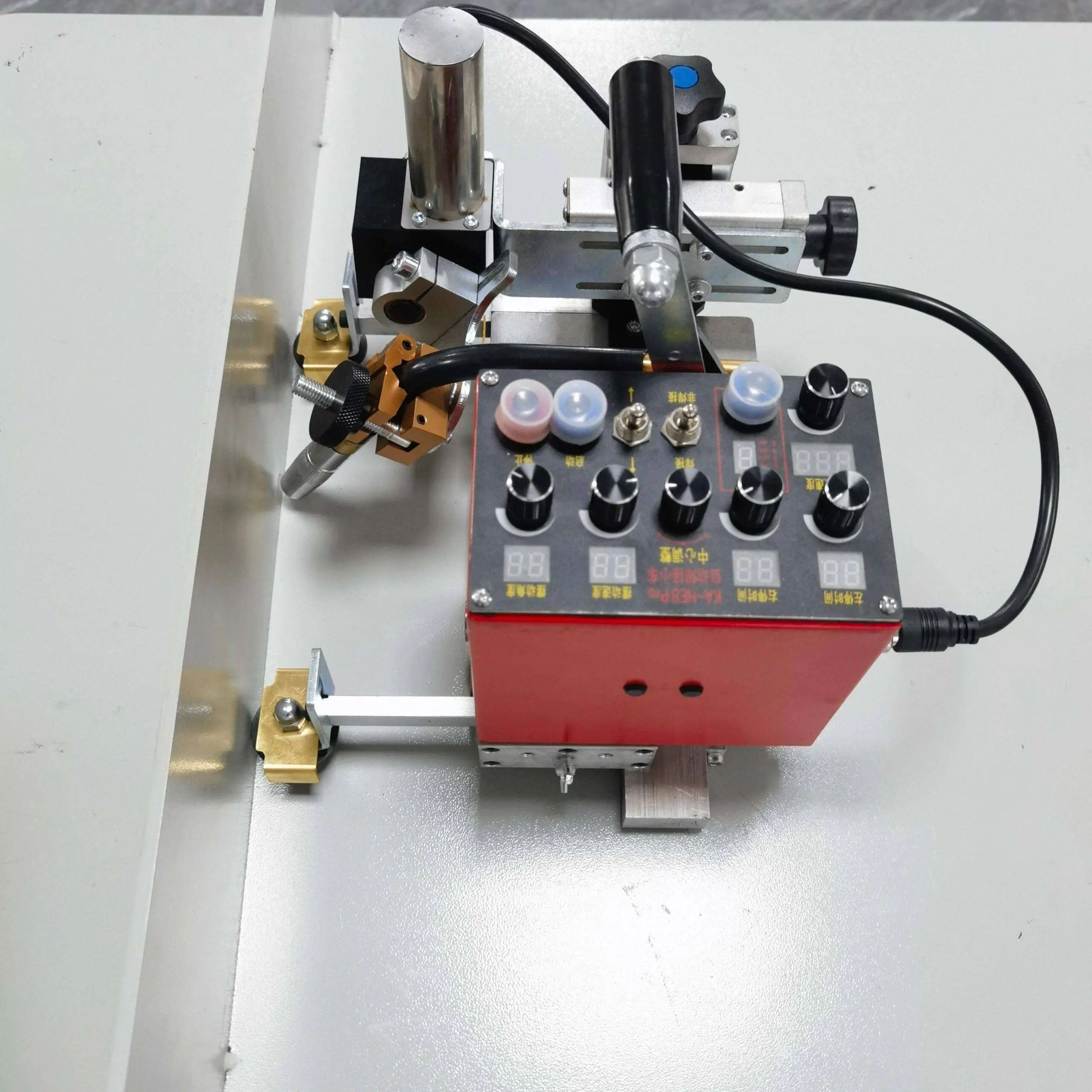
Tight Tolerances for Robotic Cells
Robotic Automated Welding systems are notoriously “dumb” when it comes to gap variations. If a gap fluctuates between 1mm and 3mm along a 10-foot seam, a standard welding robot will either blow through or leave a cold lap. By using the 3D processing center to cut perfect V-grooves and J-prep bevels, we provided the robotic cells with a consistent 0.2mm root opening. This consistency allowed us to program “Spray Transfer” weld modes that operate at significantly higher travel speeds without the fear of burn-through.
Eliminating Manual Layout
The 3D processing center etches layout lines and part numbers directly onto the steel. When the components arrive at the Automated Welding station, the operator doesn’t need a tape measure or a blueprint. The etched markings act as a “jig-less” assembly guide. In our Houston trials, this reduced assembly labor by 65% and allowed the Steel welding robots to maintain an 85% “arc-on” time, compared to the 25-30% typically seen with manual fit-up.
Technical Deep Dive: Steel Welding and Material Metallurgy
The transition to 30kW laser cutting has specific implications for Steel welding. As a senior engineer, I’ve had to monitor the chemical composition of the cut edge closely. Laser cutting with oxygen can leave a thin oxide layer that, if not removed, can lead to porosity in the weld. However, the high power of the 30kW beam allows us to use high-pressure air or nitrogen for thinner structural sections, which leaves a weld-ready surface.
Weld Prep and Beveling Strategy
The “3D” aspect of the processing center is most valuable in creating complex weld preps. For heavy-duty moment connections used in Houston high-rises, we now program the laser to create a “Variable Bevel.” The angle changes as the laser moves around the flange of an H-beam. This ensures that the Automated Welding torch has optimal access to the root at all times. We have found that the laser-cut bevel is much cleaner than a tracked-torch oxy-fuel cut, requiring zero post-process grinding. This preserves the integrity of the Steel welding joint and ensures we pass 100% of UT (Ultrasonic Testing) inspections on the first go.
Managing Thermal Distortion
One lesson learned is the management of heat. While the laser is fast, the sheer power of 30kW can cause localized expansion in smaller structural clips. We’ve adjusted our nesting logic in the 3D Structural Steel Processing Center to use “stitch cutting” on sensitive parts. This keeps the material cool, ensuring that when the part moves to Automated Welding, it hasn’t warped out of its 0.5mm tolerance window.
Lessons Learned from the Houston Workshop Floor
Implementing this technology in a high-volume Houston shop taught us several hard lessons that aren’t in the manufacturer’s manual.
1. Material Handling is the Real Bottleneck
A 30kW laser is a beast that needs to be fed. We initially found that the laser was sitting idle for 40% of the shift because our overhead cranes couldn’t move the 40-foot I-beams fast enough. To realize the ROI on a 3D Structural Steel Processing Center, you must invest in automated infeed/outfeed conveyors. If the laser is waiting for a crane, you’re losing $500 an hour in potential throughput.
2. Cleanliness in Automated Welding
While the laser cuts are precise, the Houston humidity can cause “flash rust” on the laser-cut edges within 48 hours. We learned that the Automated Welding sensors (specifically laser seam trackers) can get confused by inconsistent rust patterns or heavy mill scale. We now mandate that parts cut by the 3D center must be welded within a 24-hour window, or treated with a weld-through primer. This keeps the Steel welding quality consistent and prevents the robot from losing the seam.
3. The Skill Shift
The role of the “welder” has changed. Our best manual welders struggled to adapt to the Automated Welding interface. Instead, we found success training young technicians who had a knack for CNC logic but a fundamental understanding of Steel welding puddle behavior. The 3D Structural Steel Processing Center requires a “Digital Carpenter” mindset—someone who can visualize the 3D geometry before the beam ever hits the rollers.
Conclusion: The Future of Houston’s Steel Industry
The synergy between the 30kW Fiber Laser 3D Structural Steel Processing Center and Automated Welding is not just a marginal improvement; it is a total transformation of the structural steel workflow. By using 30kW of laser power to dictate the precision of the initial cut, we have finally made Steel welding a predictable, high-speed manufacturing process rather than a variable craft. For any Houston facility looking to compete in the global market, this integration is the only path forward to reducing man-hours per ton while increasing structural reliability. We have moved from “cut, grind, and hope” to “program, laser, and weld.”
Report End.