The Dawn of Ultra-High Power in Dammam’s Industrial Sector
Dammam, the capital of the Eastern Province and a global hub for the energy and logistics sectors, is currently witnessing a massive transformation in its manufacturing capabilities. As Saudi Arabia accelerates its investment in renewable energy and electrical grid expansion, the demand for power towers—massive, complex structural assemblies—has reached an all-time high.
Historically, the fabrication of H-beams for these structures involved a multi-step process: mechanical sawing for length, followed by manual or CNC drilling for bolt holes, and finally, plasma or oxy-fuel cutting for complex notches and bevels. The arrival of the 30kW fiber laser H-beam cutting machine has consolidated these disparate processes into a single, automated workstation. This transition is not merely an upgrade; it is a total reimagining of structural fabrication.
The Technical Edge of 30kW Fiber Laser Sources
As an expert in the field, I often get asked: why 30kW? In the world of fiber lasers, power translates directly to “processing margin” and speed. For H-beams used in power towers, which often feature thick flanges and webs ranging from 12mm to 30mm, a 30kW source provides a significant advantage.
At 30kW, the laser beam maintains a higher energy density, allowing it to vaporize thick carbon steel almost instantaneously. This results in a remarkably small Heat-Affected Zone (HAZ). In the context of power towers, maintaining the metallurgical integrity of the steel is critical; a smaller HAZ ensures that the structural properties of the H-beam are not compromised during the cutting process. Furthermore, the 30kW source allows for high-speed nitrogen cutting on medium thicknesses, producing an oxide-free edge that is ready for immediate welding or galvanizing without the need for secondary grinding.
Three-Dimensional Precision: The 5-Axis Cutting Head
Cutting an H-beam is significantly more complex than cutting a flat plate. The machine must navigate the “shadows” of the flanges and the thickness of the web. The 30kW machines deployed in Dammam typically utilize a sophisticated 5-axis or 6-axis robotic cutting head.
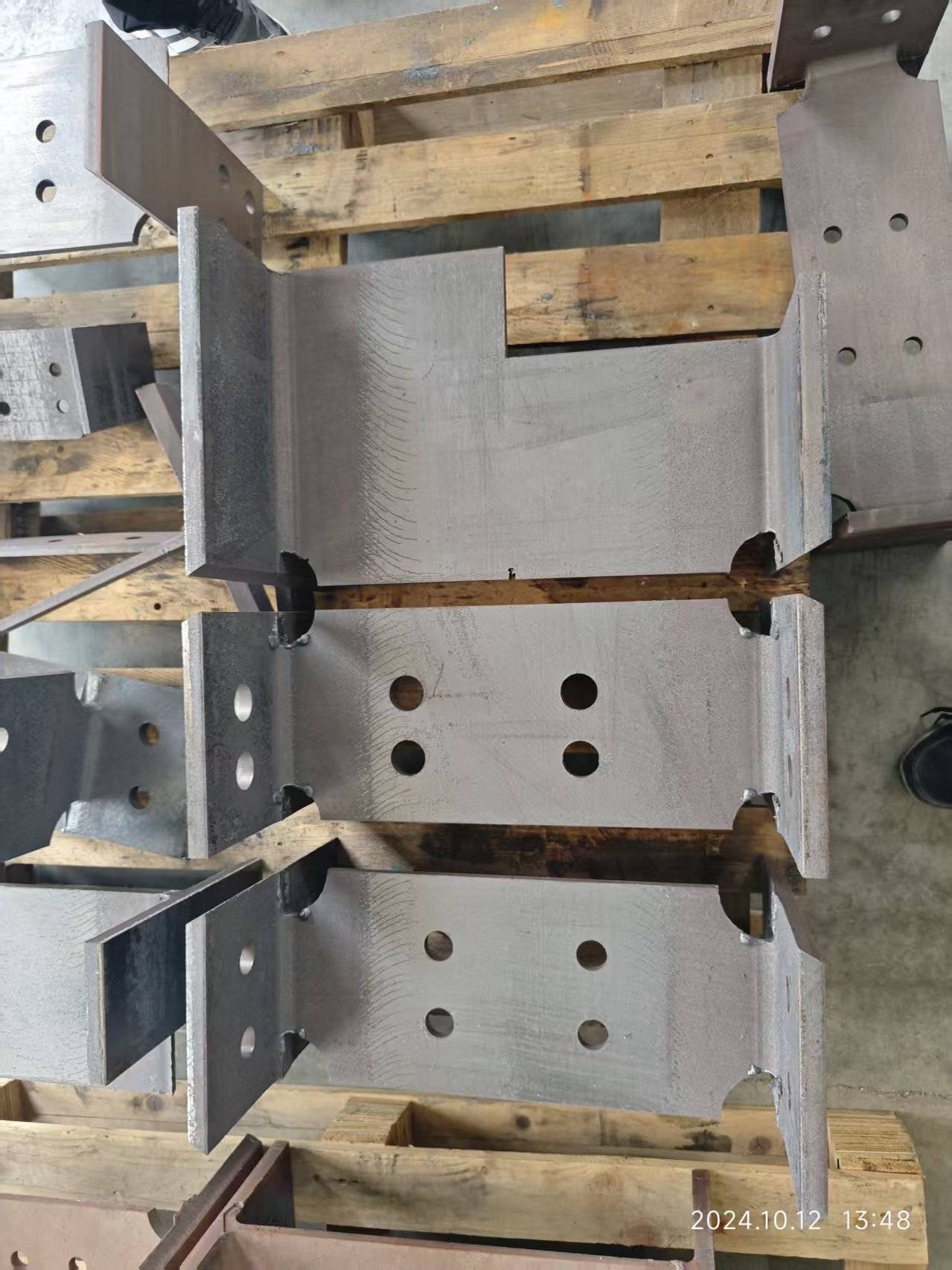
This technology allows the laser to perform complex bevel cuts (A, V, X, and K shapes) which are essential for the high-strength weld joints required in power tower legs. The ability to rotate the head around the beam allows for the cutting of bolt holes in both the flanges and the web in a single pass, ensuring perfect alignment. For engineers in Dammam, this means that the towers can be assembled on-site with “Lego-like” precision, reducing the risk of costly field errors and structural misalignments.
Zero-Waste Nesting: Economics of Efficiency
In large-scale infrastructure projects, material costs account for a massive portion of the total budget. Traditional H-beam processing often leaves “skeletons” or significant offcuts at the end of each beam. Zero-waste nesting software, integrated into these 30kW systems, has revolutionized this aspect of the business.
Zero-waste nesting works by utilizing advanced algorithms that analyze the entire production queue. Instead of treating each H-beam as a separate entity, the software “nests” different parts from various tower designs into a single raw beam. By employing “common line cutting”—where one laser cut serves as the edge for two different parts—and minimizing the “dead zone” of the machine’s chucks or grippers, material utilization can exceed 98%.
In Dammam’s competitive landscape, where the price of raw steel fluctuates, the ability to squeeze an extra 5-10% of usable parts out of every ton of steel is the difference between a winning bid and a loss. This efficiency also aligns with the Kingdom’s sustainability goals, reducing the carbon footprint associated with steel production and scrap recycling.
Power Tower Fabrication: Meeting Rigorous Standards
Power towers are the backbone of the electrical grid, and their failure can have catastrophic consequences. They must withstand extreme wind loads, thermal expansion in the harsh Arabian desert, and the weight of high-voltage lines.
The 30kW fiber laser addresses these challenges through precision. Bolt holes produced by a laser are significantly more accurate than those produced by plasma, with tolerances often within ±0.1mm. This precision ensures that stress is distributed evenly across the fasteners. Additionally, the software integrated into these machines can automatically compensate for “beam camber” or slight deviations in the straightness of the raw H-beam, ensuring that every cut is perfectly indexed to the actual center of the material.
Environmental Resilience in the Eastern Province
Operating a 30kW fiber laser in Dammam presents unique environmental challenges. The combination of high ambient temperatures, humidity from the Persian Gulf, and fine desert dust can be lethal to sensitive optical components.
Modern H-beam laser machines designed for this region feature “tropicalized” environmental controls. This includes dual-circuit industrial chillers specifically rated for 50°C+ ambient temperatures and positive-pressure, air-conditioned cabinets for the laser source and electrical components. The cutting heads are equipped with specialized “cover glass” monitoring systems that detect dust contamination before it can lead to thermal runaway or lens damage. For fabricators in Dammam, these features ensure that the machine can maintain a 24/7 production cycle even during the height of summer.
Streamlining the Workflow: From CAD to Tower
The workflow for power tower fabrication in Dammam has been shortened significantly. In a traditional setup, a design might move from a CAD office to a marking station, then a saw, then a drill, and finally a manual layout table for complex notches.
With the 30kW H-beam laser, the process is streamlined:
1. **Digital Intake:** 3D models (often in TEKLA or DSTV formats) are imported directly into the machine’s CAM software.
2. **Nesting:** The zero-waste algorithm organizes the parts for maximum efficiency.
3. **Automated Loading:** Massive H-beams are fed into the machine via automated conveyors.
4. **All-in-One Processing:** The 30kW laser cuts the beam to length, carves out holes, notches, and bevels the ends in one continuous motion.
5. **Marking:** The laser can also “etch” part numbers and assembly instructions directly onto the steel, facilitating faster on-site construction.
Conclusion: The Future of Saudi Steel Fabrication
The adoption of 30kW fiber laser H-beam cutting machines in Dammam is a clear indicator of the region’s industrial maturity. By solving the dual challenges of high-speed thick-material processing and material waste, these machines are enabling Saudi fabricators to compete on a global stage.
As the Kingdom continues to build the cities and energy grids of the future, the precision and efficiency offered by zero-waste nesting and ultra-high-power lasers will remain indispensable. For the power tower fabrication industry, this is not just a technological upgrade—it is the foundation for a more sustainable, efficient, and robust infrastructure. The “Made in Saudi” label is increasingly becoming synonymous with high-tech precision, and the 30kW fiber laser is at the very heart of that evolution.