The Dawn of Ultra-High Power in Structural Fabrication
For decades, the fabrication of heavy structural steel for offshore platforms relied on a combination of oxy-fuel torches, plasma cutters, and manual labor. While effective for basic sizing, these methods struggled with the precision required for modern modular offshore construction. The arrival of the 20kW Heavy-Duty I-Beam Laser Profiler in Edmonton marks the end of that era.
At 20kW, the fiber laser is no longer restricted to thin-gauge sheet metal. It is a powerhouse capable of piercing through 50mm of carbon steel with ease and maintaining high feed rates on the thick-walled I-beams and H-columns that form the backbone of offshore rigs. The high power density allows for a narrower kerf and a significantly faster cutting speed compared to traditional methods, reducing the total thermal input into the material and preserving the metallurgical properties of the high-strength alloys used in marine environments.
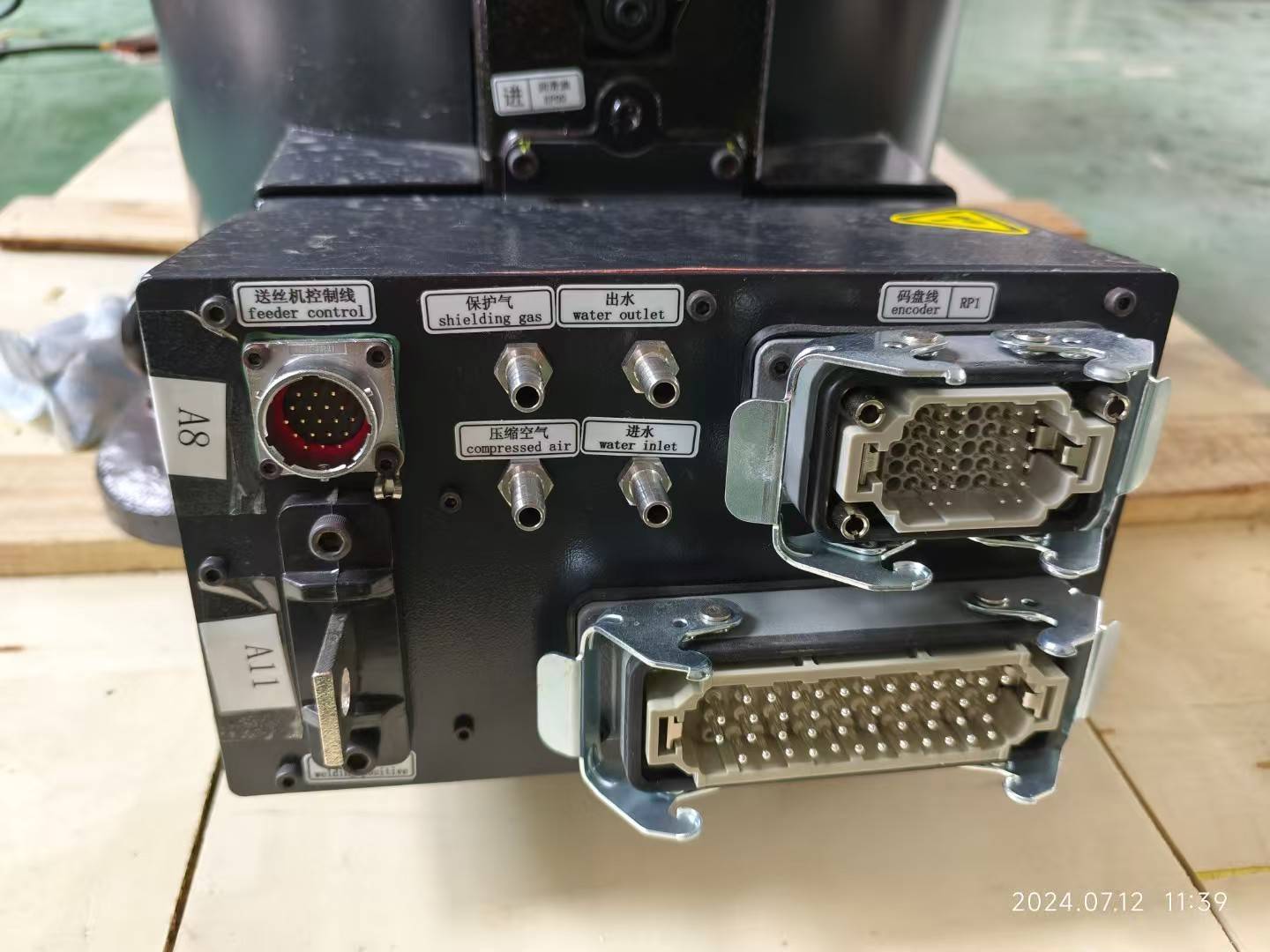
The Mechanics of the Infinite Rotation 3D Head
The “Infinite Rotation” capability is the true differentiator in this system. Traditional 5-axis laser heads are often limited by cable management systems, requiring the head to “unwind” after a certain degree of rotation. In complex I-beam profiling, where the laser must navigate around flanges and webs to create interlocking joints or bolt holes, these pauses destroy throughput.
The infinite rotation 3D head utilizes advanced slip-ring technology and sophisticated CNC algorithms to allow the cutting nozzle to rotate indefinitely. This enables the machine to perform continuous 45-degree bevels (V, X, Y, and K cuts) across the entire profile of a heavy beam. For offshore applications, where pipes and beams must be joined at complex angles to withstand wave action and seismic loads, this 3D capability ensures that the fit-up is perfect. A perfect fit-up means less gap to fill with weld metal, leading to stronger, more reliable joints.
Why Edmonton? The Strategic Hub for Offshore Infrastructure
It might seem counterintuitive to discuss offshore platforms in the landlocked city of Edmonton, Alberta. However, Edmonton is the manufacturing heart of Canada’s energy sector. The city’s fabrication shops are world-renowned for their ability to build modular units—massive, pre-assembled structures that are transported by rail or road to coastal regions for final assembly.
By adopting 20kW laser profiling, Edmonton-based fabricators can produce offshore modules that meet the stringent standards of the North Sea or the Atlantic coast. The ability to cut, bevel, and mark structural steel in a single pass on one machine reduces the footprint of the fabrication process and significantly lowers the cost of logistics. When every millimeter of a multi-ton beam is accounted for via laser precision, the “on-site” assembly of these modules becomes a seamless process of bolting and welding, rather than grinding and forcing.
The Critical Role of Precision in Offshore Structural Integrity
Offshore platforms operate in some of the harshest environments on Earth. They are subject to constant vibration, extreme temperature fluctuations, and the corrosive power of saltwater. In these conditions, the quality of a cut is not just a matter of aesthetics; it is a matter of safety.
Traditional plasma cutting creates a significant Heat Affected Zone (HAZ). This zone is often more brittle than the base metal, making it a prime candidate for stress-corrosion cracking over time. The 20kW fiber laser, due to its incredible speed and focused beam, minimizes the HAZ. Furthermore, the precision of the 3D head allows for “knife-edge” accuracy on bevels. When an Edmonton shop ships a 1,000-ton module to the coast, the engineering team knows that every load-bearing I-beam has been cut with a tolerance of ±0.1mm. This level of accuracy is essential for the fatigue-resistant designs required in modern offshore engineering.
Automating the Complex: From CAD to Beam
One of the most significant hurdles in heavy-duty profiling has been the transition from engineering software to the shop floor. The 20kW I-beam profiler is integrated with advanced “TubesT” or similar 3D nesting software that speaks directly to the CAD models used by offshore architects.
The software automatically compensates for the “toe-in” or “web-offset” common in hot-rolled structural steel. As the heavy-duty gantry moves the 20kW head along a 12-meter I-beam, sensors perform real-time measurements to adjust the focal point and nozzle height. This automation removes the human error associated with manual layout and marking. For offshore platforms, which require thousands of unique holes and notches for piping, electrical conduits, and safety bracing, the ability to automate this entire workflow on a single heavy-duty bed is a massive competitive advantage for Alberta’s manufacturing sector.
Heavy-Duty Engineering for Heavy-Duty Loads
A 20kW laser source is useless if the machine tool itself cannot handle the weight of structural steel. These profilers are built with massive, reinforced beds and high-torque rack-and-pinion systems. In Edmonton’s heavy-industry shops, it is common to see I-beams weighing several tons being loaded onto the machine.
The “Heavy-Duty” designation refers to the machine’s ability to maintain high-speed acceleration and deceleration while carrying these loads. Large-scale pneumatic or hydraulic chucks secure the beam, while the 3D head dances around the material. The vibration dampening built into these machines ensures that even at 20kW of output, the laser beam remains stable, preventing “chatter” marks on the cut surface that could serve as initiation points for structural failure.
Economic and Environmental Impact on the Alberta Sector
The transition to 20kW laser technology also provides a compelling economic argument. While the initial capital expenditure for a high-power fiber laser is significant, the “cost-per-part” drops dramatically. The speed of a 20kW laser is often 3 to 5 times faster than plasma on thick sections. Moreover, the laser uses nitrogen or oxygen as assist gases, which, when combined with high-efficiency fiber resonators, results in lower energy consumption per meter of cut than older technologies.
From an environmental standpoint, the laser process is much cleaner. It produces fewer fumes and less hazardous waste than traditional oxy-fuel or plasma cutting. For Edmonton companies looking to align with ESG (Environmental, Social, and Governance) targets while serving the offshore energy market, the 20kW laser profiler is a sustainable choice that does not sacrifice performance.
The Future: Edmonton as a Center of Excellence
As offshore wind and subsea mining begin to join traditional oil and gas as major marine industries, the demand for complex structural steel will only grow. The 20kW Heavy-Duty I-Beam Laser Profiler with Infinite Rotation 3D Head is more than just a tool; it is a statement of intent from Edmonton’s fabrication community.
By investing in this level of technology, local shops are moving away from “commodity” fabrication and into “high-value” precision engineering. The ability to handle the largest beams, the most complex bevels, and the most demanding materials makes Edmonton a one-stop shop for the global offshore industry. We are seeing a future where the North Sea’s next great platform begins its life as a digital file in an Edmonton office, before being brought to life by the focused power of a 20kW fiber laser.
Final Technical Considerations for the Expert Operator
To truly harness this power, operators in Edmonton must focus on the synergy between gas pressure and focal position. Cutting 300mm+ I-beams with 20kW requires a nuanced understanding of nozzle geometry to ensure that the slag is ejected cleanly from the deep channels of the structural member. Furthermore, the maintenance of the 3D head’s protective windows is paramount; at 20kW, even a speck of dust can cause a thermal runaway event.
However, with proper training and the robust support network available in Alberta’s industrial corridor, these machines are proving to be the most reliable assets on the shop floor. They represent the pinnacle of current laser technology—a perfect marriage of raw power and delicate precision that is redefining what is possible in the world of offshore structural fabrication.