The Dawn of Ultra-High Power in Maritime Fabrication
For decades, the shipbuilding industry relied on the rugged but relatively imprecise methods of plasma and flame cutting for structural profiles. While effective for thick steel, these methods often required extensive secondary processing, including grinding, edge cleaning, and rework to correct thermal deformation. The introduction of the 20kW fiber laser into the Dubai maritime sector has fundamentally altered this landscape. At 20kW, the energy density is sufficient to “vaporize” thick-walled structural steel almost instantaneously, providing a cut quality that is light-years ahead of traditional methods.
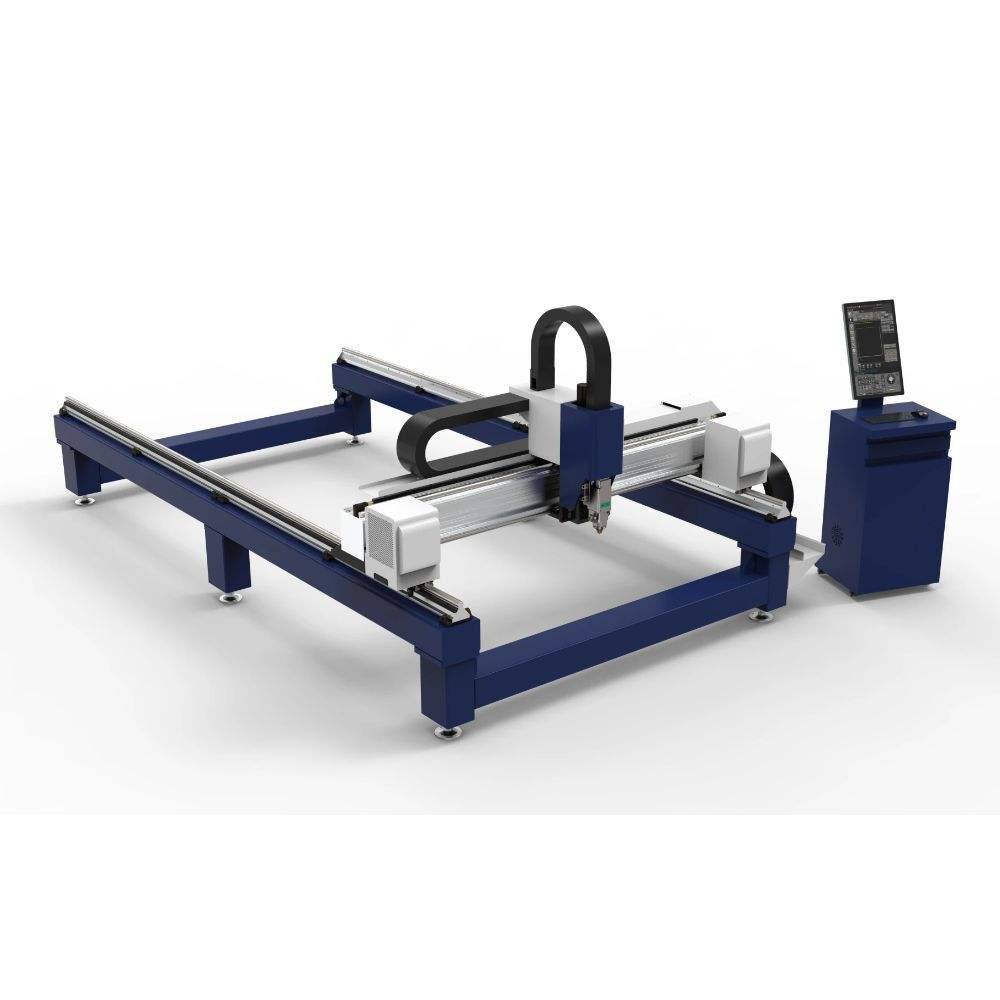
In the context of a Dubai-based shipyard, where efficiency is tied to high-value contracts and rapid turnaround times, the 20kW laser profiler serves as the heart of the fabrication shop. This machine isn’t merely a cutter; it is a sophisticated CNC machining center that handles the most demanding structural components used in hull reinforcements, deck supports, and internal skeletons of massive tankers and specialized vessels.
Engineering for the Heavy-Duty Needs of I-Beams
Processing an I-beam is significantly more complex than cutting a flat sheet of metal. An I-beam’s geometry—consisting of a central web and two parallel flanges—requires a machine with a massive Z-axis stroke and specialized 3D cutting heads. The “Heavy-Duty” designation of this profiler refers to its reinforced gantry and bed architecture, designed to support beams that can weigh several tons and extend up to 12 or 15 meters in length.
The 20kW laser head is typically mounted on a multi-axis system (often 4-axis or 5-axis), allowing it to rotate around the beam to cut holes in the web, notch the flanges, and create complex “cope” cuts for interlocking joints. This 3D capability is crucial for shipbuilders who need to fit beams together at complex angles to follow the curvature of a ship’s hull. The precision afforded by the fiber laser means that these components fit together perfectly during the assembly phase, significantly reducing the amount of gap-filling welding required.
The Impact of 20,000 Watts on Throughput
Why 20kW? In the world of fiber lasers, power equals speed and thickness capability. For a shipyard, this means the ability to cut through I-beam flanges that are 20mm, 30mm, or even 40mm thick with clean, vertical edges. At 20kW, the “melt-shear” process is optimized, using high-pressure nitrogen or oxygen to blow away molten metal at speeds that were previously unthinkable for structural steel.
In Dubai’s competitive manufacturing environment, doubling the cutting speed can be the difference between winning and losing a maritime infrastructure project. The 20kW source allows for high-speed piercing, which is often the slowest part of the cutting cycle. With “flash piercing” technology, the laser enters the material in a fraction of a second, allowing the machine to move immediately into the cutting path. This is particularly beneficial for beams that require hundreds of bolt holes or lightening cutouts.
Automatic Unloading: Solving the Logistics Bottleneck
One of the greatest challenges in heavy-duty profiling is what happens *after* the cut. Manually moving a 12-meter I-beam off a cutting bed is a dangerous, time-consuming process involving overhead cranes, rigging teams, and significant downtime. The Automatic Unloading system integrated into this profiler solves this logistical nightmare.
As the laser finishes its final cut, a series of synchronized hydraulic or pneumatic lifters and conveyor rollers engage. The finished beam is automatically moved from the cutting zone to a dedicated sorting area. This happens while the next raw beam is being loaded into the chucks. In a high-volume yard, this “zero-gap” transition increases machine utilization by up to 40%. It also drastically improves safety; by reducing the number of “crane picks” required in the shop, the risk of accidents related to suspended loads is significantly mitigated—a key metric for HSE (Health, Safety, and Environment) standards in UAE industrial zones.
Navigating the Dubai Climate: Robustness and Reliability
Operating a high-precision 20kW laser in Dubai presents unique environmental challenges. The extreme ambient temperatures, high humidity, and airborne salinity from the Arabian Gulf can be detrimental to sensitive optics and electronics. A professional-grade profiler for this region must be “tropicalized.”
This includes heavy-duty industrial chillers with oversized heat exchangers to keep the laser source and cutting head at a constant 22°C, even when the workshop temperature exceeds 45°C. Furthermore, the machine’s racks, gears, and linear guides must be fully enclosed and pressurized with filtered air to prevent the ingress of fine desert sand and salt spray. For a shipyard located in Jebel Ali or Dubai Maritime City, these features are not optional; they are essential for ensuring the 24/7 uptime required for large-scale vessel fabrication.
The Precision Advantage: Reducing Secondary Operations
In traditional shipbuilding, parts are often “over-cut” and then trimmed to fit during the assembly process. This “cut-to-fit” philosophy is wasteful and slow. The 20kW laser profiler enables a “designed-to-fit” workflow. Because the laser can maintain tolerances within +/- 0.1mm over a 12-meter span, the beams coming off the machine are ready for immediate welding.
This precision extends to beveling. Many structural members in a ship’s hull require beveled edges for deep-penetration welds. A 5-axis 20kW laser can cut these bevels (V, Y, K, or X-shaped) directly into the beam during the profiling process. This eliminates the need for manual torch beveling or portable milling machines, saving thousands of man-hours over the course of a single ship’s construction.
Integration with Maritime CAD/CAM Software
Modern shipyards use sophisticated software like Aveva Marine or ShipConstructor. The 20kW Heavy-Duty Profiler is designed to integrate seamlessly with these platforms. The 3D models of the ship’s structure are exported directly to the laser’s controller, which automatically generates the nesting patterns and cutting paths for the I-beams.
This digital thread from design to fabrication ensures that every hole, notch, and marking is exactly where the naval architect intended. Furthermore, the laser can be used to “etch” part numbers, alignment marks, and welding instructions directly onto the steel surface. This “laser marking” is invaluable for the assembly crew, acting as a foolproof map for the complex puzzle of a ship’s internal structure.
Economic Viability and ROI for Dubai Shipyards
While the initial investment in a 20kW heavy-duty system is significant, the ROI (Return on Investment) is driven by three factors: speed, labor reduction, and material savings. In Dubai, where energy costs are managed but labor and shipyard “real estate” are premium, the ability to produce more work in a smaller footprint is vital.
The 20kW fiber laser is also more energy-efficient than older CO2 lasers or high-definition plasma systems when considering the “wall-plug efficiency” (the ratio of electrical power in to optical power out). When combined with the reduction in scrap—thanks to tighter nesting and higher precision—the machine typically pays for itself within 18 to 24 months of high-capacity operation. For a shipyard looking at a 10-year horizon, the technology provides a massive competitive edge in the regional maritime market.
The Future of Structural Fabrication in the UAE
As Dubai pushes toward the “Operation 300bn” goal—a strategy to increase the industrial sector’s contribution to the GDP—the adoption of ultra-high-power laser technology is a cornerstone of this industrial evolution. The 20kW Heavy-Duty I-Beam Laser Profiler with Automatic Unloading is more than just a tool; it is a statement of intent. It signals that a shipyard is moving away from the “hammer and torch” era and into the age of photonic manufacturing.
For the engineers and project managers in Dubai’s shipyards, this technology offers the ability to build larger, safer, and more complex vessels with a level of efficiency that was previously the stuff of science fiction. The combination of extreme power, 3D structural capability, and automated logistics ensures that the next generation of ships launched from the shores of the UAE will be built to a standard that defines the modern maritime world.













