The Dawn of High-Power Fiber Laser Technology in Jakarta’s Maritime Sector
Jakarta has long served as the heartbeat of Indonesia’s industrial economy, particularly as the logistical and technical gateway for the nation’s vast oil and gas interests. For decades, the fabrication of offshore platforms—massive structures required to withstand corrosive saltwater, extreme pressure, and seismic activity—relied on plasma cutting and manual oxygen-fuel torches. While functional, these methods introduced significant thermal distortion and required extensive secondary processing.
The introduction of the 6000W Universal Profile Steel Laser System changes this equation. At 6kW, the fiber laser source provides a power density capable of vaporizing thick-walled structural steel with a Kerf width so narrow it was previously unimaginable in heavy engineering. For Jakarta-based fabricators, this means moving from “rough cutting” to “precision engineering” in a single pass. The fiber laser’s wavelength (typically 1.064 microns) is absorbed more efficiently by carbon steel and stainless steel than traditional CO2 lasers, resulting in faster cutting speeds and a reduced Heat Affected Zone (HAZ), which is critical for maintaining the metallurgical properties of offshore grade steels.
The Mechanics of the Infinite Rotation 3D Head
Perhaps the most significant leap in this system is the Infinite Rotation 3D Head. Traditional 5-axis laser heads are often limited by “cable wrap,” requiring the machine to reset or “unwind” after a certain degree of rotation. In the high-stakes environment of offshore fabrication, where complex geometries are the norm, this downtime is a liability.
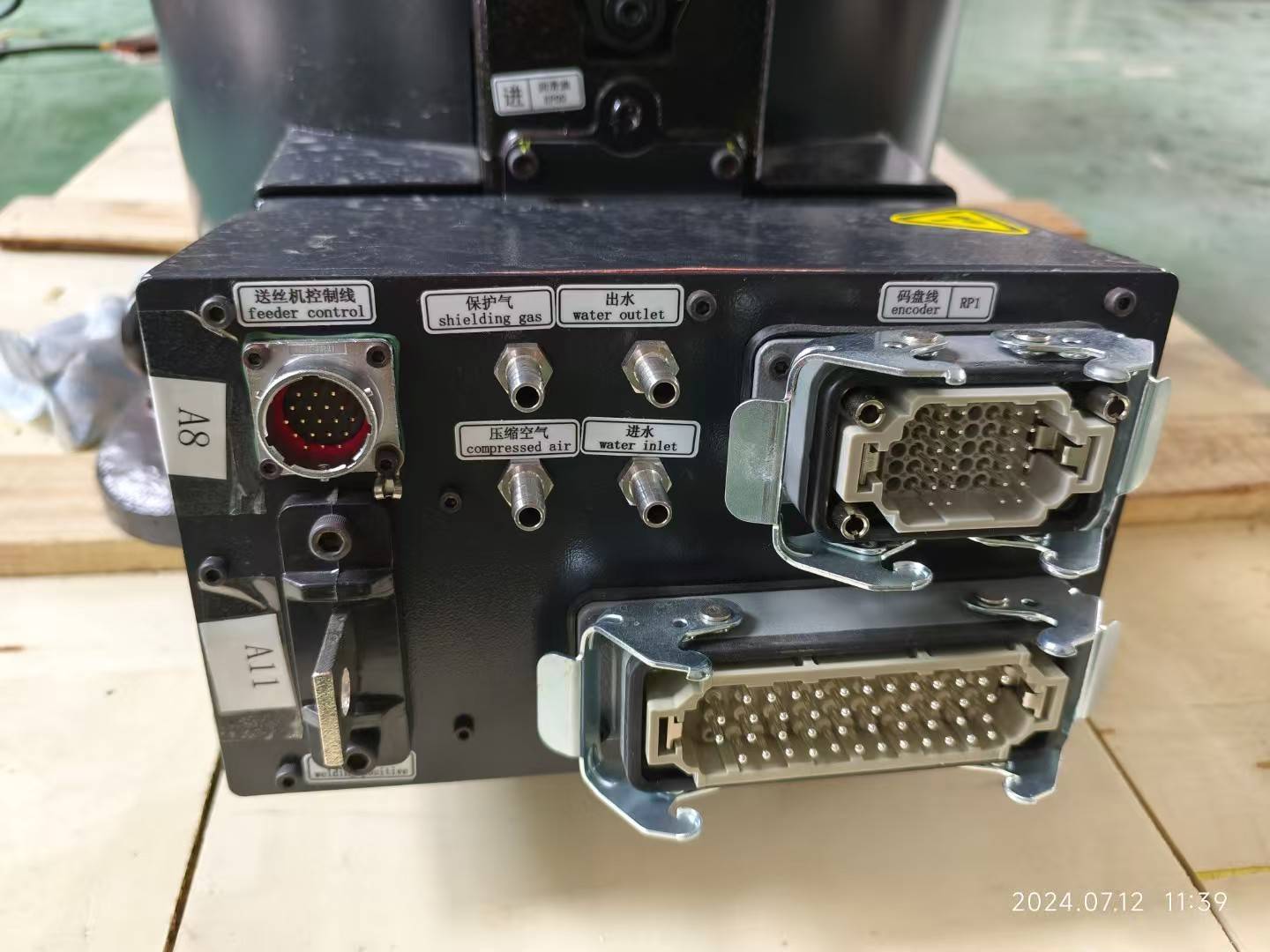
The Infinite Rotation head utilizes advanced slip-ring technology or high-precision wireless power and gas transmission to allow the cutting nozzle to rotate indefinitely around the C-axis. When combined with the A/B tilt axes, the system can perform complex beveling (up to 45 or even 50 degrees) on the fly. For offshore platforms, where beams must be joined at precise angles to distribute stress, this capability is revolutionary. It allows for the creation of V, X, Y, and K-shaped weld preparations directly on the laser bed. By automating the beveling process, Jakarta shipyards can ensure that every joint fits perfectly, reducing the volume of weld filler needed and significantly increasing the structural fatigue life of the platform.
Universal Profile Steel: Beyond the Flat Plate
Offshore platforms are not built from flat sheets alone; they are a complex skeleton of “Universal Profiles.” This includes H-beams for primary support columns, I-beams for deck stringers, and C-channels for secondary bracing. Historically, processing these required different machines: a saw for length, a drill for bolt holes, and a manual torch for notches.
The 6000W Universal Profile System treats a 12-meter H-beam with the same agility that a standard laser treats a thin sheet. Using a sophisticated four-chuck system or a specialized profile conveyor, the machine rotates the entire beam while the 3D head moves in tandem. This allows for:
1. **Complex Notching:** Creating “fish-mouth” cuts where two tubular or profiled members intersect.
2. **Bolt Hole Precision:** Laser-cutting holes with tolerances of +/- 0.1mm, ensuring that modular platform components can be bolted together on-site in the middle of the ocean without the need for field adjustments.
3. **Etching and Marking:** Automatically marking part numbers and welding instructions onto the steel, which is vital for the traceability requirements of international maritime certifications like Lloyd’s Register or ABS.
Offshore Platform Applications: Durability and Safety
In the context of the offshore energy sector—including the growing offshore wind market in Southeast Asia—the stakes for structural failure are catastrophic. A platform must survive thirty years of salt spray and gale-force winds. The 6000W laser system contributes directly to this longevity.
Traditional mechanical cutting methods can leave micro-fissures or stress-rising burrs on the edges of steel profiles. Under the cyclical loading of waves, these micro-fissures can evolve into cracks. The laser’s non-contact cutting process, coupled with the precision of the 3D head, produces an edge finish that is often smooth enough to skip grinding entirely. Furthermore, the ability to cut complex interlocking joints (J-notches) means that structural members can be “fitted” together like a puzzle before welding, providing a level of mechanical redundancy that is highly prized in offshore engineering.
Jakarta: The Strategic Hub for Laser Adoption
Why Jakarta? The city is the center of Indonesia’s “Industry 4.0” initiative. For an offshore fabricator located in the industrial zones of North Jakarta or nearby Cikarang, the proximity to specialized technicians and spare parts is a major advantage. High-power fiber lasers require a stable environment and expert calibration.
Implementing a 6000W system in Jakarta also addresses the local labor market shift. As the cost of skilled manual welders and fitters rises, and the demand for faster project delivery increases, automation becomes the only viable path forward. The software integrated with these 3D laser systems—often utilizing TEKLA or AutoCAD structures—allows Jakarta-based engineers to design a platform digitally and send the code directly to the machine, bypassing the errors associated with manual measurement and chalk-line marking.
Environmental and Economic ROI
From an expert perspective, the return on investment (ROI) for a 6000W system is driven by two factors: energy efficiency and material utilization. Fiber lasers are roughly 30% more energy-efficient than CO2 lasers, which is a significant consideration given the industrial electricity tariffs in Indonesia.
Moreover, the nesting software for profile steel is incredibly advanced. It can calculate the most efficient way to cut multiple parts from a single length of I-beam, minimizing “scrap” or “off-cuts.” In the offshore world, where high-strength steel (like S355 or S420) is expensive and subject to global price volatility, saving 5-10% in material waste can equate to hundreds of thousands of dollars over the course of a single platform contract.
Overcoming Challenges: Humidity and Power Stability
Operating a high-power laser in Jakarta does come with specific challenges that an expert must address. The tropical humidity can cause condensation on optical components, and the local power grid can occasionally suffer from fluctuations.
The 6000W Universal Profile systems designed for this region are equipped with specialized industrial chillers and climate-controlled cabinets for the laser source and electrical components. Furthermore, the use of high-capacity voltage stabilizers and UPS systems is mandatory to protect the sensitive fiber optics and CNC controllers. When these environmental factors are managed, the 6000W laser becomes a 24/7 workhorse, capable of maintaining the high duty cycles required by the offshore industry.
Conclusion: Shaping the Future of Indonesian Infrastructure
The 6000W Universal Profile Steel Laser System with an Infinite Rotation 3D Head is more than just a cutting tool; it is a strategic asset for the Indonesian offshore sector. By localizing this level of technological sophistication in Jakarta, the industry can reduce its reliance on imported pre-fabricated components and bolster its domestic manufacturing capabilities.
As offshore platforms venture into deeper waters and face harsher environments, the precision provided by infinite-rotation 3D cutting will become the standard, not the exception. For the fabricators of Jakarta, the message is clear: the future of steel is light-driven, and those who harness the 6000W fiber laser today will be the ones building the energy infrastructure of tomorrow.