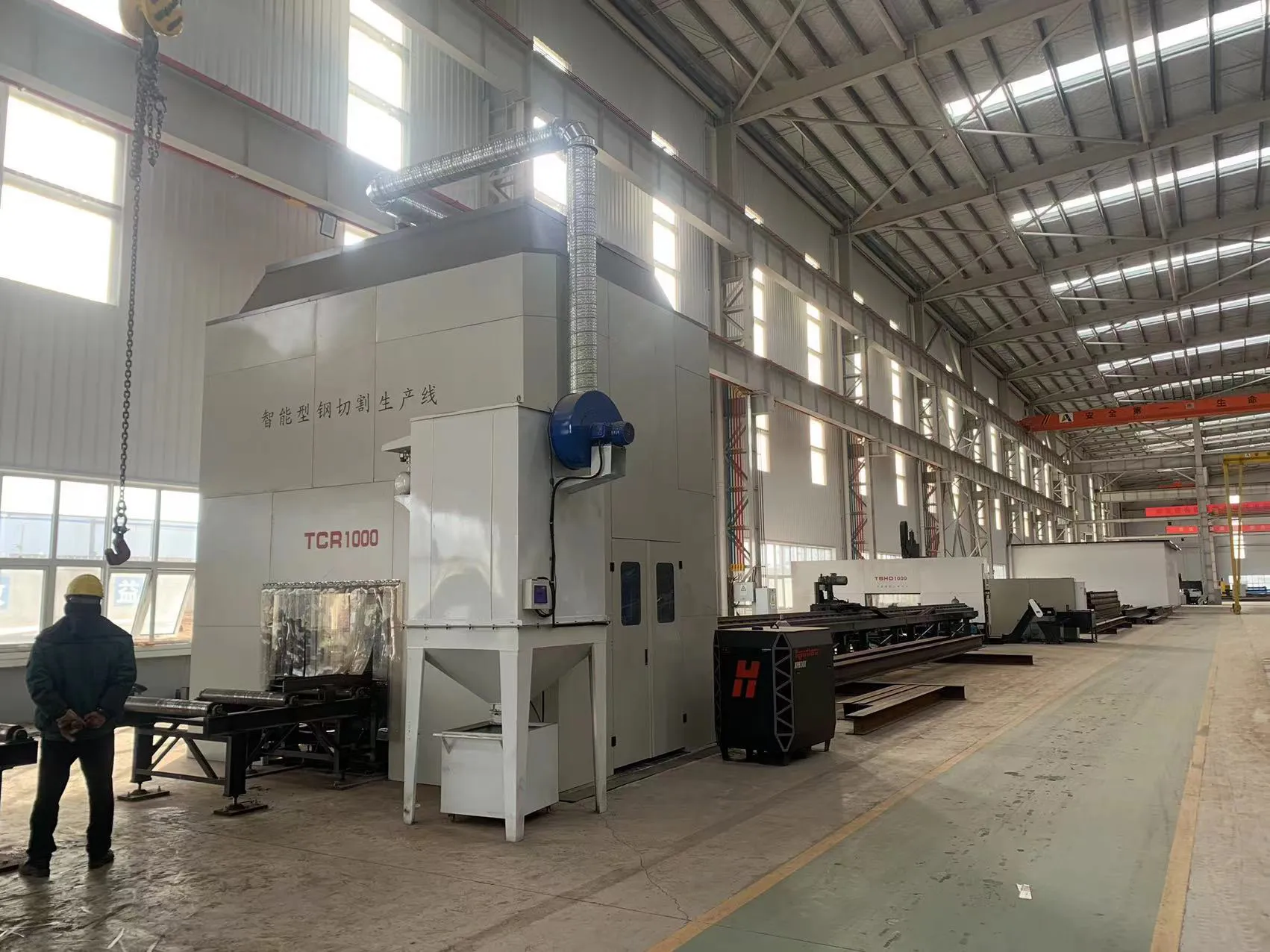
The Strategic Significance of 6000W Fiber Power in Katowice
Katowice and the surrounding Upper Silesian Industrial Region have long been the backbone of European mining. However, the modern era demands more than just raw steel; it requires high-precision components that can withstand the extreme pressures of deep-earth extraction. The transition to a 6000W (6kW) fiber laser system marks a departure from legacy plasma cutting and CO2 laser technologies.
A 6kW fiber laser offers the ideal “sweet spot” for mining machinery. While 10kW+ systems exist, the 6kW oscillator provides an optimal balance of capital investment and operational capability for the thicknesses typically encountered in mining—predominantly 10mm to 25mm carbon steel. At this power level, the laser achieves high-speed nitrogen cutting for thinner auxiliary components and high-quality oxygen cutting for thick structural plates. In Katowice’s competitive fabrication market, the ability to cut through 20mm Hardox or Strenx steel with a narrow heat-affected zone (HAZ) is a critical advantage, ensuring that the structural integrity of the steel is not compromised during the thermal process.
Universal Profile Processing: Beyond the Flat Sheet
Mining machinery is rarely composed solely of flat plates. Robust frames for underground loaders, roof supports, and ventilation ducting rely heavily on structural profiles. A “Universal” system is defined by its ability to switch seamlessly between flatbed sheet cutting and profile processing.
This versatility is achieved through an integrated rotary axis or a dedicated tube-cutting attachment. For a manufacturer in Katowice, this means a single machine can process a 6-meter I-beam and then immediately switch to cutting a batch of 15mm thick gussets from a standard sheet. The precision of the laser ensures that holes for high-tensile bolts and slots for interlocking joints are cut with tolerances of +/- 0.1mm. This level of accuracy is impossible to achieve with manual oxy-fuel or mechanical drilling, significantly reducing the “fit-up” time during the welding and assembly phases of mining equipment production.
The Mechanics of Automatic Unloading in Heavy Industry
One of the most significant challenges in high-power laser cutting is the “productivity paradox.” While the fiber laser can cut a sheet in minutes, the manual unloading of heavy, hot, and sharp steel parts can take twice as long, idling an expensive machine. In the context of Katowice’s labor market and the physical demands of mining components, automatic unloading is no longer a luxury—it is a necessity.
The automatic unloading system typically utilizes a combination of vacuum suction cups for thinner sheets and magnetic grippers for heavy, ferromagnetic structural steel. Once the laser head completes its path, a programmable gantry system descends to pick the finished parts and place them on a designated pallet or conveyor. Simultaneously, the “skeleton” (the leftover scrap) is removed.
In mining machinery fabrication, where parts are often large and cumbersome, automation prevents operator fatigue and minimizes the risk of workplace injuries. Furthermore, intelligent unloading systems can sort parts based on their subsequent destination in the factory—directing some to the bending station and others to the welding bay—effectively turning the laser system into the central nervous system of the production floor.
Material Science: Handling High-Strength Steels
The mining industry relies on specialized alloys designed for abrasion resistance and high load-bearing capacity. Steels such as AR400, AR500, and various high-yield structural grades are standard. These materials are sensitive to heat; excessive thermal input can lead to softening or brittleness in the cutting edge.
The 6000W fiber laser, with its high energy density and small spot size, concentrates energy so precisely that the duration of heat exposure is minimized. This is particularly vital for the gears, sprockets, and wear plates used in continuous miners and longwall shearers. By maintaining the base material’s properties right up to the cut edge, the laser ensures that the components will survive the abrasive environments of the coal and copper mines found in the Silesian region.
Enhancing the Supply Chain in the Silesian Industrial Hub
Katowice is not just a center for mining; it is a logistics hub with a deep ecosystem of sub-contractors and OEMs. The implementation of a 6kW laser system with automatic unloading allows local manufacturers to move up the value chain. Instead of providing raw cut parts, they can provide “kit-ready” components.
The “Universal” aspect allows for the creation of “slot-and-tab” designs. In this manufacturing philosophy, parts are designed to snap together like a puzzle before welding. This eliminates the need for complex jigs and fixtures. For a company building a massive mining conveyor system, receiving a kit of laser-cut profiles and plates that self-align can reduce assembly time by up to 40%. This efficiency is what allows Katowice-based firms to compete with global manufacturers, offering faster lead times and higher quality.
The Intersection of Industry 4.0 and Mining
The 6000W laser system is a data-driven machine. Modern systems installed in Katowice are typically integrated with ERP (Enterprise Resource Planning) software. The “Automatic Unloading” component is the physical manifestation of this digital workflow.
As the laser cuts, it generates real-time data on gas consumption, cutting time, and material yield. When the parts are unloaded automatically, the system updates the inventory in real-time. If a part for a specific hydraulic manifold is damaged or fails a quality check, the system can automatically reschedule the cut in the next nest. This level of “smart” manufacturing is crucial for the mining sector, where machine downtime in the field can cost thousands of Euros per hour. Having a reliable, automated pipeline for replacement parts ensures that the mining operations remain fluid.
Environmental and Economic Impact
From an expert’s perspective, the move to 6kW fiber technology is also an environmental mandate. Compared to CO2 lasers, fiber lasers are approximately 3 to 4 times more energy-efficient. In the current European energy climate, where electricity costs are a significant overhead for Silesian factories, the reduction in power consumption is a direct boost to the bottom line.
Moreover, the precision of the 6kW beam allows for tighter nesting of parts. In heavy mining components, where material costs for thick alloy steel are high, improving material utilization by even 5% can result in tens of thousands of Euros in annual savings. The automatic unloading system further contributes to this by ensuring that parts are not damaged during the removal process, reducing scrap and rework.
Conclusion: Future-Proofing the Heart of Poland’s Industry
The installation of a 6000W Universal Profile Steel Laser System with Automatic Unloading in Katowice is a statement of intent. It signifies that the mining machinery sector is not a “sunset industry” but rather a high-tech field that demands the best in photonics and automation.
For the expert, the value of this system lies in its synergy. The 6kW source provides the power, the universal profile capability provides the flexibility, and the automatic unloading provides the scale. Together, they allow Katowice’s engineers to design more complex, more durable, and more efficient mining machines. As the industry moves toward deeper mines and more challenging geological conditions, the precision and reliability offered by this laser technology will be the foundation upon which the next generation of mining infrastructure is built. In the heart of Silesia, the future of mining is being cut by light.