The Dawn of High-Power Photonics in Hamburg’s Maritime Sector
Hamburg has long been the heartbeat of global maritime commerce and engineering. As shipyards in the region face increasing pressure to modernize and compete with global markets, the transition from traditional mechanical and plasma cutting to high-power fiber laser technology has become essential. The introduction of the 30kW Fiber Laser Heavy-Duty I-Beam Profiler is not merely an incremental upgrade; it is a foundational change in how naval architecture is realized.
At 30,000 watts, the laser source provides an unprecedented power density. In the context of shipbuilding, where structural steel can range from 15mm to over 50mm in thickness, this power allows for high-speed sublimation and fusion cutting that was previously thought impossible for laser systems. The result is a narrow kerf, a minimal heat-affected zone (HAZ), and an edge quality that requires zero post-processing before welding.
The Engineering Marvel: 30kW Power and Material Interaction
The core of this system is the 30kW fiber laser source. In laser physics, the jump from 12kW or 20kW to 30kW isn’t just about cutting faster; it’s about the stability of the melt pool in thick-section materials. When processing heavy-duty I-beams used in the skeleton of a vessel, the 30kW beam maintains a consistent vapor channel (the “keyhole”), ensuring that the molten metal is ejected efficiently by the assist gas (usually Oxygen or Nitrogen).
For a Hamburg-based shipyard, this means the ability to cut through S355 or S460 structural steel at speeds that leave traditional methods in the dust. More importantly, the precision of a fiber laser ensures that the structural properties of the steel remain intact. Unlike plasma cutting, which can introduce significant thermal stress and deformation, the 30kW fiber laser localizes heat so effectively that even the largest I-beams remain dimensionally stable throughout the cutting process.
Infinite Rotation 3D Head: The Geometry of Modern Shipbuilding
Perhaps the most impressive component of this machine is the Infinite Rotation 3D Head. In traditional beam profiling, the cutting head is often limited by cable management systems that prevent continuous rotation, requiring “unwinding” movements that slow down production. An “Infinite Rotation” head utilizes advanced slip-ring technology and robotic articulation to rotate indefinitely around the workpiece.
In shipbuilding, components are rarely simple. I-beams require complex bevels (V, Y, K, and X joints) to prepare them for robotic welding. The 3D head can tilt up to ±45 degrees (or more, depending on configuration) while moving across the web and flanges of the beam. This allows for:
– **Beveling on the fly:** Creating complex weld preparations as the profile is being cut.
– **Coping and Notching:** Cutting intricate shapes into the ends of beams so they interlock perfectly with other structural members.
– **Bolt Hole Precision:** Producing perfectly cylindrical holes with a diameter-to-thickness ratio that plasma cannot match, ensuring easy assembly in the dry dock.
Automation and the Heavy-Duty I-Beam Profiler Gantry
A machine of this caliber requires a chassis that can handle the massive weight of maritime structural sections. These I-beam profilers are built on heavy-duty, reinforced beds capable of supporting beams that weigh several tons and extend up to 12 or 15 meters in length.
The automation suite integrated into these systems is designed for the “Industry 4.0” shipyard. Features include:
– **Automatic Loading and Unloading:** Hydraulic lift systems and conveyor beds that move the beams into the cutting zone without manual crane intervention for every adjustment.
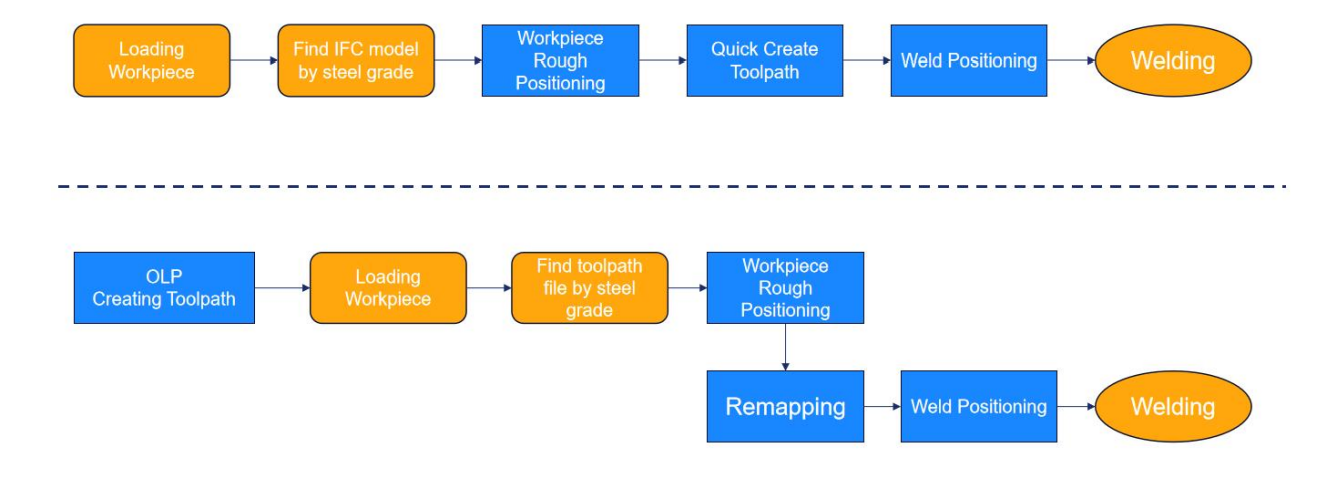
– **Material Sensing and Compensation:** Ships’ beams are rarely perfectly straight. The 3D head is equipped with laser sensors that “map” the actual profile of the beam in real-time, adjusting the cutting path to account for any twists or bows in the steel.
– **Nesting Software:** Advanced CAD/CAM integration (such as Tekla or AVEVA) allows engineers to nest parts directly onto the beams, minimizing scrap and ensuring every centimeter of expensive steel is utilized.
Strategic Impact on Hamburg’s Shipyard Workflow
In the bustling shipyards of Hamburg, floor space and time are the two most valuable commodities. Traditionally, an I-beam would move from a saw to a drill line, and then to a manual station where a technician with a torch would grind out the bevels. This process is labor-intensive, prone to human error, and creates a bottleneck.
The 30kW Laser Profiler collapses these steps into a single workstation. A single operator can oversee the transformation of a raw I-beam into a finished, weld-ready component in a fraction of the time. This “one-stop” processing reduces the “Work in Progress” (WIP) inventory cluttering the shipyard and allows for “Just-In-Time” delivery to the assembly blocks.
Furthermore, the precision of the laser-cut parts simplifies the assembly of the hull blocks themselves. When parts fit together with sub-millimeter tolerances, the need for “gap bridging” during welding is eliminated. This leads to stronger welds, less filler material usage, and a significantly faster assembly cycle for the vessel.
Economic and Environmental Considerations
The capital investment in a 30kW 3D laser system is significant, but the Return on Investment (ROI) in a high-volume shipyard is rapid. The reduction in secondary operations—grinding, cleaning, and re-working—is where the primary savings are found. In the German labor market, reducing manual man-hours on hazardous tasks like grinding and manual thermal cutting also improves safety and reduces long-term health costs.
From an environmental perspective, the fiber laser is a much cleaner technology. It produces fewer fumes than plasma and operates with higher electrical efficiency. As Hamburg moves toward “Green Shipbuilding” initiatives, adopting energy-efficient manufacturing processes becomes a key component of corporate social responsibility and regulatory compliance within the EU.
The Future: Digital Twins and Laser Precision
As we look toward the future of naval construction in Hamburg, the 30kW I-Beam Profiler is a critical link in the “Digital Twin” chain. Because the laser system operates with such high digital fidelity, the “as-built” component is an exact match for the “as-designed” CAD model. This data-driven approach allows for better lifecycle management of the ship.
If a vessel is damaged years later, the exact specifications of the structural beams are stored in the digital archives. Using the same laser technology, a replacement part can be cut with the guarantee that it will fit perfectly into the existing structure, even if that structure was built a decade ago.
Conclusion: Setting the Standard for Global Shipbuilding
The deployment of a 30kW Fiber Laser Heavy-Duty I-Beam Laser Profiler with Infinite Rotation 3D Head in Hamburg is a clear statement of intent. It signals that German shipbuilding is not content to rely on its prestigious history but is actively defining the future of maritime manufacturing.
By harnessing the power of ultra-high-wattage lasers and the flexibility of five-axis motion, shipyards can produce vessels that are stronger, lighter, and more cost-effective. In the heart of Hamburg’s industrial port, the hum of the 30kW laser is the sound of a new era—one where the limits of steel are pushed by the precision of light. This technology ensures that the ships of tomorrow are built on a foundation of absolute accuracy, ensuring safety on the high seas and economic resilience on the shores of the Elbe.