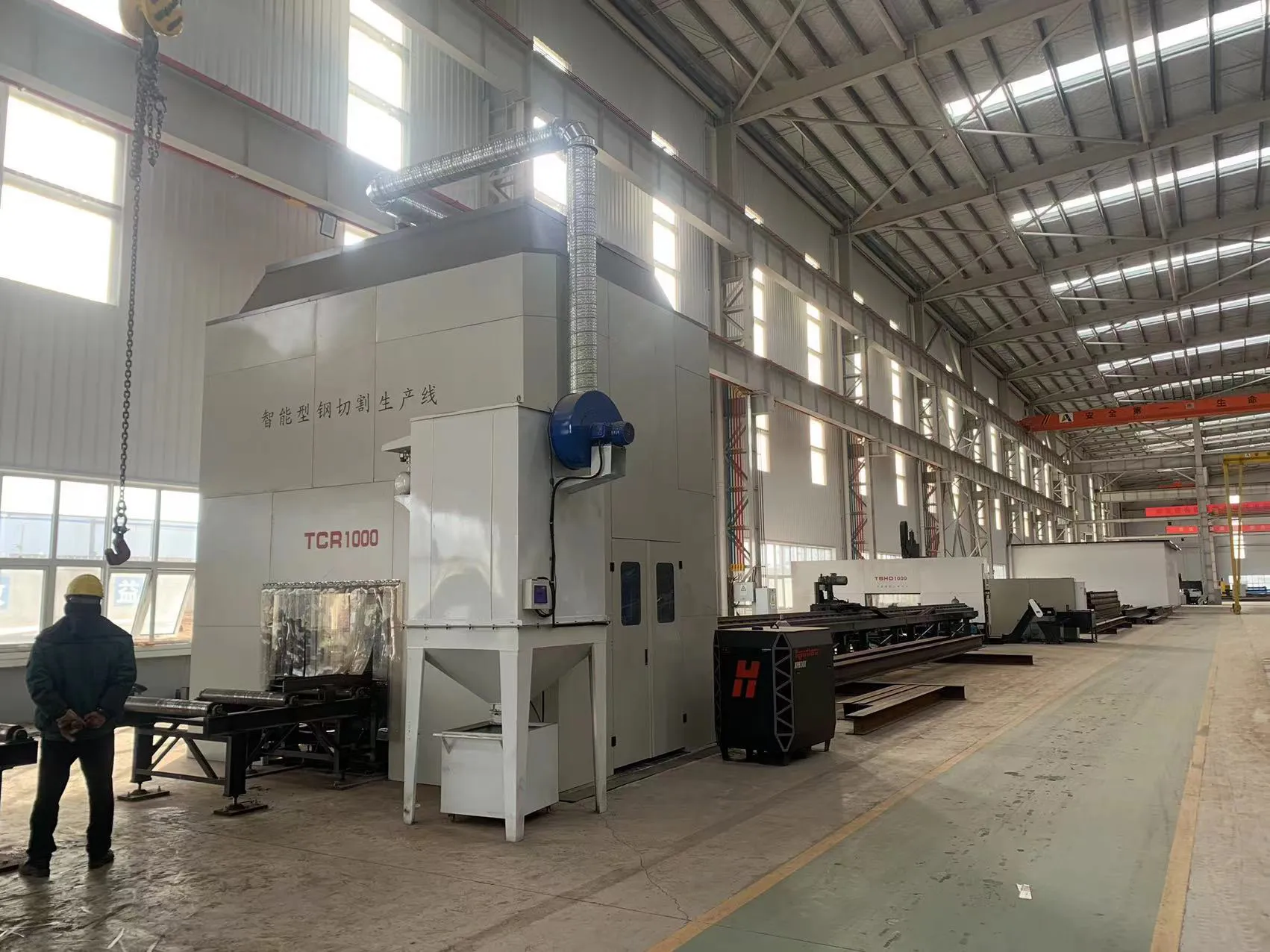
The Dawn of 30kW Power: Redefining Heavy-Duty Fabrication
For years, the heavy fabrication industry in Dammam relied on plasma cutting or lower-wattage CO2 lasers for thick-plate processing. However, the emergence of the 30kW fiber laser has fundamentally altered the economics of steel fabrication. In the context of wind turbine towers—which require immense structural integrity to support nacelles weighing hundreds of tons—the ability to cut through thick carbon steel with surgical precision is paramount.
A 30kW laser source provides a power density that allows for “high-speed melt-shearing.” Unlike plasma, which creates a wide heat-affected zone (HAZ), the 30kW fiber laser concentrates energy into a microscopic spot size. This results in a narrower kerf and a significantly smaller HAZ. For the heavy-duty I-beams used in the internal platforms and foundation structures of wind towers, this means the metallurgical properties of the steel remain uncompromised, ensuring the long-term fatigue resistance necessary for structures vibrating under wind loads.
The Complexity of I-Beam Profiling for Wind Infrastructure
Wind turbine towers are not merely simple cylinders; they are complex engineering marvels that require intricate internal support systems. These systems often utilize heavy-duty I-beams for internal bracing, flooring, and ladder supports. Traditional methods of profiling these beams—such as manual layout and mechanical drilling or sawing—are labor-intensive and prone to human error.
A 30kW Laser I-Beam Profiler automates this process. The machine is designed with a specialized chuck system and multi-axis gantry that allows the laser head to move around the stationary or rotating beam. This enables the cutting of bolt holes, notches, and complex geometries across the web and flanges of the I-beam in one continuous operation. In the high-volume environment of Dammam’s industrial cities, this automation is the difference between completing a tower section in days versus weeks.
Mastering the ±45° Bevel: The Key to Weld Quality
In the construction of wind turbine towers, the quality of the weld is non-negotiable. Because these structures are subject to extreme cyclical loading, every joint must be perfect. This is where the ±45° bevel cutting capability becomes indispensable.
Traditional straight cuts require a secondary process—usually manual grinding or milling—to create the V, X, or K-shaped grooves needed for full-penetration welding. The 30kW laser profiler utilizes a 5-axis “3D” cutting head that can tilt up to 45 degrees in any direction. This allows the machine to cut the profile of the I-beam and the required weld bevel simultaneously.
By achieving a precise ±45° angle, the laser ensures a consistent “fit-up.” When two massive steel components meet, the gap is uniform, allowing robotic welding systems to lay down a perfect bead. This synergy between laser cutting and automated welding is a cornerstone of modern “Smart Factory” initiatives in the Saudi industrial sector.
Strategic Implementation in Dammam: A Hub for Vision 2030
Dammam is uniquely positioned as the epicenter of Saudi Arabia’s industrial might. With its proximity to King Abdulaziz Port and the massive steel mills of the Eastern Province, it serves as the logical staging ground for the Kingdom’s renewable energy components.
The Saudi Green Initiative and Vision 2030 aim to generate a significant portion of the Kingdom’s energy from renewables. Large-scale wind farms, such as the Dumat Al Jandal project, require thousands of tons of fabricated steel. Deploying 30kW fiber lasers in Dammam allows local manufacturers to localize the supply chain. Instead of importing pre-fabricated tower sections, the Kingdom can process raw steel locally, fostering high-tech job creation and reducing the carbon footprint associated with international shipping.
Furthermore, the environmental conditions in Dammam—characterized by high temperatures and humidity—demand robust machinery. Modern 30kW fiber lasers are equipped with advanced chilling systems and dust extraction units designed to maintain stability in harsh climates, ensuring 24/7 operation in the desert heat.
Comparing Fiber Laser to Conventional Plasma Cutting
When evaluating the ROI for a wind tower project, the comparison between fiber lasers and plasma cutting is stark. While plasma has historically been cheaper for very thick materials, the 30kW fiber laser has closed the gap in thickness while maintaining a lead in quality.
1. **Precision:** A laser-cut hole in a 25mm I-beam flange is perfectly cylindrical, whereas plasma often produces a slight taper. For bolt-heavy wind tower assemblies, the laser eliminates the need for reaming.
2. **Speed:** At 30kW, the cutting speed on 20mm to 30mm steel is significantly faster than plasma, leading to higher throughput.
3. **Operating Costs:** Fiber lasers have no moving parts in the light-generating source and do not require the expensive electrode and nozzle replacements frequent in plasma cutting.
4. **Post-Processing:** The “clean” edge produced by the fiber laser—free of dross and slag—means the part can move directly from the laser bed to the welding station.
Technical Challenges: Handling and Motion Control
Processing a 12-meter I-beam weighing several tons requires more than just raw laser power; it requires sophisticated material handling. The heavy-duty profilers used in wind tower fabrication feature reinforced beds and synchronized “power-touch” rollers.
The software integration is equally critical. To achieve a ±45° bevel on a curved or slightly warped I-beam, the laser must use real-time sensing. High-speed capacitive sensors measure the distance between the nozzle and the steel thousands of times per second, adjusting the Z-axis and the tilt angle to compensate for any irregularities in the beam’s physical profile. This ensures that the bevel remains a constant 45 degrees, even if the structural steel has slight mill tolerances.
Sustainability and the Future of Wind Energy Fabrication
The move toward 30kW fiber lasers is also a move toward more sustainable manufacturing. Fiber lasers are remarkably energy-efficient, converting roughly 40-50% of electrical input into beam power, compared to the 10% efficiency of older CO2 lasers.
In the wind energy sector, where the goal is to create “green” energy, the irony of using inefficient, high-waste manufacturing processes is not lost on engineers. The precision of the 30kW laser minimizes nesting waste, ensuring that every square centimeter of Saudi steel is utilized effectively. Additionally, the reduction in secondary grinding reduces noise pollution and metal dust in the Dammam work environment, leading to a safer and cleaner industrial landscape.
Conclusion: Empowering the Saudi Energy Transition
The 30kW Fiber Laser Heavy-Duty I-Beam Laser Profiler is more than just a cutting machine; it is a catalyst for industrial evolution in Dammam. As the demand for wind turbine towers grows, the ability to process heavy structural steel with ±45° bevel precision will define the leaders of the fabrication industry.
By investing in this high-wattage technology, Saudi fabricators are not just keeping pace with global standards—they are setting them. The combination of power, precision, and local expertise ensures that the towers supporting the Kingdom’s wind turbines are built on a foundation of engineering excellence, contributing to a sustainable and self-reliant energy future for Saudi Arabia.