The Dawn of 30kW Fiber Laser Power in Heavy Industry
For decades, the heavy-duty structural steel industry relied on oxy-fuel and plasma cutting to manage the massive cross-sections of I-beams and H-beams. While effective, these methods were fraught with limitations: wide heat-affected zones (HAZ), significant dross, and a lack of precision that necessitated hours of manual grinding. As a fiber laser expert, I have witnessed the evolution of the resonator, but the jump to 30kW represents something more than an incremental update—it is a total reimagining of what is possible.
At 30kW, the energy density of the laser beam is so intense that it transitions from a traditional melting process to a high-speed sublimation and ejection process. For offshore platforms, where I-beams can reach thicknesses of 20mm to 50mm or more, the 30kW fiber laser maintains a narrow kerf and a perfectly square edge. In Istanbul’s rapidly expanding industrial zones, this technology is being deployed to meet the rigorous standards of international maritime classifications, ensuring that every cut contributes to the ultimate stability of the platform.
Istanbul: The Strategic Nexus for Offshore Fabrication
Istanbul is no longer just a historical bridge between continents; it has become a global center for high-tech manufacturing and maritime excellence. The city’s proximity to the shipyards of Tuzla and Yalova makes it the ideal theater for the 30kW I-beam laser profiler. Turkish engineers have integrated European motion control systems with high-power resonators to create machines that can handle structural sections up to 12 meters in length.
The deployment of these machines in Istanbul serves a dual purpose. First, it services the domestic push for energy independence through Black Sea gas exploration. Second, it positions Istanbul as a primary exporter of “smart-cut” structural steel for European offshore wind projects. The ability to process heavy-duty I-beams locally with 30kW precision reduces lead times and logistics costs, making Istanbul-based fabricators some of the most competitive in the global market.
The Mechanics of the Heavy-Duty I-Beam Profiler
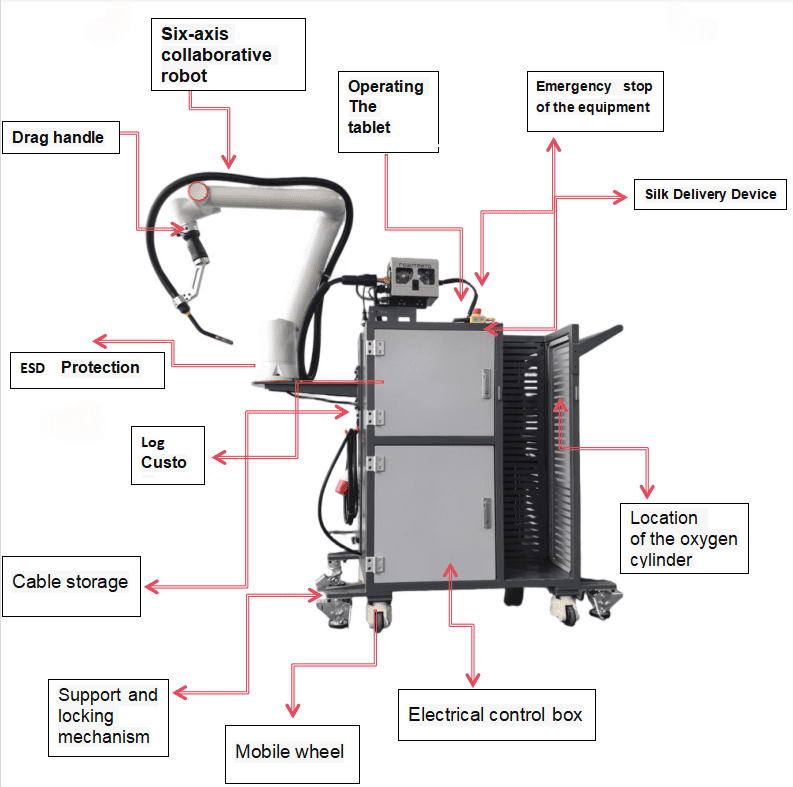
A 30kW fiber laser is only as good as the machine that moves it. Heavy-duty I-beam profilers differ significantly from flat-bed lasers. These systems utilize a multi-axis “chuck and rail” or “robotic arm” configuration. The I-beam is fed through a rotating housing, or the laser head moves around the stationary beam in a 3D workspace.
For offshore platforms, beams require more than simple straight cuts. They need complex bolt holes, “dog-bone” cutouts for seismic resilience, and, most importantly, weld-ready bevels. The 30kW head can tilt up to 45 degrees (or more with specialized 3D heads), allowing for V, Y, and X-type bevels to be cut in a single pass. This eliminates the need for secondary bevelling processes, which are traditionally the biggest bottleneck in structural fabrication.
Zero-Waste Nesting: Economics Meets Sustainability
In the context of offshore engineering, the materials used—often high-strength S355 or S460 structural steel—are expensive. Traditional nesting on long profiles often leaves “remnants” or “skeletons” that are sent to the scrap heap. Zero-waste nesting is an algorithmic approach that optimizes the sequence of cuts to ensure that one part’s exit cut becomes the next part’s entry cut.
This “common line cutting” is difficult with I-beams due to the flange-and-web geometry. However, modern AI-driven software integrated into Istanbul’s 30kW systems can now perform “end-to-end” nesting. By precisely calculating the kerf width of the 30kW beam, the software can nest parts so tightly that the “end-of-bar” waste is reduced to mere millimeters. In a project involving thousands of tons of steel for a jacket structure or a semi-submersible rig, a 5-10% saving in material costs can equate to millions of dollars.
Meeting the Rigorous Demands of Offshore Platforms
Offshore platforms are subjected to constant salt spray, extreme pressure, and cyclic loading from waves. Any flaw in the structural steel—particularly in the heat-affected zone—can lead to stress corrosion cracking or fatigue failure.
As an expert, I emphasize that the 30kW laser’s greatest advantage in this sector is its speed. Because the laser cuts so quickly, the total heat input into the I-beam is significantly lower than that of plasma or oxy-fuel. This results in a much smaller HAZ, preserving the metallurgical properties of the high-tensile steel. When these beams are welded together in the Istanbul shipyards, the integrity of the joint is superior because the base metal hasn’t been “pre-damaged” by excessive heat during the cutting phase.
Furthermore, the precision of 30kW fiber lasers ensures that bolt holes are perfectly cylindrical with no taper. On a rig where thousands of beams must align perfectly in the middle of the ocean, a tolerance of ±0.1mm is a luxury that becomes a necessity.
The Technological Synergy: 30kW and 3D Processing
The “Heavy-Duty” moniker of these Istanbul-based profilers comes from their ability to handle “Jumbo” sections. Cutting an I-beam involves navigating the transition from the thick flange to the thinner web. A 30kW system uses real-time “power modulation.” As the laser head moves across the varying thicknesses of the I-beam profile, the internal sensors adjust the power output and gas pressure (usually Nitrogen or Oxygen) in milliseconds.
In Istanbul, we are seeing the integration of 3D scanning technology with the laser head. Before the cut begins, the machine scans the actual dimensions of the I-beam (which may have slight mill tolerances or “warping”). The software then adjusts the cutting path to the *actual* shape of the steel, rather than the *theoretical* CAD model. This ensures that every notch and hole is perfectly placed, regardless of imperfections in the raw material.
Environmental Impact and the Green Steel Initiative
The global move toward “Green Steel” is particularly relevant for offshore wind energy. It is somewhat paradoxical to build “green” energy infrastructure using “dirty” manufacturing processes. The 30kW fiber laser is significantly more energy-efficient than older CO2 lasers or high-definition plasma systems.
By using the Istanbul-based 30kW profilers, companies reduce their carbon footprint in three ways:
1. **Energy Efficiency:** Fiber lasers convert electrical energy to light with over 40% efficiency.
2. **Waste Reduction:** Zero-waste nesting minimizes the energy required to recycle scrap steel.
3. **Chemical Reduction:** The clean cut of a 30kW laser requires no secondary chemical cleaning or heavy grinding, reducing noise pollution and particulate matter in the shop environment.
The Future of Offshore Construction in the Region
As we look toward the future, the role of Istanbul as a hub for 30kW fiber laser processing will only grow. We are already seeing the emergence of “Laser-Welded Heavy Sections,” where 30kW lasers are used not just to cut, but to weld thick plates into custom I-beams that are lighter and stronger than hot-rolled sections.
For the offshore platform industry, this means the ability to design more complex, lighter, and more durable structures. The 30kW Fiber Laser Heavy-Duty I-Beam Laser Profiler is not just a tool; it is a catalyst for a new era of maritime engineering. In the workshops of Istanbul, the future of the world’s energy infrastructure is being carved out of steel with unprecedented power and surgical precision. Fabricators who adopt this technology are not just improving their margins; they are setting the new gold standard for structural safety and efficiency in the harshest environments on Earth.