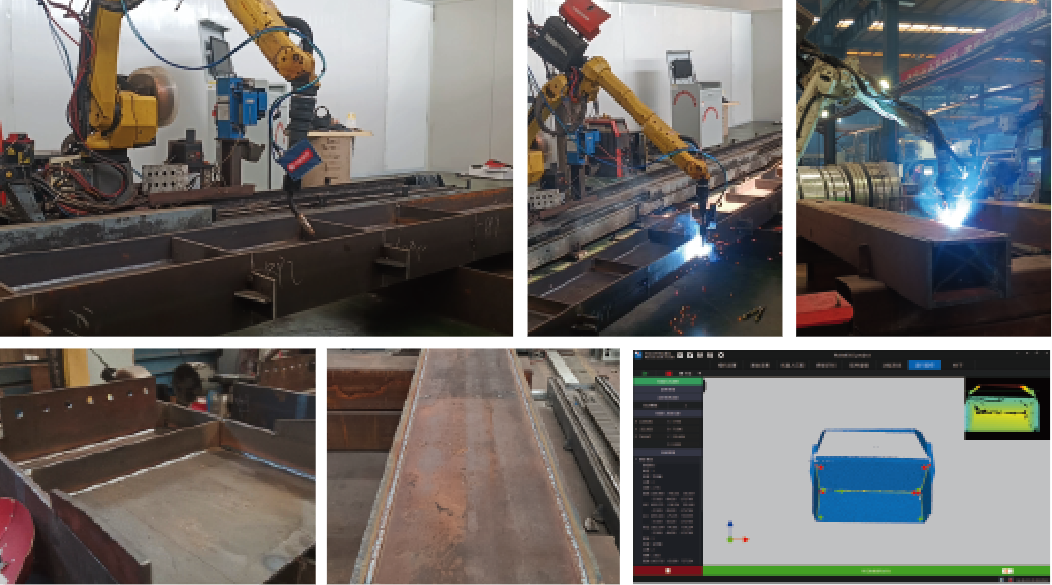
The Evolution of Bridge Fabrication in Edmonton’s Industrial Landscape
Edmonton has long been the backbone of heavy fabrication for Western Canada, serving as the gateway to the North and a primary center for oil, gas, and infrastructure manufacturing. In the realm of bridge engineering, the demands placed on structural steel are immense. Bridges must withstand extreme temperature fluctuations, heavy load cycles, and corrosive environments. Historically, the fabrication of bridge components—such as girders, diaphragms, and gusset plates—relied on a combination of plasma cutting, oxy-fuel, and mechanical drilling.
However, the introduction of the 6000W Universal Profile Steel Laser System has fundamentally changed the calculus of bridge construction. This technology allows for the transition from “analog” fabrication to a fully digital workflow. In Edmonton’s competitive market, where labor costs and project timelines are tight, the ability to automate the processing of complex steel profiles provides a significant strategic advantage.
Understanding the Power: Why 6000W is the Sweet Spot
In the world of fiber lasers, wattage is often equated with speed and thickness capacity. For bridge engineering, where structural members often exceed 12mm to 20mm in thickness, a 6000W (6kW) fiber laser serves as the ideal workhorse.
At 6000W, the laser source provides enough energy density to achieve high-speed melt-expulsion. Unlike CO2 lasers of the past, fiber lasers operate at a wavelength that is more readily absorbed by steel, resulting in a cleaner cut with a much smaller Heat Affected Zone (HAZ). For bridge engineers, the HAZ is a critical concern; excessive heat can alter the metallurgical properties of the steel, potentially leading to embrittlement or reduced fatigue life. The 6kW fiber laser minimizes this risk, ensuring that the structural integrity of the bridge member remains intact according to Canadian Highway Bridge Design Code (CSA S6) standards.
Universal Profile Processing: Beyond Flat Plate
The term “Universal Profile” refers to the system’s ability to handle not just flat plates, but the entire spectrum of structural shapes: I-beams, H-beams, C-channels, angles, and Hollow Structural Sections (HSS).
In bridge engineering, the intersection of these profiles is where the most complex engineering occurs. Traditional methods required multiple machines: a saw for length, a drill line for bolt holes, and a manual welder/grinder for coping and weld preparations. A Universal Profile Laser System integrates all these functions into a single cell. Using a multi-axis cutting head (often 5-axis or 6-axis), the laser can perform complex 3D cuts, such as bird-mouth notches or beveled edges for weld preparation. This ensures that when the components arrive at a bridge site in rural Alberta or a congested Edmonton interchange, they fit together with sub-millimeter precision, drastically reducing field welding and assembly time.
The Game Changer: Automatic Unloading and Material Handling
Perhaps the most significant advancement in this system is the integration of automatic unloading. Structural steel is inherently heavy and dangerous to handle. In a traditional shop, moving a 40-foot I-beam requires overhead cranes, multiple riggers, and significant downtime between cuts.
The automatic unloading system utilizes heavy-duty conveyor beds and hydraulic lift-arms to transition finished parts from the cutting zone to a storage or sorting area without manual intervention. For an Edmonton-based fabrication facility, this means:
1. **Increased Throughput:** The machine can continue cutting the next profile while the previous one is being safely moved.
2. **Enhanced Safety:** Reducing the “touches” by human operators significantly lowers the risk of workplace injuries associated with heavy steel handling.
3. **Labor Efficiency:** A single operator can oversee the entire process, from CAD/CAM nesting to the final unloaded part, allowing other skilled tradespeople to focus on high-value assembly and welding.
Precision Engineering and Fatigue Resistance
Bridge components are subject to millions of stress cycles over their lifespan. Any imperfection in a bolt hole or a cut edge can serve as a stress riser, leading to fatigue cracking.
The 6000W laser system produces holes that are perfectly cylindrical with a surface finish that often negates the need for reaming. In bridge engineering, the “bolt hole quality” is a frequent point of inspection. Plasma cutters often leave a slight taper or dross that must be ground away. The fiber laser’s precision ensures that bolt tension is distributed evenly across the flange, which is vital for the long-term health of the structure. Furthermore, the ability to laser-mark part numbers and fold lines directly onto the steel during the cutting process ensures traceability—a mandatory requirement for government infrastructure projects in Alberta.
Local Impact: Edmonton’s Infrastructure and the “Bridge to the Future”
Edmonton is currently undergoing a massive infrastructure renewal, including the expansion of the Valley Line LRT and various upgrades to the Anthony Henday Drive. These projects require thousands of tons of structural steel.
A 6000W Universal Profile Laser System located within the city limits allows local contractors to source their steel more efficiently. By reducing the “lead time” between an engineering design change and the delivery of a modified part, project managers can keep massive civil engineering projects on schedule. Additionally, the environmental impact is reduced; fiber lasers are significantly more energy-efficient than plasma or CO2 systems, and the precision nesting software minimizes steel scrap, aligning with the growing demand for “green” construction practices in the public sector.
Overcoming Alberta’s Unique Environmental Challenges
Operating high-precision laser equipment in Edmonton requires specialized considerations, particularly regarding climate. A 6000W system generates significant heat, while the Alberta winter brings extreme cold and fluctuating humidity.
Modern universal systems installed in Edmonton are equipped with closed-loop chilling systems and climate-controlled enclosures for the resonator and optics. This ensures that even when the outside temperature drops to -30°C, the laser beam remains stable and the mechanical components maintain their tolerances. The automatic unloading systems are also designed with heavy-duty sensors that are resistant to the fine metallic dust and grit common in local industrial zones, ensuring 24/7 reliability.
The Future: Digital Twins and Integrated Fabrication
The 6000W Universal Profile Steel Laser System is more than just a cutting tool; it is a data-driven node in a modern manufacturing ecosystem. These systems are typically integrated with BIM (Building Information Modeling) software. An engineer in a downtown Edmonton firm can send a 3D model directly to the fabricator, where the laser’s software automatically calculates the optimal nesting and cutting paths.
This “Digital Twin” approach means that the physical bridge being built is an exact replica of the digital model, down to the last bolt hole. As we look toward the future of bridge engineering, the integration of AI-driven predictive maintenance on these laser systems will further reduce downtime, ensuring that Edmonton remains at the forefront of global structural steel fabrication.
Conclusion
The deployment of a 6000W Universal Profile Steel Laser System with Automatic Unloading is a transformative event for Edmonton’s engineering community. It bridges the gap between traditional heavy industry and high-tech manufacturing. By providing the power to cut thick structural profiles, the versatility to handle complex geometries, and the automation to operate safely and efficiently, this technology ensures that the next generation of Alberta’s bridges will be stronger, safer, and more cost-effective than ever before. For the bridge engineering sector, the message is clear: the future of fabrication is automated, precise, and powered by fiber.