The Dawn of Ultra-High-Power Fiber Lasers in Heavy Industry
For decades, the heavy structural steel industry relied on plasma and oxy-fuel cutting for the fabrication of large-scale components like wind turbine towers. While effective, these methods often lacked the precision and edge quality required for modern high-performance engineering, necessitating extensive secondary grinding and edge preparation. The arrival of the 30kW fiber laser has fundamentally altered this landscape.
As an expert in fiber laser technology, I have witnessed the evolution from 2kW systems to the current 30kW titans. A 30kW source provides a power density that allows for the efficient sublimation and fusion cutting of carbon steels up to 50mm and beyond with high-quality finishes. In the context of wind turbine towers, where plate thicknesses typically range from 20mm to 80mm, the 30kW fiber laser offers a “sweet spot” of speed and penetration that was previously unattainable. The high brightness of these sources ensures a narrow heat-affected zone (HAZ), which is critical for maintaining the metallurgical integrity of the structural steel used in the harsh environments of the North Sea.
Hamburg: A Strategic Hub for Wind Energy Fabrication
Hamburg serves as the logistical and industrial heart of Germany’s transition to renewable energy. Its proximity to the North and Baltic Seas makes it the ideal location for a 3D Structural Steel Processing Center dedicated to wind turbine components. Setting up a 30kW laser facility in Hamburg allows manufacturers to minimize the transport costs of massive tower segments and provides a direct link to the offshore wind farm supply chain.
The industrial ecosystem in Hamburg demands high-throughput solutions. A 30kW laser center here isn’t just a machine; it is a critical node in a “just-in-time” production strategy for green energy. By locating these high-power centers near the port, companies can process raw steel coming in via sea and output finished, beveled tower sections ready for assembly and coating, significantly reducing the carbon footprint of the manufacturing process itself.
The Technical Precision of ±45° Bevel Cutting
In wind turbine tower fabrication, the quality of the weld joint is paramount. Towers are subjected to immense cyclical loading and extreme weather. To ensure deep-penetration welds, the edges of the thick steel plates must be beveled. Traditionally, this was a multi-stage process involving a straight cut followed by mechanical milling or a secondary plasma beveling pass.
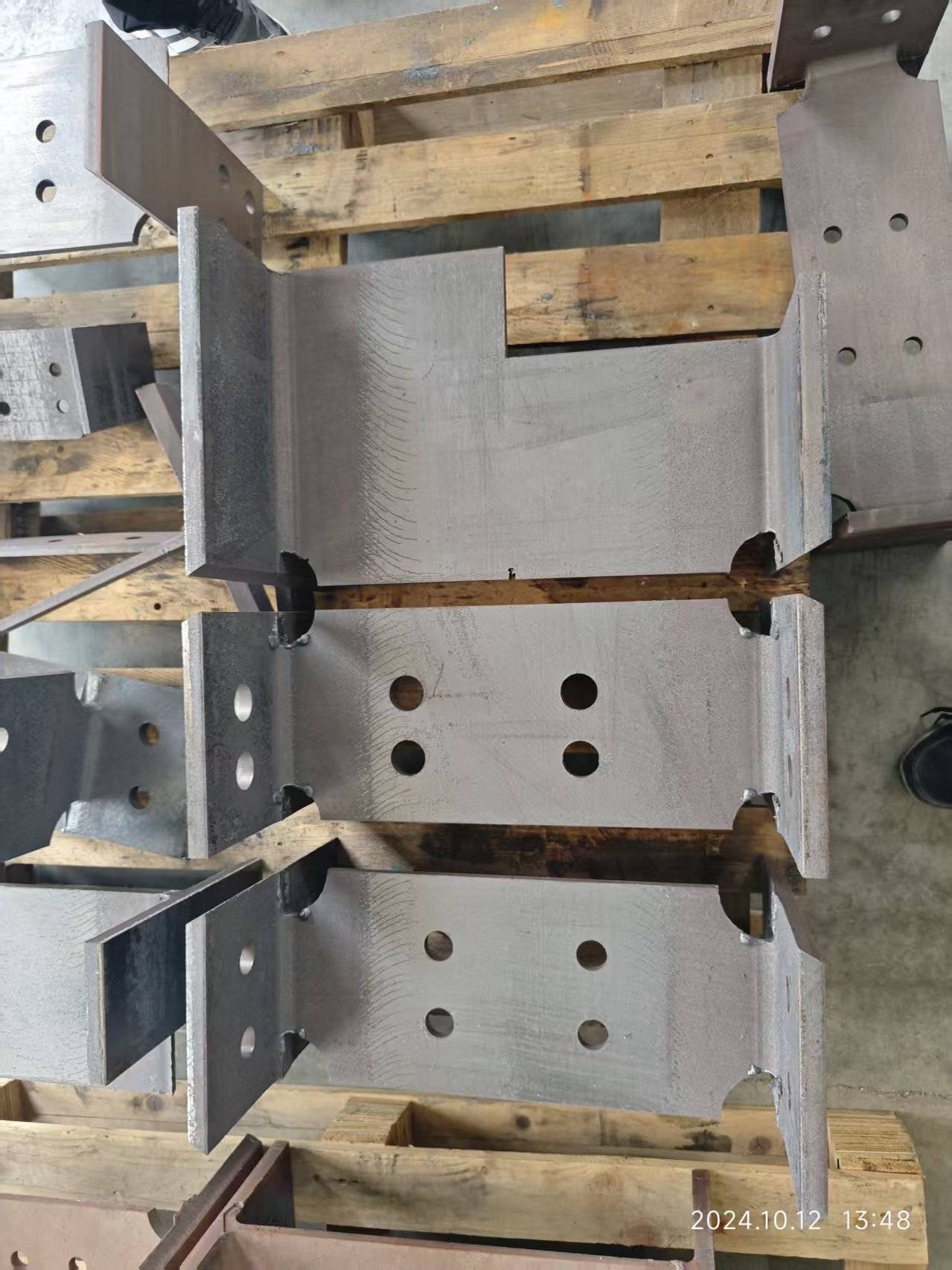
The 30kW 3D processing center integrates a sophisticated 5-axis cutting head capable of ±45° tilting. This allows for the creation of complex weld preparations—such as V, Y, X, and K-type joints—in a single pass. The precision of a fiber laser bevel is unmatched; where plasma may have a deviation of several millimeters over a long cut, a 30kW laser maintains sub-millimeter accuracy. This precision ensures that when two large tower sections are brought together for longitudinal or circumferential welding, the fit-up is perfect. A perfect fit-up reduces the amount of filler wire needed and minimizes the risk of weld defects, which are catastrophic in offshore applications.
3D Structural Processing: Beyond Flat Plates
While much of a wind tower is made of rolled plates, the “3D” aspect of these processing centers refers to their ability to handle structural shapes, tubes, and curved surfaces. A wind turbine tower is not a simple cylinder; it is a complex assembly including internal platforms, door frames (manholes), and flange connections.
The 30kW 3D system can transition from cutting flat plate to processing the elliptical or circular cut-outs for door frames with ease. Because the system can adjust the laser head’s orientation in real-time (the 3D component), it can maintain a perpendicular or specific beveled angle relative to the curved surface of a pre-rolled section. This versatility is essential for modern “smart towers” that require precise internal fittings for sensors, elevators, and electrical conduits. The ability to cut these features after the plate has been rolled ensures that the geometry remains true to the design, accounting for any slight deformations that occur during the rolling process.
Efficiency and Throughput: The 30kW Advantage
Speed is often the most cited advantage of fiber lasers, but in heavy steel, “speed” is relative. At 30kW, the processing of 30mm structural steel is significantly faster than a 12kW or 15kW system—often by a factor of two or three. However, the real efficiency gain comes from the reduction in gas consumption and the elimination of post-processing.
Using high-pressure nitrogen or air cutting on thinner sections of the tower (up to 20mm) allows for blindingly fast speeds with no oxidation. On the thicker base sections, oxygen-assisted cutting with a 30kW source allows for a very stable and clean kerf. The power allows the laser to “push” through the molten material more effectively, reducing dross and slag. For a fabricator in Hamburg, this means a tower section moves from the laser bed to the welding station in minutes, rather than hours spent on a grinding floor.
Structural Integrity and the Heat-Affected Zone (HAZ)
One of the primary concerns for structural engineers in the wind sector is the Heat-Affected Zone. Excessive heat can alter the grain structure of the steel, making it brittle. Fiber lasers, due to their high power density and localized energy delivery, produce the smallest HAZ of any thermal cutting process.
At 30kW, the laser moves so quickly that the heat does not have time to dissipate into the surrounding material. This is particularly vital for the high-strength low-alloy (HSLA) steels commonly used in wind towers. By preserving the base metal’s properties right up to the cut edge, the 30kW laser ensures that the tower remains resilient against the fatigue stresses of 25+ years of service in the ocean.
Environmental Impact and Operational Costs
The transition to fiber lasers is also a move toward sustainability. A 30kW fiber laser has a wall-plug efficiency of approximately 40-50%, compared to the 10% efficiency of older CO2 technology. Furthermore, by replacing plasma cutting, which generates significant amounts of dust and requires high-maintenance filtration, the fiber laser offers a cleaner working environment.
In the Hamburg facility, the integration of such a system reduces the total energy required per meter of cut. When scaled across the hundreds of towers needed for a single offshore wind project, the energy savings are substantial. Additionally, because the laser-cut edges are so clean, the amount of chemical cleaning and abrasive blasting required before painting is reduced, further lowering the environmental impact of the fabrication process.
The Future: AI and Automation in 3D Laser Processing
Looking ahead, the 30kW 3D processing centers in Hamburg are becoming increasingly autonomous. Modern systems are equipped with real-time monitoring sensors that adjust laser parameters on the fly to compensate for material variations or heat buildup. Vision systems can scan a pre-rolled tower section, compare it to the CAD model, and automatically adjust the 3D cutting path to ensure the ±45° bevel is perfectly executed despite any minor manufacturing tolerances in the rolling stage.
As an expert, I see the 30kW laser as the foundation of a digital twin manufacturing strategy. Every cut, every bevel, and every hole is logged, providing a “birth certificate” for each wind tower section. This level of traceability is becoming a standard requirement for insurers and developers in the global wind energy market.
Conclusion
The deployment of a 30kW Fiber Laser 3D Structural Steel Processing Center in Hamburg represents the pinnacle of modern metal fabrication. By mastering the ±45° bevel cut on a massive scale, this technology directly addresses the bottlenecks in wind turbine tower production. It offers a unique combination of extreme power, surgical precision, and 3D versatility, ensuring that the infrastructure supporting our green energy future is built stronger, faster, and more efficiently than ever before. For the engineers and fabricators in Hamburg, the 30kW fiber laser is not just a tool—it is the engine of the energy transition.