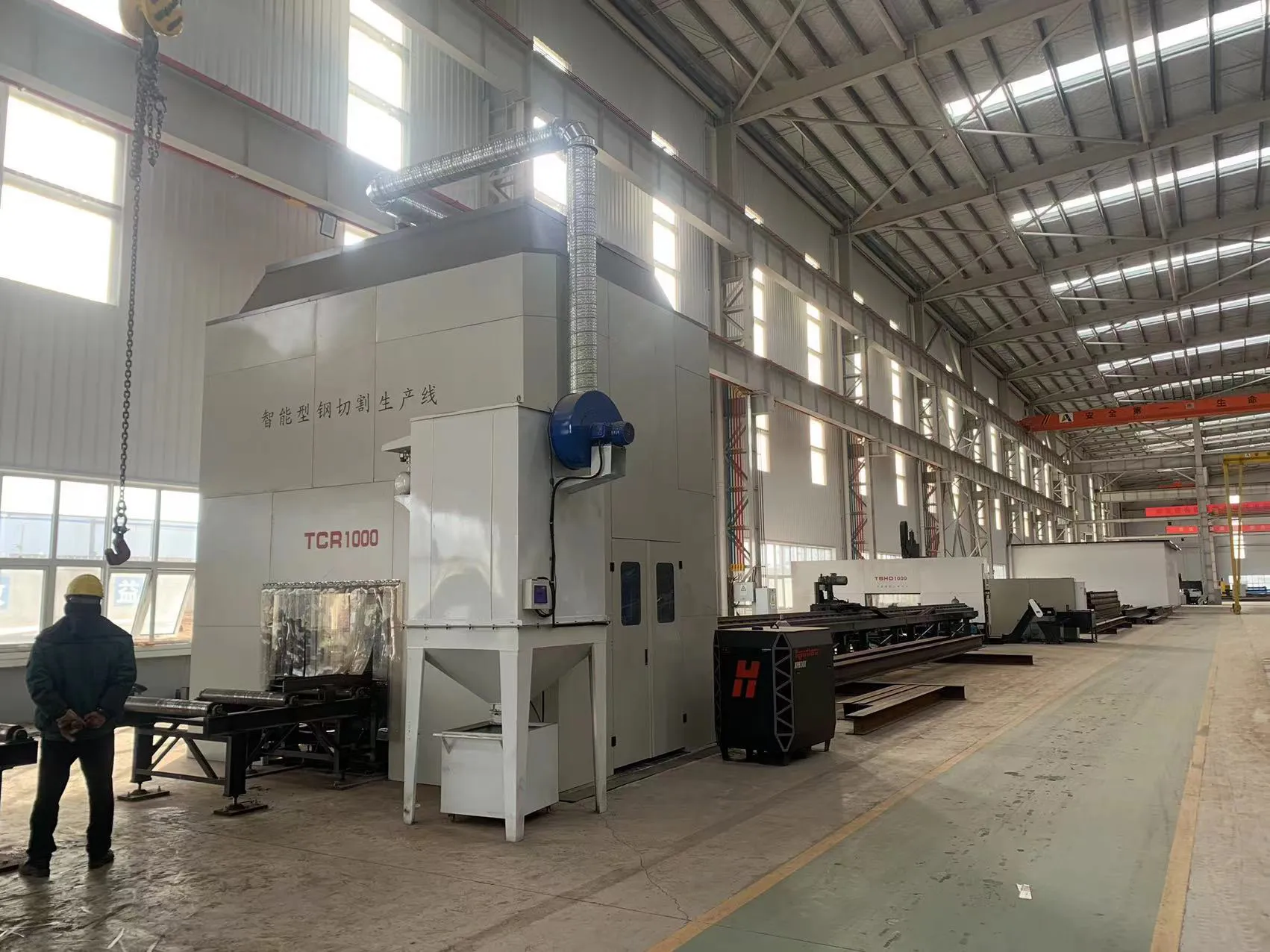
The Industrial Renaissance: Katowice as a Hub for Crane Manufacturing
Katowice and the surrounding Upper Silesian industrial region have long been the backbone of Poland’s steel and heavy machinery sectors. However, the modern crane manufacturing industry—producing everything from massive overhead bridge cranes to mobile lattice boom crawlers—requires a level of precision that traditional plasma or oxy-fuel cutting can no longer provide. The transition to 20kW fiber laser technology represents more than just a tool upgrade; it is a fundamental shift in how structural steel is manipulated.
In Katowice’s competitive landscape, crane manufacturers are tasked with using high-strength, low-alloy (HSLA) steels like S355, S700, and even S960. These materials are notorious for their difficulty to process using conventional methods without causing significant Heat-Affected Zones (HAZ) that compromise structural integrity. The 20kW fiber laser solves this by delivering an immense energy density that vaporizes steel so rapidly that the surrounding material remains cool, preserving the mechanical properties essential for lifting heavy loads safely.
Unpacking the 20kW Fiber Powerhouse
To understand why a 20kW source is the “sweet spot” for beam and channel cutting, one must look at the physics of the fiber laser. At 20,000 watts, the laser beam can maintain a stable “keyhole” welding or cutting mode through thicknesses that were previously the exclusive domain of plasma. For a crane manufacturer in Katowice, this means the ability to cut through the flanges of heavy I-beams up to 25mm or 30mm thick with nitrogen, ensuring a clean, oxide-free edge that is ready for immediate welding.
The 20kW source also offers a significant “speed buffer.” While a 10kW laser might struggle at the limit of its capacity, the 20kW system operates comfortably, resulting in a more stable beam and longer life for optical components. In the context of 24/7 crane production cycles, this reliability translates to lower downtime and a significantly lower cost-per-part compared to lower-power alternatives or legacy mechanical sawing and drilling lines.
Advanced CNC Integration for Complex Beam Geometries
Cutting a flat sheet is two-dimensional; cutting a beam or a channel is a complex three-dimensional challenge. The 20kW CNC systems deployed in Katowice feature sophisticated multi-axis heads—often 5-axis or 6-axis configurations—that allow the laser to move around the structural profile. This is critical for crane manufacturing, where beams often require complex cutouts for wiring, weight reduction holes, and precise bevels for V-butt or K-butt weld preparations.
The CNC controllers are the brains of the operation, synchronizing the rotation of the beam (via high-torque chucks) with the movement of the laser head. This synchronization allows for “one-pass” processing. Instead of a beam moving through three different stations for sawing, drilling, and milling, the 20kW laser performs all these functions in a single cabin. For Katowice-based factories, this consolidation reduces the footprint of the production line and eliminates the logistical nightmare of moving 12-meter-long steel beams between different machines.
Zero-Waste Nesting: The Economics of Efficiency
In heavy manufacturing, material costs can account for up to 70% of the total production cost of a crane. Traditionally, “offcuts” or “drops” from beams were considered an unavoidable cost of doing business. Zero-waste nesting software, powered by advanced algorithms, has changed this equation.
For a 20kW beam cutter, nesting involves more than just fitting shapes together. It requires the software to calculate the most efficient sequence of cuts across multiple lengths of raw stock. In Katowice, manufacturers are using these systems to implement “common-line cutting,” where a single laser pass creates the edges of two adjacent parts. Furthermore, the software can nest smaller components—such as gussets, brackets, or reinforcement plates—into the scrap areas of larger beam cutouts. This “part-in-part” nesting ensures that the internal skeletons of the crane’s main girders don’t go to waste, effectively pushing material utilization toward 98%.
Impact on Weld Quality and Structural Integrity
For crane manufacturers, the weld is the most critical point of failure. Traditional cutting methods often leave a thick dross or a heavily carbonized edge that must be ground down manually—a labor-intensive process that introduces human error. The 20kW fiber laser produces a surface finish that is nearly mirror-like.
Because the laser beam is so concentrated, the kerf (the width of the cut) is extremely narrow. This precision allows for tighter fit-ups during assembly. In the assembly halls of Katowice, welders are finding that parts cut with 20kW lasers require significantly less filler material and produce less distortion during the welding process. This is particularly vital for the long, box-girder constructions used in overhead cranes, where even a few millimeters of misalignment over a 30-meter span can lead to catastrophic structural issues.
The “Green” Shift in Silesian Heavy Industry
Katowice is at the forefront of Poland’s “Green Deal” in manufacturing. While a 20kW laser sounds like it would consume vast amounts of electricity, it is actually more energy-efficient than the technologies it replaces. Fiber lasers have a wall-plug efficiency of roughly 35-40%, compared to the 10% efficiency of older CO2 lasers.
By eliminating the need for secondary processes like grinding, drilling, and deburring, the total energy footprint of a finished crane component is drastically reduced. Furthermore, the zero-waste nesting contributes to sustainability goals by minimizing the amount of scrap steel that needs to be transported back to smelters for recycling, thereby reducing the carbon footprint of the entire supply chain.
Navigating the Challenges of High-Power Laser Adoption
Transitioning to a 20kW CNC system is not without its challenges. The intensity of a 20kW beam requires specialized optics and high-grade “cover slides” to protect the cutting head from back-reflections and dust. In the dusty environment of a traditional steel fabrication shop in Katowice, maintaining cleanroom-like conditions for the laser’s optical path is a significant operational shift.
Moreover, safety is paramount. A 20kW laser beam is invisible and capable of causing instant fire or injury from reflected radiation. This necessitates fully enclosed “Class 1” safety housings for the entire beam-cutting line. Katowice’s manufacturers are investing heavily in operator training, moving workers from the manual torch to the CNC console, a shift that also helps address the regional shortage of skilled manual welders and fabricators.
Conclusion: The Future of Crane Fabrication
The integration of 20kW CNC Beam and Channel Laser Cutters with zero-waste nesting is redefining the capabilities of Katowice’s crane manufacturing sector. By combining the raw power needed for thick structural steel with the surgical precision of fiber optics and the intelligence of AI-driven software, Polish manufacturers are securing their place as leaders in the European market.
As the demand for larger, more complex infrastructure grows globally, the ability to produce high-quality, lightweight, and cost-effective crane components will be the ultimate competitive advantage. In the heart of Poland’s industrial engine, the roar of the plasma torch is being replaced by the silent, blindingly fast hum of the 20kW fiber laser—a clear signal that the future of heavy engineering has arrived in Katowice.