The Dawn of Ultra-High Power: Why 30kW Matters for Offshore Steel
As a fiber laser expert, I have witnessed the rapid escalation of power levels over the last decade. However, the jump to 30kW represents more than just a numerical increase; it is a fundamental change in the physics of material interaction. In the context of Sao Paulo’s heavy industrial hubs—where the demand for offshore platform components is surging—30kW is the threshold that allows laser technology to fully displace traditional thermal cutting methods.
At 30kW, the energy density at the focal point is sufficient to vaporize thick-section carbon steel and stainless steel almost instantaneously. For offshore platforms, which rely on heavy-duty structural members (often exceeding 25mm to 50mm in thickness), this power level ensures that cutting speeds remain commercially viable. Furthermore, the 30kW source allows for the use of compressed air or nitrogen as a shielding gas on thicknesses where oxygen was previously the only option. This results in a cleaner, oxide-free cut surface, which is essential for the high-integrity coating systems used to prevent corrosion in the South Atlantic’s harsh maritime environment.
Universal Profile Processing: Beyond Flat Sheets
The term “Universal Profile” refers to the system’s ability to handle the complex geometries of structural steel—I-beams, H-beams, U-channels, angles, and square or round tubing. For the offshore sector, where space-frame structures and complex piping manifolds are common, a flat-bed laser is insufficient.
The 30kW Universal Profile system in Sao Paulo utilizes a multi-axis robotic arm or a specialized 5-axis cutting head integrated with a heavy-duty rotary chuck and conveyor system. This allows the laser to move around the profile, cutting holes, notches, and complex miters in a single setup. In the construction of offshore modules, the ability to process a 12-meter H-beam with all bolt holes and weld preparations pre-cut to sub-millimeter tolerances reduces assembly time on the shipyard floor by as much as 40%. The “universal” aspect ensures that whether the project requires structural bracing or fluid transport piping, the same machine can handle the workload.
The Precision of ±45° Bevel Cutting for Weld Preparation
In offshore engineering, the strength of a structure is only as good as its welds. Standard square cuts are rarely sufficient; thick plates and profiles require V, X, Y, or K-shaped bevels to ensure full-penetration welds. Traditionally, these bevels were created using manual grinding, milling, or specialized plasma bevel heads, all of which are time-consuming and prone to human error.
The 30kW fiber laser system equipped with a ±45° beveling head changes the equation. The laser can execute complex bevel geometries during the primary cutting cycle. Because the fiber laser beam is so concentrated, the Heat Affected Zone (HAZ) is significantly smaller than that of plasma cutting. This is critical for the high-strength low-alloy (HSLA) steels frequently used in the Santos Basin offshore projects. A smaller HAZ means the metallurgical properties of the steel remain intact, reducing the risk of hydrogen-induced cracking in the weld zone. The ±45° range allows for the creation of precise landing zones and sharp knife edges, ensuring that when two massive structural components meet, the fit-up is perfect.
Strategic Importance in the Sao Paulo-Santos Industrial Axis
Sao Paulo is the industrial heart of Brazil, serving as the primary supply chain hub for the offshore oil and gas operations in the Campos and Santos Basins. As Petrobras and other global energy giants expand their Pre-salt operations, the technical requirements for subsea equipment and platform topsides have become increasingly stringent.
Deploying a 30kW Universal Profile laser in this region offers a significant competitive advantage. Local fabricators can now meet international standards (such as AWS or ISO maritime specs) with greater consistency. The high labor costs and the scarcity of highly skilled manual welders in some sectors make the automation provided by the laser system a necessity. By delivering “weld-ready” parts straight from the machine, Sao Paulo shops can reduce their reliance on manual edge preparation, thereby lowering the total cost per ton of fabricated steel.
Technical Challenges and Engineering Solutions
Operating a 30kW laser is not without its challenges. The primary concern is thermal management. At these power levels, the cutting head optics are under immense stress. Expert-level systems utilize sophisticated “smart” heads equipped with sensors to monitor the temperature of the protective windows and the focus position in real-time.
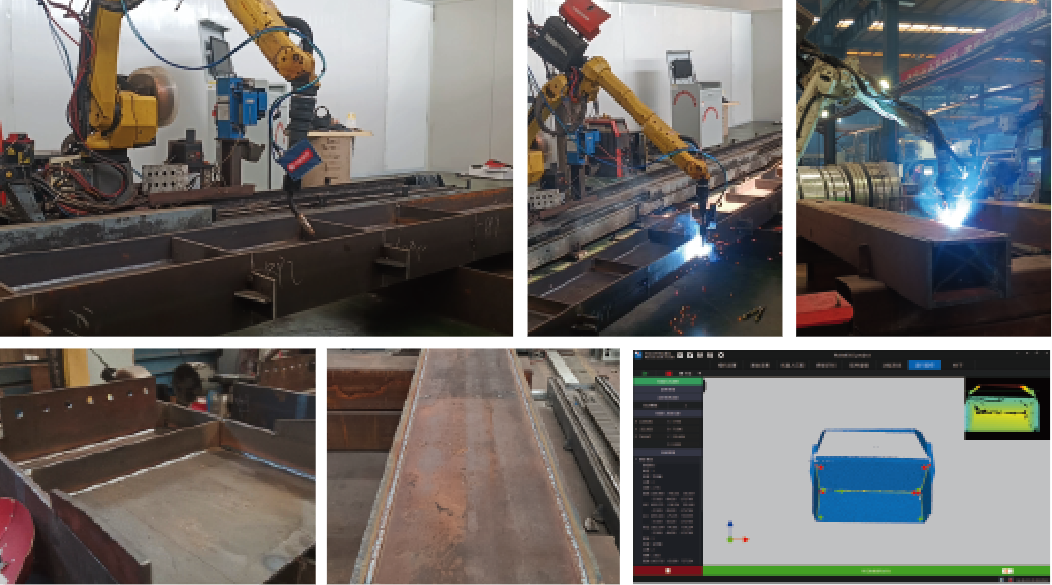
Furthermore, the beam delivery system must be perfectly tuned. For universal profiles, the software (CAD/CAM) plays a role as vital as the hardware. The system must account for the structural “drift” or slight deformations inherent in long steel beams. Advanced 30kW systems in Sao Paulo use touch-probes or laser scanning to map the actual profile of the beam before cutting starts, adjusting the cutting path in real-time to ensure that every hole and bevel is positioned correctly relative to the beam’s actual dimensions, not just its theoretical model.
Economic and Environmental Impact on Offshore Fabrication
From an expert perspective, the ROI (Return on Investment) of a 30kW system is driven by throughput and material savings. While the initial capital expenditure is high, the speed of a 30kW laser on 20mm steel is approximately 3 to 4 times faster than a 12kW system. When compared to plasma, the laser uses significantly less electricity per meter of cut and eliminates the need for expensive abrasive consumables.
Environmentally, the fiber laser is a much “greener” technology. It produces fewer fumes than plasma and eliminates the chemical waste associated with some mechanical machining processes. For companies in Sao Paulo striving to meet ESG (Environmental, Social, and Governance) goals—which are increasingly required by international oil companies—transitioning to high-power fiber laser cutting is a clear step forward. The reduction in scrap material, facilitated by the laser’s narrow kerf (cut width), also ensures that expensive alloys are used with maximum efficiency.
Conclusion: The Future of Brazilian Offshore Infrastructure
The deployment of a 30kW Fiber Laser Universal Profile system with ±45° beveling represents the pinnacle of current fabrication technology. For the offshore platforms that will define Brazil’s energy future, this technology provides the essential pillars of modern manufacturing: speed, precision, and repeatability.
As Sao Paulo continues to solidify its role as a global leader in maritime engineering, the adoption of ultra-high-power lasers will be the differentiator. We are moving toward a future where the “digital shipyard” becomes a reality—where a 3D model is sent to a 30kW laser, and hours later, a complex structural profile emerges, perfectly cut and beveled, ready to be robotically welded into a structure that will withstand the pressures of the deep Atlantic for decades. As an expert in the field, I see this not just as an upgrade in machinery, but as a total transformation of the industrial landscape in South America.