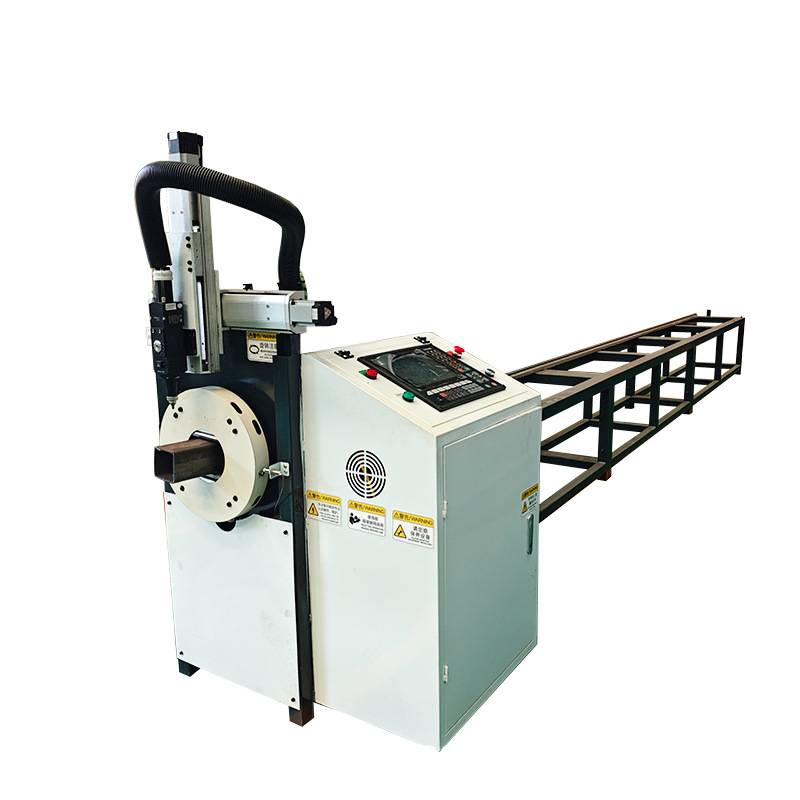
The Strategic Emergence of Rayong as a Renewable Energy Hub
Rayong has long been the industrial heartbeat of Thailand, situated within the Eastern Economic Corridor (EEC). Traditionally dominated by the automotive and petrochemical industries, the region is currently undergoing a “green” metamorphosis. The installation of a 20kW 3D Structural Steel Processing Center specifically for wind turbine towers is a testament to this transition.
Wind turbine towers are massive structures, often exceeding 100 meters in height, requiring thick-walled steel sections that can withstand immense dynamic loads and environmental stresses. For manufacturers in Rayong, the proximity to major ports like Laem Chabang and the established supply chain of the EEC makes it an ideal location for producing these oversized components. However, the challenge has always been the speed and precision of processing heavy-duty structural steel. Traditional methods like plasma cutting or oxy-fuel cutting, while capable of handling thickness, often fall short in terms of edge quality and heat-affected zone (HAZ) management. The introduction of 20kW fiber laser technology solves these legacy issues, providing a competitive edge for Thai manufacturers on the global stage.
Unleashing the Power: The 20kW Fiber Laser Advantage
In the world of fiber lasers, 20kW represents a “sweet spot” for heavy industrial applications. While 30kW and 40kW machines exist, the 20kW source provides the most stable and cost-effective solution for the 20mm to 50mm plate thicknesses typically found in wind tower construction.
From a physics perspective, the high power density of a 20kW beam allows for “high-speed sublimation cutting” even in thick materials. This results in a significantly narrower kerf compared to plasma. More importantly for wind towers, the fiber laser produces a much smaller Heat Affected Zone. In structural engineering, a large HAZ can lead to embrittlement of the steel, which is a major failure risk in the high-vibration environment of a wind turbine. By utilizing a 20kW source, the processing center ensures that the molecular integrity of the steel remains intact, meeting the stringent ISO and IEC standards required for renewable energy infrastructure.
3D Cutting and Weld Preparation: The Precision of 5-Axis Motion
Wind turbine towers are not simple cylinders; they are complex conical structures with various cutouts for access doors, cable entries, and internal platforms. Furthermore, the thick plates must be beveled at specific angles (V, X, K, or Y-shaped joints) to facilitate deep-penetration welding.
The “3D” aspect of the Rayong facility refers to the 5-axis cutting head. Unlike standard 2D lasers that only move on an X-Y plane, the 3D head can tilt and rotate. This allows the laser to perform “bevel cutting” in a single pass. In traditional manufacturing, a plate would be cut to size, and then a worker would manually grind the bevel. This is labor-intensive, prone to human error, and creates a bottleneck.
The 3D processing center automates this entirely. For a wind tower flange or a door frame section, the 20kW laser can cut the complex geometry and the welding bevel simultaneously. The precision of these cuts—often within tolerances of ±0.1mm—ensures that when the sections are moved to the welding station, the fit-up is perfect. This reduces weld wire consumption and minimizes the risk of weld defects, which are incredibly costly to repair once a tower is partially assembled.
Maximizing Throughput with Automatic Unloading Systems
In high-output environments like those in Rayong, the “beam-on” time is the primary metric of profitability. If a 20kW laser finishes a cut in record time but the machine sits idle for 30 minutes while a crane clears the bed, the technological advantage is lost. This is where the Automatic Unloading System becomes critical.
Processing structural steel for wind towers involves handling parts that can weigh several tons. The integrated automatic unloading system utilizes heavy-duty conveyor belts and hydraulic lift-forks designed to sync with the laser’s cutting cycle. As one section of the steel plate is finished, the system intelligently moves the parts to a sorting area while simultaneously clearing scrap.
This automation serves two purposes. First, it ensures continuous operation (24/7 production capability). Second, it dramatically improves workplace safety. Manually moving large, sharp-edged steel components is one of the highest-risk activities in a fabrication shop. By removing the human element from the immediate cutting zone, the facility adheres to the highest international safety standards, making it more attractive to global investors and partners.
Optimizing the Supply Chain for Wind Tower Components
The specific application of this center for wind turbine towers covers several key components:
1. **Tower Shells:** Large-format plates that are cut and beveled before being rolled into cans.
2. **Internal Stiffeners:** Reinforcement rings that provide structural rigidity.
3. **Flanges:** The massive rings used to bolt tower sections together.
4. **Door Frames and Cable Ports:** Complex cutouts that require high precision to maintain the structural integrity of the tower base.
By centralizing the production of these parts in Rayong using a 20kW 3D system, manufacturers can significantly reduce the lead time for a single tower. In an industry where project timelines are often measured in years, the ability to shave weeks off the fabrication schedule is a massive competitive advantage. Furthermore, the efficiency of the fiber laser reduces electricity consumption per meter of cut compared to older technologies, aligning with the “green” ethos of the wind energy industry.
Technical Challenges and the Rayong Solution
Operating a 20kW laser in a tropical environment like Rayong presents unique challenges, primarily regarding thermal management and humidity. The 3D Structural Steel Processing Center is equipped with high-capacity industrial chillers and pressurized, filtered optical paths.
The high humidity of coastal Thailand can cause condensation on laser optics, which at 20kW, would lead to instantaneous catastrophic failure of the cutting head. To combat this, the system uses a nitrogen-purged “clean room” environment within the beam delivery path. Furthermore, the 20kW source itself is housed in a climate-controlled cabinet to ensure the laser diodes maintain a constant operating temperature, ensuring power stability during long cutting cycles on thick plates.
Economic Impact and the Future of Energy in Thailand
The deployment of this technology in Rayong does more than just cut steel; it builds a local ecosystem of high-tech manufacturing. As local engineers and operators become proficient in 5-axis laser processing and automated systems, Thailand moves up the value chain from basic assembly to high-precision engineering.
This facility is positioned to serve not only the domestic Thai wind market—which is seeing growth in provinces like Chaiyaphum and Nakhon Ratchasima—but also the burgeoning offshore wind markets in Vietnam, Taiwan, and Australia. The 20kW 3D Structural Steel Processing Center acts as a force multiplier, allowing a single facility in Rayong to produce components that meet the quality standards of the most demanding European and American developers.
Conclusion: A New Standard in Structural Fabrication
The 20kW 3D Structural Steel Processing Center with Automatic Unloading represents the pinnacle of current laser application technology. In the context of Rayong’s industrial landscape, it serves as a beacon of the “Thailand 4.0” initiative, blending heavy industry with high-tech automation.
For the wind energy sector, the implications are clear: faster production, higher safety, and superior structural integrity. As turbine towers continue to reach higher into the atmosphere to harness the wind, the precision provided by 20kW fiber lasers will be the foundation upon which the next generation of renewable energy infrastructure is built. The synergy of high power, 3D motion, and intelligent automation ensures that Rayong remains at the forefront of the global transition to sustainable energy.