The Dawn of 30kW Power in Structural Fabrication
For decades, the structural steel industry relied on a combination of band saws, beam drill lines, and plasma cutters to process the heavy sections required for large-scale infrastructure. However, as architectural designs for stadiums in cities like Charlotte become more ambitious—featuring sweeping curves, massive cantilevers, and intricate skeletal frames—the limitations of these traditional methods have become clear. Enter the 30kW fiber laser.
A 30kW power source is a game-changer for heavy-duty I-beam profiling. Unlike lower-wattage lasers that struggle with the thickness and scale of structural steel, 30,000 watts of power allows for the rapid piercing and cutting of carbon steel sections up to 50mm thick and beyond. In the context of stadium construction, where beams are often significantly thick to support thousands of spectators, this power ensures that the laser doesn’t just “creep” through the metal but glides. The high energy density results in a narrower kerf and a significantly smaller Heat Affected Zone (HAZ), preserving the metallurgical integrity of the I-beam—a critical factor in load-bearing stadium components.
Infinite Rotation 3D Head: The Art of Five-Axis Precision
The true “brain” of this profiler is the Infinite Rotation 3D Head. Traditional 3-axis lasers are limited to flat planes, which is insufficient for the multi-dimensional nature of an I-beam. To process the flanges and the web of a beam simultaneously, a 5-axis or 6-axis system is required.
The “Infinite Rotation” capability is particularly crucial. In older 3D heads, the rotation was limited by internal cabling, requiring the head to “unwind” after a certain degree of movement, which wasted time and increased the risk of error. An infinite rotation head uses advanced slip-ring technology and sophisticated kinematics to rotate indefinitely. This allows the laser to transition seamlessly from cutting a bolt hole in the flange to beveling the edge of the web for a weld joint in one continuous motion.
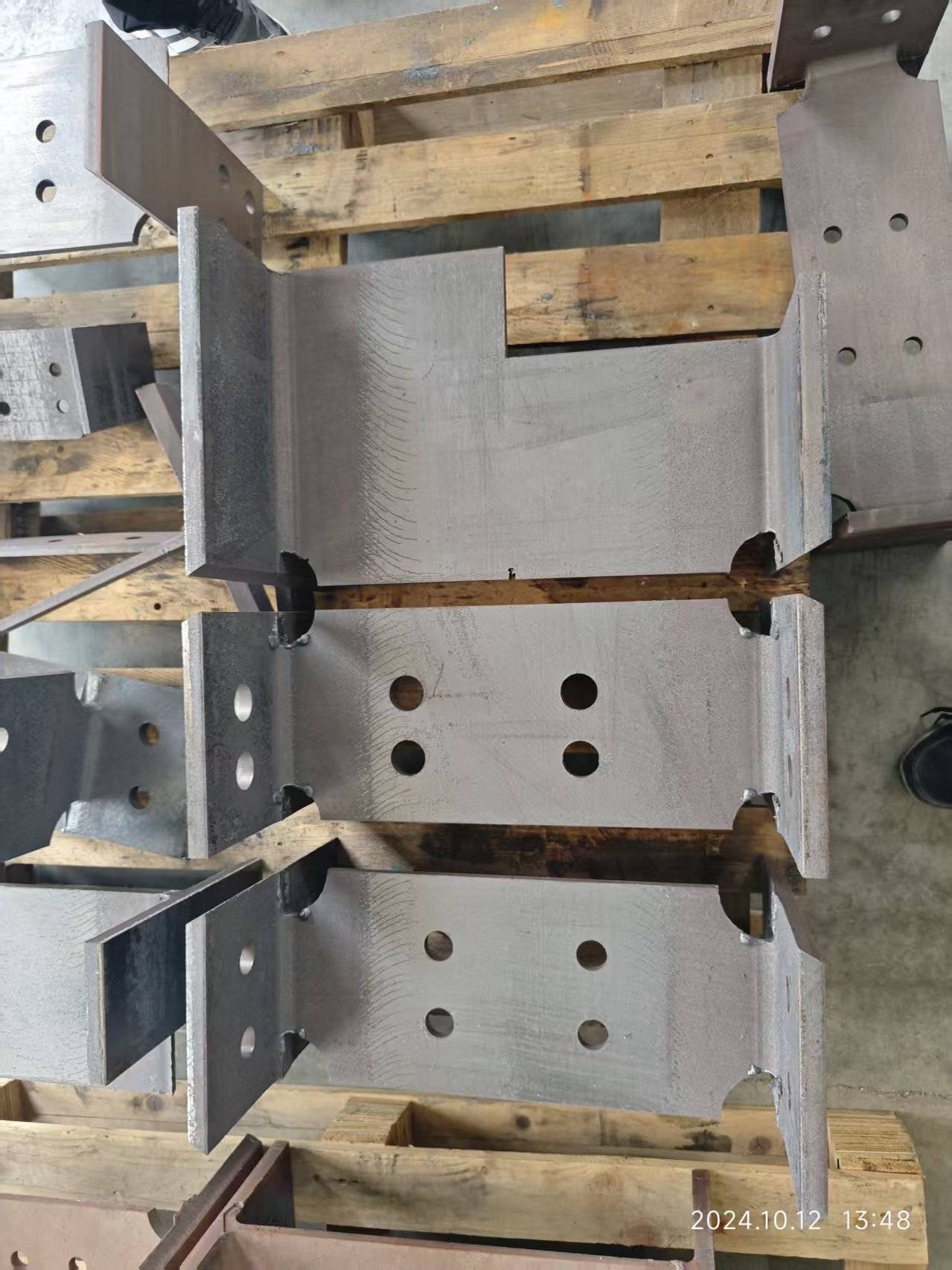
For stadium steel, which often requires complex geometries to accommodate seating tiers and roofing systems, this 3D capability allows for the creation of compound miters and “Saddle Cuts” with surgical precision. The head can tilt up to 45 or even 60 degrees, providing the perfect V, X, or K-shaped bevels required for high-strength welding without the need for secondary grinding.
Optimizing Stadium Steel Structures in Charlotte
Charlotte, North Carolina, has established itself as a hub for both professional sports and high-end construction engineering. The demand for localized, high-capacity steel fabrication is at an all-time high. When fabricating steel for a stadium, the primary challenges are scale, repetition, and safety.
Stadium trusses often involve hundreds of identical but complexly notched beams. Using the 30kW I-beam profiler, a Charlotte-based fabricator can automate the entire process. The machine’s heavy-duty loading system handles beams that can weigh several tons and extend over 12 meters in length.
By utilizing advanced CAD/CAM nesting software, the profiler interprets 3D models directly from architects. It calculates the exact path for the infinite rotation head to follow, ensuring that every bolt hole aligns perfectly across miles of steel. In a project like a stadium renovation or a new arena, where the “fit-up” on-site must be flawless to avoid costly delays, the ±0.1mm tolerance of a fiber laser is a significant upgrade over the ±2.0mm tolerance of traditional plasma cutting.
Efficiency and Throughput: Beyond the Cut
The economic argument for a 30kW laser profiler in a heavy-industrial setting like Charlotte revolves around “Total Process Consolidation.” In a traditional shop, an I-beam might move from a saw to a drill line, then to a manual layout station, and finally to a plasma station for beveling. Each move requires a crane, a rigger, and time.
The 30kW Fiber Laser Heavy-Duty Profiler acts as an all-in-one workstation. It performs:
1. **Cut-to-length:** Replacing the band saw.
2. **Hole making:** Replacing the drill line (and doing so faster).
3. **Marking/Etching:** Laser-etching assembly part numbers and weld locations directly onto the steel.
4. **Beveling:** Preparing edges for full-penetration welds.
By consolidating these four steps into one machine, fabricators can see a throughput increase of up to 300%. For large-scale projects, this means the steel for an entire stadium section can be processed in days rather than weeks. Furthermore, the 30kW laser’s ability to use nitrogen as a shield gas for thinner sections or high-pressure oxygen for thicker ones ensures that the cut edge is clean and free of dross, meaning the steel can go straight from the laser to the paint shop or the job site.
Technical Challenges and Solutions in High-Power Profiling
Operating a 30kW laser on heavy-duty beams is not without its challenges. The primary concern is thermal management and the protection of the optics. At 30,000 watts, the heat generated at the cutting tip is immense. The 3D head must be equipped with sophisticated cooling systems and “smart sensors” that monitor the health of the protective windows in real-time.
In Charlotte’s humid climate, air filtration and beam path stability are also critical. The 30kW profilers are typically housed in climate-controlled enclosures or use specialized air dryers to ensure the laser beam remains consistent over long distances. Additionally, the “heavy-duty” aspect of the machine refers to its bed and chuck system. To handle massive I-beams, the machine utilizes a series of synchronized power chucks that rotate and feed the beam through the cutting zone, ensuring that even if the beam has slight mill-scale deformations or “camber,” the laser maintains the correct focal distance.
The Environmental and Labor Impact
Sustainability is becoming a core requirement for municipal projects in North Carolina. Fiber lasers are significantly more energy-efficient than older CO2 lasers or high-definition plasma systems when measured by “output per watt.” Furthermore, the precision of the laser reduces material waste. Nesting software can squeeze the maximum number of parts out of a single I-beam, minimizing the “drop” or scrap steel.
From a labor perspective, the 30kW profiler addresses the skilled welder and machinist shortage. Since the laser provides a perfect edge prep and marks the assembly locations, the “fit-up” process on the stadium floor becomes a much simpler task of “connect the dots.” This allows junior welders to perform at a higher level and reduces the physical strain of manual layout and grinding.
Conclusion: Building the Future of Charlotte
The 30kW Fiber Laser Heavy-Duty I-Beam Laser Profiler with Infinite Rotation 3D Head is more than a piece of machinery; it is a strategic asset for the future of North Carolina’s infrastructure. As stadium designs continue to push the boundaries of physics and aesthetics, the tools used to create them must keep pace.
By bringing this level of power and precision to Charlotte, fabricators are not only improving their bottom line but are also enabling architects to dream bigger. The ability to process heavy I-beams with the speed of light and the grace of a 5-axis robotic system ensures that the next generation of stadiums will be safer, more beautiful, and built with an efficiency that was once the stuff of science fiction. In the world of structural steel, the 30kW fiber laser is the new gold standard, and its impact will be seen in the skylines and arenas of tomorrow.