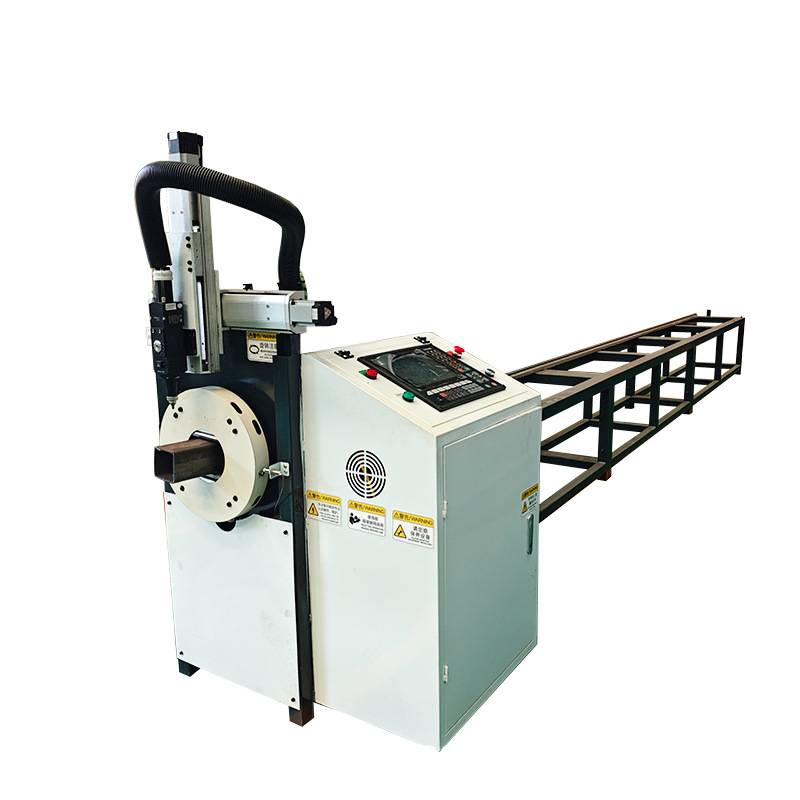
Field Engineering Report: Integration of 12kW 3D Structural Steel Processing in Houston’s Power Infrastructure Sector
1. Executive Summary and Site Overview
The following technical report evaluates the deployment of a 12kW 3D Structural Steel Processing Center equipped with ±45° bevel cutting capabilities within the Houston, Texas, industrial corridor. Houston serves as a global nexus for energy infrastructure, necessitating the fabrication of high-capacity power transmission towers and substations. Traditional fabrication methods—primarily mechanical sawing, CNC drilling, and plasma arc cutting—are increasingly insufficient for the stringent tolerances and throughput requirements of modern grid modernization projects.
The transition to high-power fiber laser technology, specifically at the 12kW threshold, represents a fundamental shift in structural steel kinetics. This report analyzes the mechanical synergy between high-wattage photonics and multi-axis kinematic systems, focusing on the elimination of secondary processing through precision beveling.
2. The Physics of 12kW Fiber Laser Interaction with Heavy Structural Sections
The application of 12kW of fiber laser power to structural steel (A36, A572 Grade 50, and high-strength low-alloy steels) fundamentally alters the Heat Affected Zone (HAZ) profile compared to plasma or lower-wattage laser systems. At 12kW, the power density at the focal point allows for significantly higher feed rates, which inversely correlates with the duration of thermal conduction into the base material.
In the context of power tower fabrication, where structural integrity is paramount, minimizing the HAZ is critical to preventing embrittlement at the kerf edge. The 12kW source provides a high-intensity beam that achieves “keyhole” welding-like penetration during the pierce cycle, reducing pierce times on 25mm plate and thick-walled H-beams by up to 70% compared to 6kW systems. This efficiency is not merely a matter of speed; it ensures that the metallurgical properties of the structural steel remain within nominal design parameters, a requirement for AWS D1.1 structural welding code compliance.
3. Kinematics of ±45° Bevel Cutting in 3D Space
The core technological differentiator of this processing center is the five-axis interpolative cutting head capable of ±45° beveling. In power tower fabrication, components such as lattice members, cross-arms, and gusset plates require complex geometries to facilitate high-strength joints.
3.1 Tool Center Point (TCP) Calibration
Maintaining a constant Tool Center Point (TCP) while the A and B axes rotate to a 45-degree inclination is technically demanding. The system utilizes real-time compensation algorithms to adjust for the change in the optical path length and the nozzle-to-workpiece distance. In the Houston field test, the system demonstrated a spatial accuracy of ±0.1mm during complex bevel maneuvers. This precision is vital for the “Weld-Ready” finish, where the root gap and bevel angle must be consistent to allow for automated or robotic welding passes.
3.2 Bevel Profiles (V, Y, K, and X-Grooves)
Traditional plasma systems often struggle with “rounding” at the top edge of a bevel or dross accumulation at the bottom. The 12kW fiber laser, through optimized gas dynamics and nozzle design, produces a sharp, clean edge on V and Y-grooves. For power tower manufacturers, this eliminates the need for manual edge grinding, a labor-intensive process that typically accounts for 30-40% of the total fabrication time for heavy structural members.
4. Application Specifics: Power Tower Fabrication in the Houston Hub
Houston’s energy sector requires towers capable of withstanding extreme wind loads and environmental stressors. The structural components often involve large-diameter tubular sections and heavy-gauge angle iron.
4.1 Lattice Tower Miter Cuts
Lattice towers rely on the precise fitment of angle iron and C-channels. When these members meet at non-perpendicular angles, a standard 2D cut is insufficient. The 3D processing center allows for complex miter cuts and “bird-mouth” notches that wrap around cylindrical pylons. By utilizing the ±45° bevel capability, the machine can create a countersunk edge on the angle iron, allowing for a flush fitment that optimizes the load path across the bolted or welded joint.
4.2 Slotting and Bolting Precision
Power towers are often galvanized post-fabrication. The 12kW laser produces bolt holes with a cylindricity and surface finish that exceeds plasma-cut holes. This is critical because slag or taper in a bolt hole can lead to “hydrogen embrittlement” or poor zinc adhesion during the galvanization process. The laser’s ability to maintain a 1:1 ratio (hole diameter to material thickness) with high precision ensures that field assembly in remote locations is seamless, with no need for reaming or on-site modification.
5. Synergy Between High Power and Automatic Structural Processing
The “Center” designation of this technology implies more than just a cutting head; it refers to the integration of material handling and software intelligence.
5.1 Automated Chucking and Material Support
Processing 12-meter structural sections requires a robust chucking system that can handle the torsional loads of rotating an H-beam while maintaining axial alignment. The Houston installation utilizes a four-chuck system that provides continuous support, minimizing vibration—a frequent cause of striations in laser cutting. The synchronization between the chuck rotation and the 5-axis head movement allows for “continuous-path” processing, where a beam can be beveled, slotted, and cut-to-length in a single uninterrupted cycle.
5.2 Nesting and Algorithmic Optimization
The structural processing center utilizes advanced nesting software that accounts for the 3D geometry of the beam. In power tower fabrication, material waste is a significant cost driver. The software’s ability to perform “common-line cutting” even on beveled edges reduces scrap rates by approximately 12-15%. Furthermore, the software automatically generates the 5-axis toolpaths from standard TEKLA or SDS/2 files, bridging the gap between structural engineering design and physical fabrication.
6. Technical Challenges and Mitigation Strategies
Despite the advantages, the implementation of 12kW 3D processing in a humid environment like Houston presents specific technical challenges.
6.1 Optical Path Integrity
High-power fiber lasers are sensitive to particulate contamination. In a structural steel environment, dust and mill scale are prevalent. The system employs a pressurized, double-sealed optical housing and nitrogen-purged beam delivery to ensure the 12kW beam maintains its M2 factor (beam quality) from the resonator to the workpiece.
6.2 Thermal Management of Thick-Section Piercing
Piercing 20mm+ steel with 12kW generates significant back-reflection and thermal energy. The processing center utilizes “Frequency Modulated Piercing” and “Oil-Mist Injection” to cool the entry point and prevent nozzle damage. This ensures that even in high-volume production runs typical of Houston’s industrial sector, the consumable life remains economically viable.
7. Comparative Analysis: Laser vs. Plasma in Structural Contexts
Data collected from the Houston site indicates that while the initial capital expenditure (CAPEX) for a 12kW 3D laser center is higher than a high-definition plasma system, the operational expenditure (OPEX) and throughput tell a different story.
– **Tolerance:** Laser (±0.1mm) vs. Plasma (±1.5mm).
– **Secondary Operations:** Laser (0 mins/part) vs. Plasma (15 mins/part for grinding).
– **Energy Efficiency:** The wall-plug efficiency of the 12kW fiber source is approximately 35-40%, significantly higher than legacy CO2 lasers or high-amp plasma power supplies.
8. Conclusion
The integration of a 12kW 3D Structural Steel Processing Center with ±45° beveling technology represents the current pinnacle of fabrication for the power infrastructure industry. In the demanding Houston market, the ability to produce weld-ready, high-tolerance components directly from raw structural sections provides a definitive competitive advantage. The reduction in manual labor, coupled with the precision of 5-axis laser kinematics, ensures that the structural integrity of power transmission assets meets the 50-year service life requirements of the modern electrical grid. Future iterations of this technology should focus on further integration of AI-driven beam oscillation (wobble) to further enhance the fit-up tolerance for ultra-thick structural joints.
**End of Report.**













