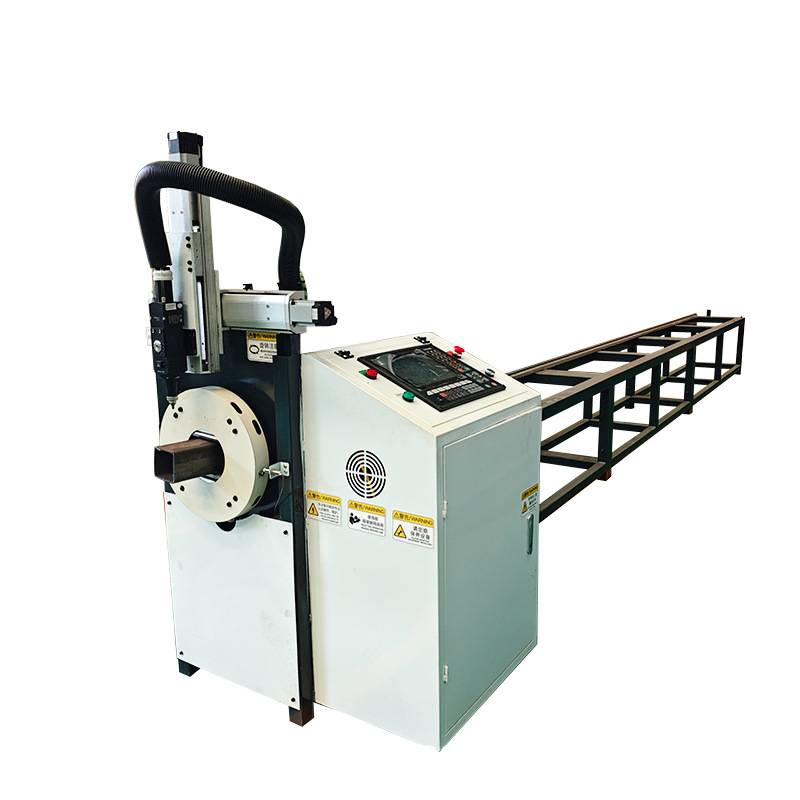
Field Report: Integration of 30kW 3D Fiber Laser Processing in Rayong Power Tower Fabrication
1. Introduction and Regional Context
The industrial landscape of Rayong, Thailand, has seen a significant shift toward high-capacity energy infrastructure, necessitated by the expansion of the national grid and the Eastern Economic Corridor (EEC) initiatives. This field report evaluates the deployment of a 30kW 3D Structural Steel Processing Center, specifically configured for the fabrication of high-voltage transmission towers (Power Towers). Historically, this sector relied on a combination of CNC drilling, punching, and mechanical sawing. However, the introduction of ultra-high-power fiber laser technology coupled with multi-axis 3D cutting heads represents a paradigm shift in structural steel throughput and geometric accuracy.
2. Technical Specifications of the 30kW Fiber Laser Source
The heart of the processing center is the 30kW fiber laser source. In the context of structural steel (typically ASTM A36 or high-strength low-alloy steels like A572), the 30kW power density allows for unprecedented feed rates on sections exceeding 20mm in thickness.
Key technical advantages observed in the field include:
- Enhanced Plasma Suppression: At 30kW, the high energy density maintains a stable keyhole even when processing thick-walled H-beams and large-diameter hollow structural sections (HSS). This minimizes dross adhesion on the internal surfaces.
- Gas Dynamics: The system utilizes high-pressure nitrogen for thinner sections to achieve oxide-free cuts, while oxygen-assisted cutting on 25mm+ plates is optimized through sophisticated nozzle sensing technology, reducing the Heat Affected Zone (HAZ) significantly compared to plasma or oxy-fuel alternatives.
- Thermal Management: The processing center incorporates advanced chilling units to mitigate thermal lensing in the cutting head, ensuring consistent beam quality during continuous 24-hour shift cycles common in the Rayong industrial zones.
3. 3D Kinematics and Structural Geometry
Unlike 2D plate cutting, power tower components—comprising angles, channels, and heavy-duty beams—require complex 3D intersections and beveling for weld preparation. The processing center utilizes a 5-axis or 6-axis fiber laser head capable of ±45-degree tilting.
In the fabrication of lattice towers, the intersection of diagonal bracing with main leg members requires precise “coping” or “fish-mouth” cuts. The 30kW 3D system automates these complex geometries in a single pass. This eliminates the need for secondary grinding or manual beveling, which are primary sources of dimensional error in traditional fabrication workflows. The system’s software integrates seamlessly with Tekla or SDS/2 BIM environments, converting structural models directly into G-code with kerf compensation specific to the 30kW beam profile.
4. Automatic Unloading: Solving the Heavy Steel Bottleneck
The processing of heavy structural steel (often 6m to 12m in length) presents significant material handling challenges. Manual unloading or forklift-assisted retrieval often leads to material deformation, surface scratching, or, more critically, loss of part traceability.
The “Automatic Unloading” technology integrated into this 30kW center utilizes a servo-synchronized conveyor and hydraulic lift-arm system.
4.1 Precision Alignment Maintenance
When a 30kW laser cuts through a heavy-duty angle bar, the release of internal stresses can cause the material to “spring” or bow. The automatic unloading system employs pneumatic centering and clamping units that maintain the material datum until the final cut is completed. This ensures that bolt hole patterns—crucial for power tower assembly—remain within the strict ±0.5mm tolerance required by electrical utility standards.
4.2 Operational Efficiency and Safety
In the Rayong facility, the transition to automatic unloading reduced the cycle time between finished parts by 40%. The system automatically sorts processed members into predefined bins or output racks based on their length and project ID. This reduces the labor overhead and mitigates the safety risks associated with moving heavy, sharp-edged steel members manually.
5. Application in Power Tower Fabrication
Power towers are subject to extreme wind loads and structural tension. In Rayong’s coastal environment, the integrity of the steel and the precision of the galvanizing-ready finish are paramount.
5.1 Bolt Hole Integrity
The primary failure point in transmission towers is often the bolted connection. Traditional punching can cause micro-fractures around the hole circumference. The 30kW laser, however, produces a “high-fidelity” hole with a perpendicularity deviation of less than 1% of the material thickness. This ensures 100% bolt-to-surface contact, improving the structural resonance characteristics of the tower.
5.2 Beveling for Weld Preparations
For heavy-duty tubular poles or substation structures, the 30kW 3D head performs $V$, $Y$, and $K$ type bevels. By achieving these bevels during the initial cutting phase, the processing center eliminates the “fit-up” issues that typically plague the welding department. The precision of the 30kW cut results in a narrower root gap, reducing the volume of weld filler metal required and decreasing overall heat input into the structure.
6. Synergy Between Power and Automation
The synergy between the 30kW source and the automated structural processing center is most evident in the “nesting” efficiency. Modern nesting algorithms for 3D sections can now utilize “common cut” logic even on complex beams. When the 30kW laser is running at peak velocity, the automated loading and unloading systems must operate in perfect synchronization to prevent the laser from idling.
In the monitored Rayong site, the “Beam-on” time increased from 55% (with manual handling) to 88% with the integrated automatic unloading system. This represents a massive increase in the Return on Investment (ROI) for the 30kW fiber source, which is a high-cap-ex asset.
7. Environmental and Metallurgical Considerations
The high-power fiber laser processing environment in Rayong requires specific attention to humidity control and dust extraction. The 30kW system is equipped with a high-volume partitioned dust collection system that captures the fine particulate matter generated by high-speed vaporized steel. Metallurgical analysis of the cut edges shows a refined grain structure with minimal carbon precipitation, ensuring that the subsequent hot-dip galvanizing process achieves a uniform and high-adhesion zinc coating.
8. Conclusion
The deployment of the 30kW Fiber Laser 3D Structural Steel Processing Center with Automatic Unloading has set a new benchmark for power tower fabrication in the Rayong region. By combining ultra-high-power laser dynamics with precision 3D kinematics and automated material handling, fabricators can achieve a level of geometric accuracy and throughput that was previously unattainable. The reduction in secondary processing, coupled with the enhanced structural integrity of the finished components, positions this technology as the standard for future infrastructure projects across the ASEAN energy sector.
As a senior expert in the field, it is my assessment that the integration of automatic unloading is not merely an “add-on” but a critical component that allows the 30kW laser to reach its full industrial potential in heavy structural applications.













