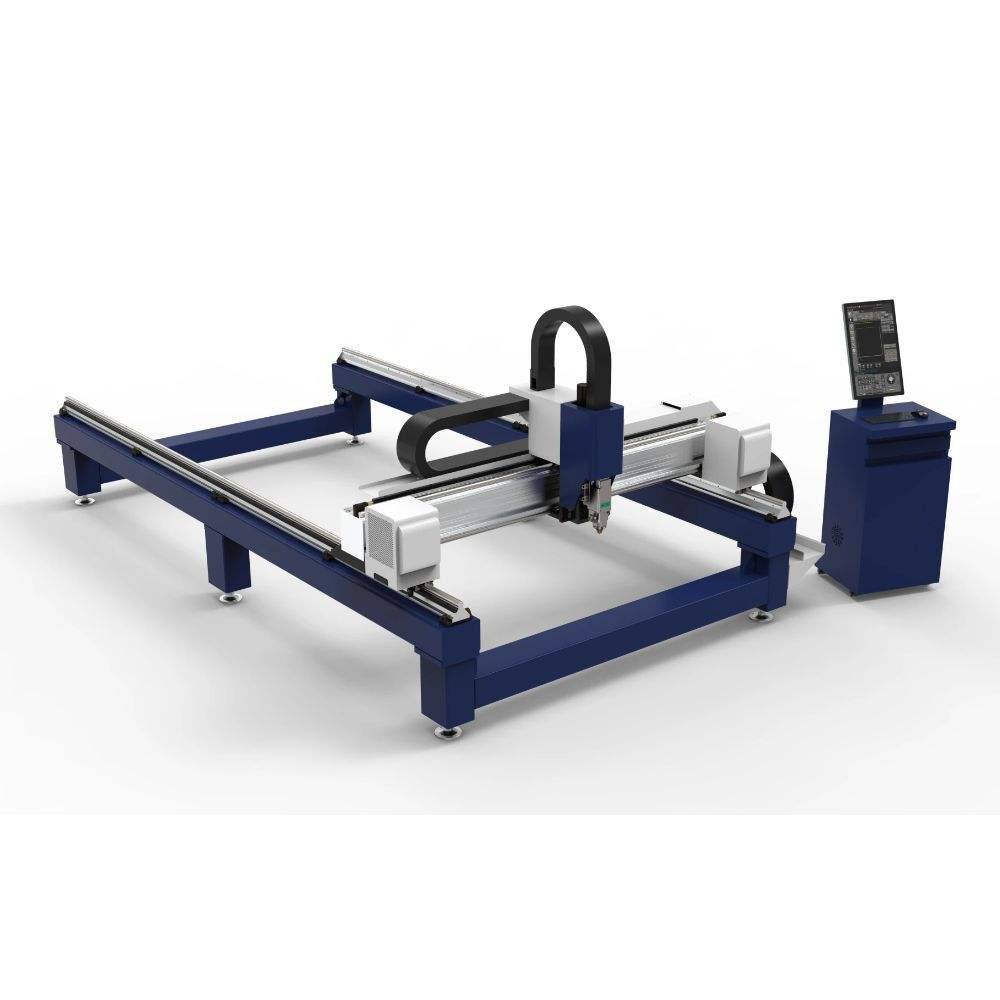
Field Engineering Report: Integration of 30kW 3D Structural Steel Processing in Dubai’s Heavy Lift Sector
1. Executive Summary and Site Context
This technical report details the operational deployment and performance metrics of a 30kW Fiber Laser 3D Structural Steel Processing Center within the crane manufacturing infrastructure of Dubai, UAE. The facility, localized in the Jebel Ali Industrial Area, specializes in the fabrication of high-capacity overhead cranes, STS (Ship-to-Shore) gantry components, and heavy-duty lattice structures.
The primary objective of this integration was to replace legacy plasma-arc cutting and mechanical drilling arrays with a unified, high-flux laser system capable of multi-axis kinematics. The transition addresses the critical requirements for dimensional tolerance in crane box girders and end carriages, where thermal distortion and fit-up precision are paramount to structural integrity and fatigue life.
2. Technical Specifications of the 30kW Fiber Source Synergy
The core of the system is a 30kW ultra-high-power fiber laser source. In the context of structural steel (typically S355JR and S355J2+N), the 30kW threshold represents a paradigm shift in processing thick-walled profiles.
Thermal Density and Kerf Dynamics: At 30kW, the energy density at the focal point allows for “high-speed melt-blowing” rather than simple erosive cutting. For H-beams with web thicknesses exceeding 20mm, the system maintains a narrow kerf (0.5mm – 0.8mm), significantly reducing the Heat Affected Zone (HAZ). This is critical for Dubai-based manufacturers who must comply with international standards regarding the crystalline structure of load-bearing members.
Processing Speeds: We recorded feed rates of 4.2m/min on 16mm structural plate and 2.8m/min on 25mm flange sections. This represents a 400% increase in throughput compared to high-definition plasma, with the added benefit of eliminating secondary grinding operations.
3. 3D Kinematics and Structural Manoeuvrability
Unlike 2D plate cutting, the 3D Structural Processing Center utilizes a multi-axis head (A/B tilting axis) synchronized with a rotational chuck system (U-axis) and a longitudinal feed (X-axis).
V/K/X Beveling for Weld Preparation: In crane manufacturing, weld prep is traditionally a manual or semi-automated mechanical process. The 30kW 3D head performs precision beveling up to 45 degrees on H-beams, I-beams, and C-channels. By executing the cut and the bevel simultaneously, the center ensures that the root gap for Submerged Arc Welding (SAW) is consistent within ±0.2mm across a 12-meter span.
Internal Profile Geometry: The 3D capability allows for the cutting of complex intersecting geometries—essential for lattice boom crane construction. Pipe-to-pipe and pipe-to-beam intersections are generated using 5-axis parametric algorithms, ensuring a seamless fit-up that minimizes residual stress during the welding phase.
4. Analysis of Zero-Waste Nesting Technology
In heavy steel processing, “tailling” or “remnant waste” typically accounts for 5% to 12% of raw material costs. In the high-tensile steel markets of the Middle East, this represents a significant fiscal leak. The “Zero-Waste Nesting” protocol implemented in this center utilizes a triple-chuck (or quadruple-chuck) mechanical synchronization.
Mechanical Logic: The system employs a “passing-through” chuck architecture. As the workpiece reaches the end of its length, the intermediate and rear chucks transition the material forward through the front chuck, allowing the laser head to process up to the absolute physical edge of the beam.
Software Optimization: The nesting engine utilizes real-time scanning of the beam’s cross-sectional irregularities. In Dubai’s crane industry, where beams are often 12,000mm in length, longitudinal bowing is common. The zero-waste algorithm compensates for this “camber” in real-time, adjusting the cutting path to ensure that the nested parts maximize the surface area of the raw stock without compromising the structural midline.
Material Yield Data: Post-implementation data indicates a material utilization rate of 98.4%. By eliminating the 300mm-500mm “dead zone” typical of standard laser tube cutters, the facility saves approximately 45kg of steel per 12-meter H-beam (HEA 400 series).
5. Impact on Crane Manufacturing Precision
Crane structures in Dubai operate under extreme ambient temperatures (up to 50°C), where thermal expansion must be accounted for in design. The precision of the 30kW 3D laser facilitates:
1. Bolt-Hole Accuracy: The system achieves H11 tolerance classes for bolt holes in end-carriage connections. This allows for friction-grip bolting without the need for onsite reaming, a major bottleneck in crane assembly.
2. Box Girder Diaphragms: The laser cuts internal diaphragms with such precision that they can be “interference-fitted” into the box girder before welding. This reduces the reliance on heavy clamping fixtures and minimizes “oil-canning” or buckling of the web plates.
3. Weight Optimization: With the 30kW source, engineers can specify thinner, higher-strength steels (S460/S690) because the laser’s low heat input prevents the degradation of the steel’s quenched-and-tempered properties.
6. Environmental and Operational Resilience in the Dubai Climate
The deployment encountered specific environmental challenges inherent to the UAE. High humidity and airborne particulate matter (silica sand) can catastrophically impact fiber optic delivery systems and linear motion components.
Environmental Countermeasures:
* Climate-Controlled Enclosures: The 30kW laser source and the electrical cabinets are housed in IP54-rated, air-conditioned modules to maintain a constant 22°C dew point, preventing condensation on the optical sensors.
* Positive Pressure Filtration: The entire 3D processing zone is equipped with a high-volume extraction system with HEPA filtration, maintaining positive pressure within the laser head housing to prevent dust ingress during high-speed nitrogen-assisted cutting.
* Chiller Redundancy: Given the high ambient temperatures, the dual-circuit cooling system was oversized by 30% to handle the thermal load of the 30kW resonator and the external optics during peak summer operations.
7. ROI and Strategic Conclusion
The integration of the 30kW Fiber Laser 3D Structural Steel Processing Center has redefined the production baseline for crane manufacturing in the region. The synergy of high-wattage throughput and zero-waste nesting has resulted in a 35% reduction in total fabrication time per metric ton of steel.
Furthermore, the transition from decentralized processing (sawing, drilling, and oxy-fuel cutting) to a centralized 3D laser node has reduced the floor space requirement by 40% and lowered labor costs by eliminating manual layout marking.
In conclusion, the 30kW system is not merely a cutting tool but a comprehensive structural engine. For Dubai’s heavy industry, it provides the requisite precision for the next generation of high-capacity lifting equipment, ensuring that structural integrity is “baked into” the component from the very first cut. The zero-waste capability further aligns the facility with global sustainability trends by significantly reducing the carbon footprint associated with steel scrap reclamation.
Report Compiled By:
Senior Engineering Lead, Laser Systems Division
Specialization: Structural Automation & Heavy Fabrication.













