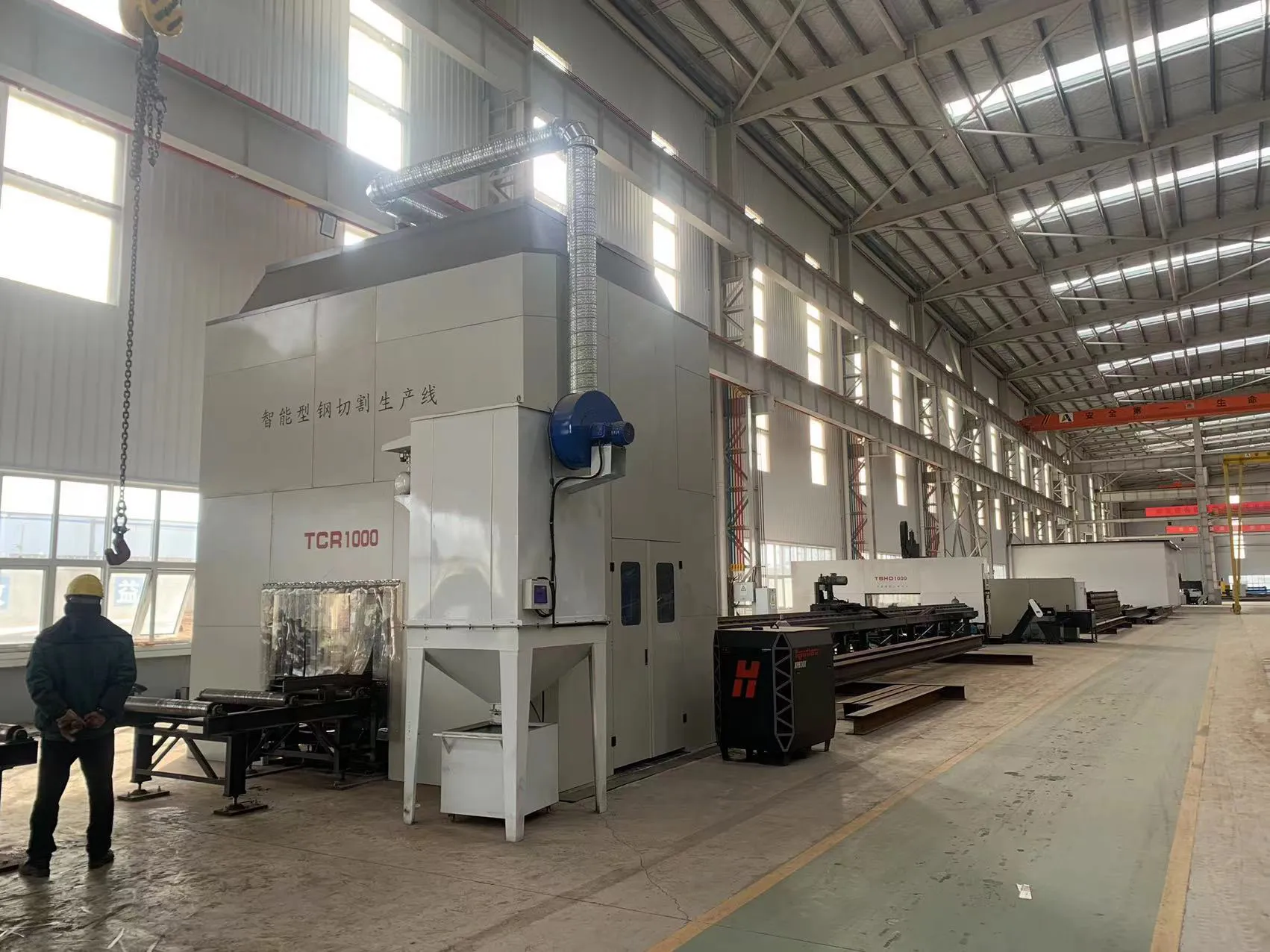
Field Technical Report: Implementation of 12kW CNC Beam Laser Processing in Queretaro’s Power Infrastructure Sector
1.0 Introduction and Site Context
This report analyzes the deployment of high-power fiber laser technology within the industrial corridor of Queretaro, Mexico—a primary hub for North American energy infrastructure fabrication. The subject of this evaluation is the integration of a 12kW CNC Beam and Channel Laser Cutter, specifically configured for the production of lattice-type power transmission towers.
Traditional fabrication in this sector has long relied on mechanical punching, shearing, and band-sawing. However, the demand for increased structural integrity and faster assembly timelines for high-voltage (400kV+) lines has necessitated a shift toward automated 3D laser processing. The primary objective of this field commissioning was to validate the “Zero-Waste Nesting” protocols while maintaining the strict ASTM and CFE (Comisión Federal de Electricidad) standards for structural steel.
2.0 Technical Specifications of the 12kW Fiber Source
The heart of the system is a 12kW ytterbium fiber laser source. In the context of beam and channel processing, wattage is not merely a metric of speed but a determinant of the Heat Affected Zone (HAZ) and edge perpendicularity.
At 12kW, the energy density allows for “high-speed nitrogen shielding” on carbon steel profiles up to 16mm thick, and oxygen-assisted cutting for sections exceeding 25mm. In Queretaro’s high-altitude environment (approx. 1,820m), gas dynamics are slightly modified. The 12kW source provides the necessary overhead to maintain a stable plasma plume during the piercing phase of heavy-wall L-sections and C-channels. This power level ensures that the kerf width remains consistent, which is critical when fabricating interlocking tower joints where tolerances are limited to ±0.5mm over a 12-meter profile.
3.0 Zero-Waste Nesting: Algorithmic and Mechanical Synergy
The most significant advancement observed during this field deployment is the proprietary “Zero-Waste Nesting” technology. In standard CNC tube and beam processing, a “tailing” or “dead zone” of 200mm to 500mm is typically discarded because the chucks cannot move the material past the focal point without losing physical grip.
3.1 The Four-Chuck Kinematic Chain
To achieve zero-waste, the system utilizes a four-chuck independent movement architecture. This allows the laser head to cut between Chuck 2 and Chuck 3 while Chuck 4 pulls the final remnant through the work envelope. This mechanical hand-off is synchronized via the CNC’s bus-based control system.
3.2 Nesting Optimization for Lattice Members
In Power Tower fabrication, the bill of materials (BOM) consists of hundreds of unique lengths of angle steel (L-profiles). The nesting software performs real-time analysis of the production queue, “micro-nesting” shorter bracing members into the remnants of longer chord members. By utilizing common-line cutting—where one laser pass creates the edges of two distinct parts—material utilization rates in the Queretaro facility transitioned from an average of 82% (mechanical sawing) to 98.5% (12kW Laser).
4.0 Application in Power Tower Structural Elements
Power towers require extreme precision in hole placement for bolting. A deviation of 1mm can lead to “bolt-hole hunting” during field erection, significantly increasing labor costs and compromising structural safety.
4.1 L-Profile (Angle Steel) Processing
The 12kW laser excels in processing A572 Grade 50 steel, common in tower construction. The CNC system compensates for the inherent “toe” and “heel” thickness variations found in hot-rolled angle steel. By using a capacitive height sensing head, the 12kW laser maintains a constant standoff distance even when the profile exhibits structural camber or sweep.
4.2 C-Channel and H-Beam Integration
For the base structures of substations being built in the Queretaro region, heavy C-channels are required. The 3D cutting head, capable of ±45-degree beveling, allows for the simultaneous cutting of the web and flanges, including the preparation of weld chamfers in a single pass. This eliminates the secondary process of manual grinding, which is a major bottleneck in heavy steel fabrication.
5.0 Structural Integrity and Metallurgical Observations
A recurring concern in structural engineering is the effect of laser cutting on the ductility of the steel. Our field analysis focused on the 12kW source’s ability to minimize the HAZ.
Through high-speed processing, the “dwell time” of the heat source on any single point is minimized. Macro-etching tests conducted on 20mm A36 steel samples cut at the site showed a HAZ depth of less than 0.3mm. This is significantly lower than that produced by plasma cutting (which can exceed 1.5mm). Consequently, the hardness increase at the cut edge is negligible, allowing for galvanization without the risk of hydrogen embrittlement or edge cracking during the dipping process.
6.0 Operational Efficiency Metrics in the Queretaro Field Site
During the 30-day evaluation period, the following metrics were recorded:
* **Throughput Increase:** The 12kW laser replaced three separate mechanical lines (punching, sawing, and drilling). Total output increased by 42% per shift.
* **Consumable Cost Reduction:** While the nitrogen consumption is high for 12kW cutting, the elimination of drill bits, saw blades, and punch dies resulted in a net 15% reduction in consumable overhead.
* **Labor Reallocation:** The automated loading and unloading systems meant that two operators could manage the output that previously required six.
7.0 Challenges and Environmental Factors
The Queretaro industrial zone experiences significant temperature fluctuations between day and night. Fiber laser stability is contingent upon thermal management. The commissioned unit utilizes a dual-circuit industrial chiller with ±0.1°C precision.
Furthermore, the local electrical grid can be prone to surges. The installation of a dedicated 150kVA stabilized power supply was mandatory to protect the 12kW ytterbium diodes. These environmental compensations are essential for maintaining the “Zero-Waste” logic, as any mid-program reset due to power instability would result in material spoilage.
8.0 Conclusion
The deployment of the 12kW CNC Beam and Channel Laser Cutter in Queretaro represents a paradigm shift for Mexican power infrastructure fabrication. The “Zero-Waste Nesting” technology effectively addresses the historical inefficiency of profile remnants, turning previously scrapped steel into usable components.
From a senior engineering perspective, the synergy between high-wattage fiber sources and multi-chuck kinematics provides a level of geometric freedom and precision that traditional mechanical methods cannot replicate. As Queretaro continues to expand its role as an energy hub, the adoption of this technology will be the benchmark for Tier-1 structural steel suppliers. The 12kW system is not merely a tool for cutting; it is an integrated manufacturing platform that redefines the economics of heavy structural processing.
**Field Report End.**
*Author: Senior Engineer, Structural Steel Division*













