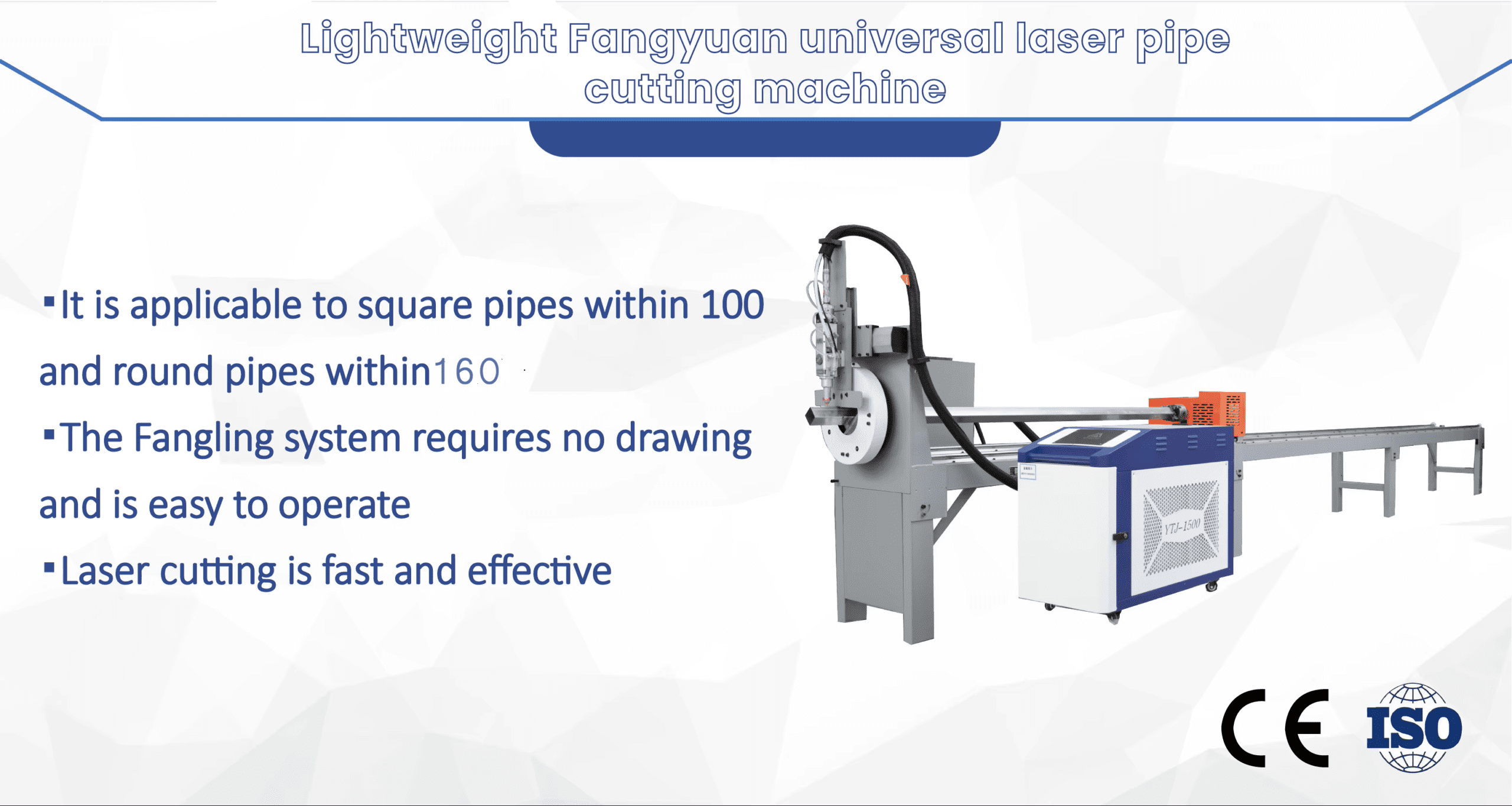
Field Assessment: High-Power 3D Structural Steel Processing in Dammam Bridge Engineering
The evolution of bridge engineering in the Eastern Province of Saudi Arabia, particularly within the industrial corridor of Dammam, has necessitated a paradigm shift in structural fabrication. The transition from traditional plasma arc cutting and mechanical drilling to 12kW 3D Fiber Laser Structural Processing Centers represents a critical technological milestone. This report analyzes the integration of high-wattage laser sources with 6-axis motion control systems and “Zero-Waste” nesting algorithms, evaluating their impact on structural integrity, material yield, and assembly tolerances in heavy infrastructure projects.
In the context of Dammam’s aggressive coastal environment, where salt-spray and high humidity accelerate corrosion, the precision of structural joints is paramount. Traditional fabrication methods often leave jagged edges or excessive heat-affected zones (HAZ) that compromise protective coating adhesion. The 12kW 3D laser center addresses these challenges by providing a non-contact, high-velocity thermal cutting process that ensures superior edge quality and dimensional accuracy within ±0.05mm.
12kW Fiber Laser Integration: Physics of High-Power Structural Cutting
The core of the processing center is the 12kW ytterbium-doped fiber laser source. At this power density, the beam parameter product (BPP) is optimized to maintain a consistent focal spot even across the varying thicknesses of heavy-duty H-beams and I-beams common in bridge girders.
Thermal Dynamics and Kerf Control
The 12kW output allows for “high-speed vaporization cutting” rather than simple melt-and-blow processes. This minimizes the heat input into the parent material, significantly reducing the width of the HAZ. In bridge engineering, a minimized HAZ is critical for maintaining the metallurgical properties of high-tensile steel (such as S355JR or ASTM A572), ensuring that the fatigue resistance of the structural members is not compromised during the fabrication of complex notches or bolt holes.
Optical Configuration for 3D Kinematics
The 3D cutting head utilizes a specialized internal cooling circuit and high-pressure nitrogen/oxygen gas delivery systems. In Dammam’s ambient high temperatures, the thermal stability of the collimating and focusing lenses is maintained via a closed-loop chilled water system, preventing “focal shift” during prolonged duty cycles on 20-meter structural profiles.
Zero-Waste Nesting: Algorithmic Material Optimization
Traditional structural processing—specifically saw-and-drill lines—inherently produces “tails” or scrap remnants, often ranging from 300mm to 800mm per beam. In large-scale bridge projects in Dammam, where thousands of tons of steel are processed, this waste represents a significant fiscal and logistical burden.
The Multi-Chuck Synchronous Drive
The “Zero-Waste” technology is achieved through a triple or quadruple-chuck kinematic arrangement. By utilizing independent servo-driven chucks, the processing center can pass the structural profile through the cutting envelope while maintaining constant grip. When the cutting head reaches the end of a profile, the lead chuck releases and the trailing chucks drive the material to the absolute edge of the beam. This allows for cutting at the “zero point” of the material, effectively eliminating the tail scrap.
Nesting Intelligence for Complex Profiles
The software layer employs heuristic algorithms to calculate the optimal sequence of cuts for H-beams, C-channels, and rectangular hollow sections (RHS). By “common-line cutting” between two adjacent parts on a single beam, the system reduces the number of pierces and the total travel distance of the laser head. In bridge fabrication, where large gusset plates and stiffeners are often integrated into the main beam geometry, this nesting precision ensures a material utilization rate exceeding 98%.
Application in Dammam Bridge Engineering
The bridge infrastructure in Dammam requires massive structural components capable of withstanding both high static loads and dynamic stresses from heavy transport. The 12kW 3D processing center is specifically deployed for the fabrication of “Box Girders” and “Truss Systems.”
Precision Weld Preparation
The 6-axis capability of the 3D laser head allows for the creation of complex bevels (K, V, X, and Y types) directly on the ends of structural members. In bridge engineering, weld prep is traditionally a manual or semi-automated grinding process. The laser center automates this, providing a precise 45-degree bevel on a 25mm thick H-beam flange in a single pass. This ensures full-penetration welds that meet the stringent requirements of the Saudi Arabian Ministry of Transport (MOT) and international standards like AWS D1.5.
Complex Hole Patterns and Notching
Bridges require intricate bolting patterns for splices and diaphragms. The 12kW laser achieves high-speed piercing through 20mm+ web thicknesses, producing bolt holes with zero taper. This eliminates the need for secondary reaming. Furthermore, the 3D capability allows for “shorthand” notches and cope cuts in beams that would be geometrically impossible for a standard 2D laser or a mechanical saw.
Operational Efficiency and Field Metrics
Analysis of the processing center’s performance in the Dammam field environment reveals a significant increase in throughput compared to conventional multi-machine lines.
Comparative Throughput Analysis
In a standard 10-hour shift, a traditional line (consisting of a band saw, a drill line, and a manual oxy-fuel station) typically processes 8 to 12 tons of structural steel, depending on complexity. The 12kW 3D Structural Laser Center has demonstrated the capacity to process 25 to 30 tons in the same timeframe. This 250% increase in efficiency is attributed to the consolidation of three distinct processes (cutting, drilling, and bevelling) into a single automated station.
Elimination of Secondary Operations
One of the most critical advantages in the Dammam bridge sector is the “weld-ready” finish of the laser-cut edge. The surface roughness (Ra) of a 12kW laser cut on 20mm steel is approximately 12.5–25 μm, which is significantly smoother than plasma cutting (>50 μm). This eliminates the requirement for edge grinding, saving approximately 15 man-hours per ton of fabricated steel.
Structural Integrity and Corrosion Resistance
Dammam’s proximity to the Persian Gulf makes corrosion the primary failure mode for steel structures. The precision of the 12kW laser plays a subtle but vital role in long-term durability.
Surface Morphology for Coating Adhesion
Because the laser cutting process uses high-pressure nitrogen for stainless steel or controlled oxygen for carbon steel, the resulting edge is free of the dross and slag associated with plasma. This clean edge allows for immediate application of zinc-rich primers and epoxy coatings. In bridge engineering, where coating failure often starts at sharp edges or burrs, the smooth radius provided by a 3D laser cut significantly extends the maintenance cycle of the bridge.
Reduced Residual Stress
Mechanical punching of holes in heavy structural steel induces localized residual stress and micro-cracking around the hole perimeter. The 12kW laser, being a non-contact thermal process with a very narrow kerf, prevents these micro-structural defects. This is particularly important for the fatigue life of bridge components subjected to cyclic loading from vehicular traffic.
Conclusion: The Future of Structural Fabrication in Dammam
The implementation of 12kW 3D Structural Steel Processing Centers with Zero-Waste Nesting represents the technical peak of current steel fabrication. For the bridge engineering sector in Dammam, the technology provides a dual advantage: drastic reductions in material waste and an unprecedented level of fabrication precision. As infrastructure projects in the region continue to grow in scale and complexity, the reliance on automated, high-power laser systems will become the baseline requirement for contractors aiming to meet both the timeline and the safety standards of modern civil engineering. The synergy of 12kW power and 3D kinematics effectively bridges the gap between digital design and physical structural realization, ensuring that Dammam’s infrastructure is built with maximum efficiency and longevity.













