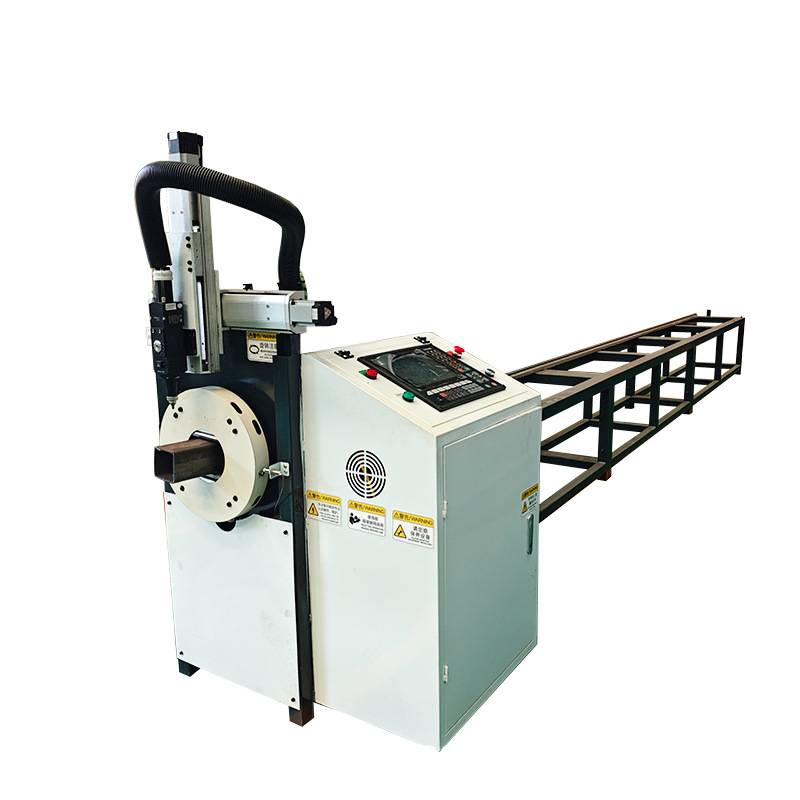
Field Engineering Report: Integration of 30kW Ultra-High Power Fiber Laser Systems in Hamburg Airport Structural Frameworks
1. Project Scope and Environmental Context
The expansion of terminal infrastructure and hangar facilities at Hamburg Airport (Flughafen Hamburg) necessitates the use of heavy-duty H-beam profiles (HEA, HEB, and HEM series) capable of sustaining high static and dynamic loads. Given the architectural complexity of modern terminal designs—characterized by wide spans and cantilevered roof structures—the precision of steel fabrication is paramount. This report evaluates the field performance of the 30kW Fiber Laser H-Beam Cutting Machine, specifically focusing on its deployment for processing S355J2+N structural steel.
The Hamburg site presents specific logistical challenges, including tight construction windows and the requirement for high-tolerance fits to minimize on-site welding adjustments. Traditional methods involving mechanical sawing, drilling, and oxy-fuel torching were deemed insufficient for the required throughput and precision. The introduction of the 30kW fiber laser source, coupled with multi-axis kinematics and zero-waste nesting algorithms, represents a significant shift in structural steel processing.
2. 30kW Fiber Laser Source: Thermal Dynamics and Penetration
The core of the system is the 30kW ytterbium fiber laser source. In the context of H-beam processing, where flange thicknesses frequently exceed 25mm, power density is the critical variable.
A. Kerf Morphology and HAZ Mitigation: At 30kW, the energy density allows for high-speed sublimation and melt-ejection. Unlike lower-wattage systems (12kW or 15kW) that require slower feed rates—thereby increasing the Heat Affected Zone (HAZ)—the 30kW system maintains a narrow kerf. Our metallurgical analysis of the cut edges on 30mm HEB flanges indicates a HAZ depth of less than 0.2mm, which is well within the acceptable limits for fatigue-critical airport structures.
B. Assist Gas Dynamics: For the Hamburg project, high-pressure Nitrogen (N2) was utilized for stainless components, while Oxygen (O2) was optimized for heavy carbon steel. The 30kW source allows for “Bright Surface” cutting on thick plates, reducing the roughness (Ra) of the cut edge. This eliminates the need for post-cut grinding before secondary coating or galvanization—a critical efficiency gain for the high-salinity environment of Northern Germany.
3. Kinematics of H-Beam Structural Processing
The machine architecture employs a 7-axis motion system, allowing the laser head to rotate around the H-beam (web and flanges) without repositioning the workpiece.
A. Beveling and Weld Preparation: One of the primary requirements for the Hamburg terminal trusses is the preparation of V, Y, and K-shaped bevels for full-penetration welds. The 30kW system’s 3D cutting head enables ±45-degree tilting. During the field test, the system demonstrated the ability to cut complex bolt-hole patterns and weld preps in a single pass, ensuring that the web-to-flange transitions maintained geometric integrity.
B. Dimensional Stability: Large-scale structural members (up to 15 meters) are prone to internal stress relief during cutting. The machine’s heavy-duty chuck system and integrated laser scanning sensors compensate for material deformation in real-time. By measuring the actual profile dimensions before the cut, the CNC offsets the toolpath to ensure that bolt holes align perfectly with the mating plates of the terminal’s main support pillars.
4. Zero-Waste Nesting Technology: Algorithmic Efficiency
Material costs for high-grade structural steel in Germany are a significant overhead. Traditional H-beam processing often results in “tailing” waste—remnants of 300mm to 800mm that cannot be clamped or processed by the machine. The “Zero-Waste Nesting” technology integrated into this system addresses this through two primary mechanisms.
A. Adaptive Clamping and Head-to-Tail Nesting: The system utilizes a dual-chuck or triple-chuck synchronization logic. As the laser processes the end of one beam, the secondary chuck takes over the feeding process, allowing the laser to cut right to the edge of the material. By nesting the start of the next component into the “waste” area of the previous one (common line cutting or interlocking), the remnant is reduced to near zero.
B. Software Optimization: The nesting engine integrates directly with TEKLA and other BIM (Building Information Modeling) software used in the Hamburg Airport project. The algorithm calculates the optimal sequence for parts of varying lengths, ensuring that the 12-meter or 15-meter raw stocks are utilized at rates exceeding 98%. In a production run of 500 tons of structural steel, this 5-8% improvement in material yield translates to substantial cost savings and a reduced carbon footprint.
5. Precision and Tolerance Analysis in Heavy Steel
For the Hamburg project, the tolerance for hole center positions was set at ±0.5mm, and the perpendicularity of the cut at ±1° relative to the flange plane.
A. Dynamic Accuracy: High-power cutting at 30kW necessitates rapid acceleration/deceleration of the cutting head to maintain constant energy deposition. The machine’s linear motor drives and high-rigidity bed construction dampen the vibrations caused by these high-speed movements.
B. Hole Integrity: A common failure point in heavy structural steel is the “taper” effect in laser-drilled holes. The 30kW power allows for a “flash-piercing” technique, reducing the pierce diameter and ensuring that the exit hole diameter is virtually identical to the entry hole diameter. This is vital for the friction-grip bolts used in the airport’s seismic-resistant joints.
6. Integration with Automatic Structural Processing (Industry 4.0)
The 30kW H-Beam machine does not operate in isolation. In the Hamburg deployment, it is linked to an automated loading/unloading system and a centralized MES (Manufacturing Execution System).
A. Automatic Detection: The system includes an automated profile detection unit that identifies the specific HEA/HEB cross-section using laser triangulation. This prevents operator error when loading material of similar appearance but different wall thicknesses.
B. Throughput Metrics: Comparison data from the field indicates that the 30kW laser system processes a standard 12-meter HEB 300 beam (including 40 bolt holes and 4 miter cuts with bevels) in approximately 8 minutes. Traditional mechanical methods, including layout, sawing, and mag-drilling, required upwards of 45 minutes for the same part. This represents a 5x increase in throughput capacity for the steel fabricator.
7. Conclusion: Strategic Implications for Infrastructure
The deployment of the 30kW Fiber Laser H-Beam Cutting Machine at the Hamburg Airport project demonstrates that ultra-high-power laser technology is no longer limited to thin-sheet applications. The combination of high photon density, 7-axis kinematics, and Zero-Waste Nesting provides a solution that meets the rigorous standards of German structural engineering.
The primary advantages—namely the elimination of secondary processing (grinding/drilling), the drastic reduction in material waste, and the ability to maintain sub-millimeter tolerances on massive profiles—position this technology as the benchmark for large-scale infrastructure projects. As the airport expansion progresses, the data suggests that the precision afforded by this system will significantly reduce on-site assembly time, ultimately lowering the total cost of ownership for the facility’s structural framework.
End of Report
Lead Engineer, Structural Laser Division













