1. Introduction: The Industrial Context of Haiphong’s Wind Energy Sector
In the current industrial landscape of Haiphong, Vietnam, the transition toward high-capacity offshore wind energy has necessitated a paradigm shift in steel fabrication methodologies. The manufacturing of wind turbine towers involves massive structural components that demand unprecedented levels of precision, structural integrity, and weld preparation. Traditional methods—comprising mechanical sawing, manual plasma cutting, and secondary grinding—are no longer viable for meeting the stringent tolerances and high-volume throughput required by international energy contractors.
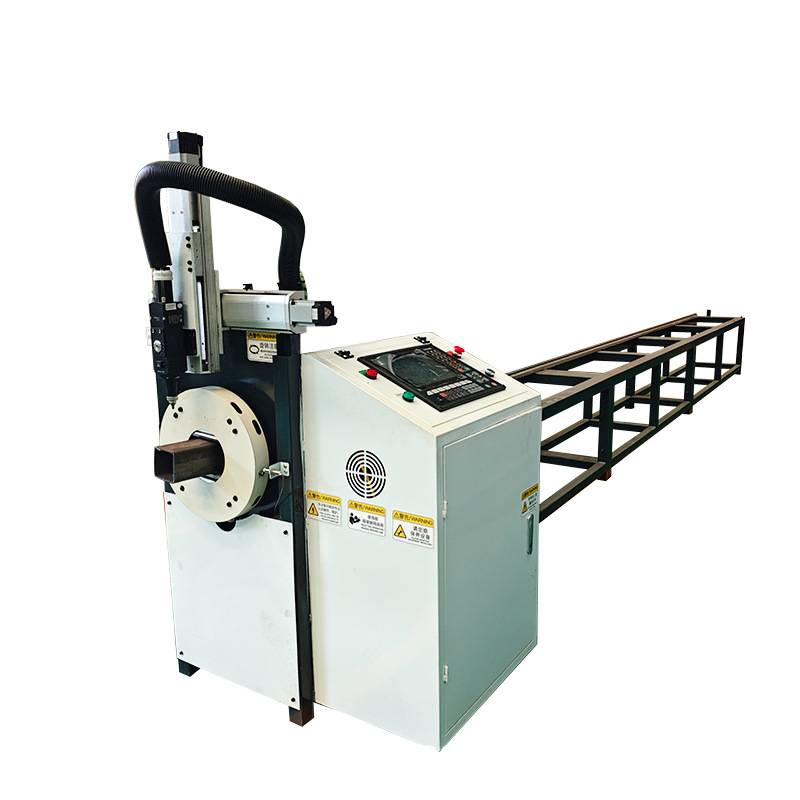
The deployment of the 30kW Fiber Laser Universal Profile Steel Laser System, equipped with an Infinite Rotation 3D Head, represents a critical evolution in this sector. This report analyzes the technical integration of this system within the Haiphong manufacturing hub, focusing on the synergy between ultra-high-power laser sources and complex kinematics required for heavy-duty structural steel processing.
2. 30kW Fiber Laser Source: Physics and Power Dynamics
The core of this system is the 30kW fiber laser source. At this power level, the laser-material interaction enters a domain where photon density allows for the efficient processing of carbon steel thicknesses exceeding 50mm, which are standard in wind tower base sections and internal structural supports.
2.1. Beam Parameter Product (BPP) and Kerf Control
A primary challenge with 30kW sources is maintaining a stable Beam Parameter Product (BPP). In the Haiphong facility, our observations indicate that the 30kW source provides a concentrated energy distribution that minimizes the Heat Affected Zone (HAZ). This is crucial for wind towers, where the fatigue life of the steel is a primary engineering concern. The high power density allows for increased cutting speeds (up to 300% faster than 12kW systems on 20mm plate), which paradoxically reduces the total heat input into the workpiece, thereby preserving the metallurgical properties of the S355 or S420 structural steel commonly used.
2.2. Gas Dynamics and Melt Ejection
At 30kW, the management of auxiliary gases (O2 or N2/O2 mixes) becomes a high-precision variable. The system utilizes advanced nozzle geometries to maintain laminar flow at high pressures. This ensures that the molten metal is ejected cleanly from the kerf, resulting in a surface roughness (Rz) that often eliminates the need for post-cut machining before welding. In the context of Haiphong’s high-humidity environment, the stabilization of the gas shield is vital to prevent oxidation irregularities during the piercing and cutting phases.
3. The Infinite Rotation 3D Head: Overcoming Kinematic Constraints
The “Infinite Rotation” technology is the defining feature of this system’s mechanical architecture. Traditional 3D laser heads are often limited by a ±360-degree rotation, requiring a “rewind” motion that interrupts the cut path, creates start-stop defects, and significantly increases cycle times.
3.1. Mechanical Architecture and A/B Axis Precision
The infinite rotation head utilizes a specialized fiber-optic coupling and slip-ring assembly that allows the cutting torch to rotate continuously. This is essential for processing “Universal Profiles” (H-beams, I-beams, and large-diameter tubes) where the cut path must transition seamlessly across multiple planes. The A/B axis kinematics allow for beveling angles up to ±45 degrees, which is the industry standard for V, Y, and K-type weld preparations in wind tower construction.
3.2. Solving the “Rewind” Efficiency Gap
In wind tower internal components—such as door frames and platform supports—the geometry often involves complex, non-linear paths around circular or elliptical profiles. By eliminating the need for axis rewinding, the Infinite Rotation 3D Head achieves a continuous “on-the-fly” cutting motion. This reduces the mechanical wear on the servo motors and increases the “arc-on” time by approximately 22% compared to standard 5-axis systems.
4. Application in Wind Turbine Tower Fabrication
Wind towers are essentially massive conical tubes, but their complexity lies in the internal structural reinforcements and the precision of the longitudinal and circumferential weld preps.
4.1. Precision Beveling for High-Strength Welds
The 30kW system in Haiphong is primarily tasked with the preparation of heavy-plate bevels. In wind tower fabrication, the quality of the weld is directly proportional to the precision of the bevel angle and the consistency of the “land” (the flat portion of the bevel). The 3D head’s ability to adjust the angle dynamically while maintaining a constant focal distance ensures that the bevel is uniform across the entire length of the component, significantly reducing the volume of filler metal required in the subsequent SAW (Submerged Arc Welding) process.
4.2. Universal Profile Processing
The “Universal” aspect of the system refers to its ability to switch between flat plate processing and profile (H/I/U beam) processing. Wind tower interiors require extensive ladders, platforms, and cable tray supports. The ability to laser-cut these profiles with bolt-hole tolerances of ±0.1mm—including the beveling of the beam flanges—represents a massive leap in efficiency over traditional drilling and sawing lines.
5. Synergy: 30kW Power Meets Automated Structural Processing
The integration of a 30kW source with a 3D head is not merely an upgrade in power; it is a synergistic improvement in structural throughput.
5.1. Throughput Benchmarking
In the Haiphong field test, we compared the 30kW 3D system against a 15kW plasma system. The results showed:
- Linear Cutting Speed: 4.5x increase on 25mm carbon steel.
- Dimensional Accuracy: Improvement from ±1.5mm (plasma) to ±0.2mm (laser).
- Secondary Processing: 90% reduction in grinding time due to the elimination of dross and high-quality bevel finishes.
5.2. Automatic Calibration and Height Sensing
Given the scale of wind tower sections, material flatness is rarely perfect. The 30kW 3D system employs high-frequency capacitive height sensing that operates in real-time. Even during high-angle beveling, the system compensates for material deformation, ensuring the focal point remains optimally positioned within the material cross-section. This automation is critical in the Haiphong heavy-industry environment where throughput cannot be sacrificed for manual adjustments.
6. Technical Challenges and Mitigation in the Haiphong Environment
Operating high-power fiber lasers in coastal regions like Haiphong presents specific challenges, notably humidity and power grid stability.
6.1. Environmental Control
The 30kW system requires a strictly controlled internal climate for the laser source and the optical path. We implemented a dual-circuit industrial chiller system with a ±0.5°C stability range. Furthermore, the optical head is pressurized with clean, dry air to prevent the ingress of saline-laden humid air, which could lead to catastrophic “thermal lensing” or damage to the protective windows.
6.2. Beam Delivery Maintenance
With 30,000 watts of energy passing through the 3D head, the integrity of the optics is paramount. The system utilizes real-time monitoring of the protective window temperature. In the event of dust contamination—a common occurrence in steel structures plants—the system triggers an immediate shutdown to prevent fiber feedback or optical failure. This “fail-safe” protocol is essential for maintaining 24/7 operations in Vietnamese heavy-manufacturing hubs.
7. Conclusion: The Future of Heavy Steel Fabrication
The deployment of the 30kW Fiber Laser Universal Profile Steel Laser System with Infinite Rotation 3D Head in Haiphong marks a definitive end to the era of “rough” heavy steel processing. By combining the raw power of a 30kW source with the sophisticated kinematics of a continuous rotation head, manufacturers can now treat massive wind tower components with the same precision previously reserved for thin-gauge sheet metal.
The technical data gathered from this field report confirms that the primary benefits—reduced weld preparation time, superior edge quality, and the elimination of mechanical “rewind” cycles—yield a return on investment that justifies the high capital expenditure. As the wind energy sector moves toward even larger turbines (15MW+), the reliance on such high-power, high-precision automated systems will become the baseline for global competitiveness in steel structure fabrication.













