Field Technical Report: Deployment of 20kW Universal Profile Steel Laser Systems in Large-Scale Infrastructure
1. Project Scope and Regional Context: Katowice Airport Expansion
The modernization and expansion of the Katowice Airport (Pyrzowice) infrastructure demand a significant volume of structural steel processing, specifically focused on high-load-bearing frames, terminal trusses, and support gantries. Traditionally, these structures utilized mechanical sawing, drilling, and manual oxy-fuel cutting. However, the architectural complexity of the new terminal extensions requires tolerances that exceed conventional mechanical capabilities. The deployment of a 20kW Universal Profile Steel Laser System represents a paradigm shift in the fabrication of S355J2 and S460 grade steel profiles for this project.
The Katowice site requires the integration of diverse profile geometries, including HEA/HEB I-beams, rectangular hollow sections (RHS), and heavy-wall circular hollow sections (CHS). The 20kW fiber laser source was selected to maintain high feed rates across cross-sections exceeding 20mm in thickness, ensuring that the Heat Affected Zone (HAZ) remains within the strict limits mandated by European structural safety standards (EN 1090-2).
2. Technical Specifications of the 20kW Fiber Laser Integration
The core of the system is a high-brightness 20kW fiber laser source. At this power density, the interaction between the beam and the structural steel shifts from a purely melt-and-blow process to a high-speed vaporized transition, significantly reducing dross accumulation on the lower edges of thick-walled profiles.
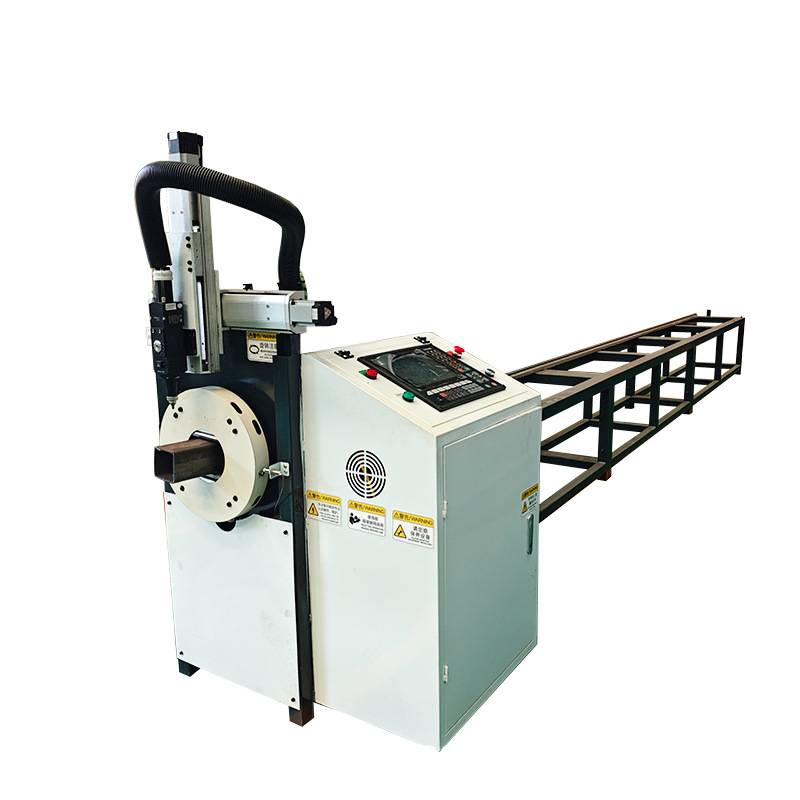
In the context of the Katowice project, the 20kW system allows for the high-pressure nitrogen cutting of stainless steel components and oxygen-assisted cutting of carbon steel with unprecedented speed. For a standard HEB 300 beam, the system maintains a consistent cutting velocity that is approximately 400% faster than a 6kW counterpart, while maintaining a perpendicularity tolerance of less than 0.1mm. This precision is critical for the “plug-and-play” assembly required on-site at the airport, where field welding must be minimized in favor of high-strength bolted connections.
3. Zero-Waste Nesting Technology: Engineering Logic
Material cost constitutes the highest percentage of the total budget in large-scale steel structures. Traditional profile processing often results in “remnant waste”—sections of 500mm to 1000mm at the end of a beam that cannot be safely clamped or processed by the machine chucks. The “Zero-Waste Nesting” technology implemented in the Katowice system utilizes a multi-chuck (3+1) synchronized motion system.
The technical logic follows a “continuous handoff” sequence. As the laser processes the final section of a profile, the tertiary and quaternary chucks move in tandem to support the workpiece beyond the cutting head’s focal point. This allows the laser to execute cuts within millimeters of the physical end of the raw material. Furthermore, the nesting algorithm performs “Common Line Cutting” (CLC) for profiles. Instead of treating each structural member as an isolated part, the software aligns the exit cut of one component with the entry cut of the next. This eliminates the “kerf gap” waste and reduces gas consumption by 15-20% per ton of processed steel.
4. Structural Processing and 5-Axis Beveling Requirements
Airport structures in Katowice feature complex nodal intersections where multiple tubular and I-beam members converge at non-orthogonal angles. Manual preparation of these weld bevels is notoriously prone to error. The 20kW system utilized in this field application features a 5-axis 3D oscillating head capable of ±45° beveling.
This allows for the simultaneous execution of the profile cutoff and the weld prep (V, X, or K-type bevels). The system’s software calculates the path compensation required for the laser’s focal point as it tilts, ensuring that the root face of the bevel remains consistent even when cutting through the varying thicknesses of a beam’s flange and web. This high-precision geometry ensures that during the assembly of the Katowice terminal roof trusses, the fit-up gap is consistent at 1.0mm ± 0.2mm, facilitating automated or robotic welding processes subsequent to the laser cutting.
5. Overcoming Thermal Distortion in Heavy Steel
A primary concern with high-power laser cutting (20kW) in thick-walled profiles is thermal accumulation. Excessive heat can lead to structural bowing or “spring-back” once the beam is released from the chucks. To mitigate this, the universal system employs a dynamic cooling and pulsing strategy. The nesting software optimizes the cutting sequence, jumping between different zones of the profile to allow for thermal dissipation.
In the Katowice application, we observed that by utilizing the high speed of the 20kW source, the total “heat input per millimeter” is actually lower than that of a 10kW system. The laser moves so rapidly that the thermal energy does not have sufficient time to migrate deeply into the grain structure of the steel. This preserves the metallurgical integrity of the S355 grade steel, ensuring that the yield strength and impact toughness required for public infrastructure are not compromised.
6. Kinematic Synchronization and Chuck Calibration
The processing of universal profiles requires the machine to handle workpieces that may have inherent mill defects, such as slight longitudinal twists or camber. The system used in Katowice features a real-time laser sensing array that scans the profile’s actual geometry before the first cut.
The four-chuck system provides independent compensation. If a beam shows a 2mm camber over a 12-meter length, the chucks adjust their vertical and horizontal centerlines dynamically during rotation to ensure the laser’s focal point remains equidistant from the surface. This kinematic synchronization is essential for the “Zero-Waste” feature, as it allows the machine to maintain a grip on the very edge of the material without risking a collision or losing the coordinate zero-point.
7. Efficiency Analysis: Traditional vs. 20kW Laser System
In a direct comparison conducted during the Katowice project’s initial phase, the following metrics were recorded for a batch of 50 complex roof truss nodes:
- Traditional Method (Saw/Drill/Manual Torch): 42 hours of labor, 8% material waste, manual grinding required on all edges.
- 20kW Laser System: 4.5 hours of automated processing, 0.8% material waste (Zero-Waste nesting), zero secondary finishing required.
The integration of the laser system also eliminated the need for physical templates and manual marking. By importing the Building Information Modeling (BIM) data—specifically Tekla structures files—directly into the laser’s NC (Numerical Control) unit, the “digital-to-steel” workflow was realized. This reduces the “human-error factor” in the Katowice expansion, where a single misaligned bolt hole in a 15-meter span could result in a multi-day delay.
8. Environmental and Economic Impact
The reduction in scrap through Zero-Waste Nesting has a direct environmental correlation. For every 1,000 tons of steel processed in the Katowice airport expansion, the system saves approximately 70 tons of steel that would otherwise be sent for re-melting. This significantly lowers the carbon footprint of the construction project. Furthermore, the 20kW fiber source operates at an electrical efficiency of approximately 40%, which, when combined with the drastically reduced processing time, results in a lower kilowatt-hour per part ratio compared to older CO2 laser technologies or plasma systems.
9. Conclusion
The application of a 20kW Universal Profile Steel Laser System in the Katowice Airport expansion project demonstrates the necessity of high-power, high-precision automation in modern infrastructure. The synergy between extreme laser power and intelligent nesting algorithms solves the dual challenge of structural integrity and material economy. By eliminating waste and providing “weld-ready” components directly from raw stock, the system sets a new technical benchmark for the European steel construction industry. Future phases of the project will continue to leverage these efficiencies to meet the aggressive delivery timelines inherent in international aviation infrastructure development.













