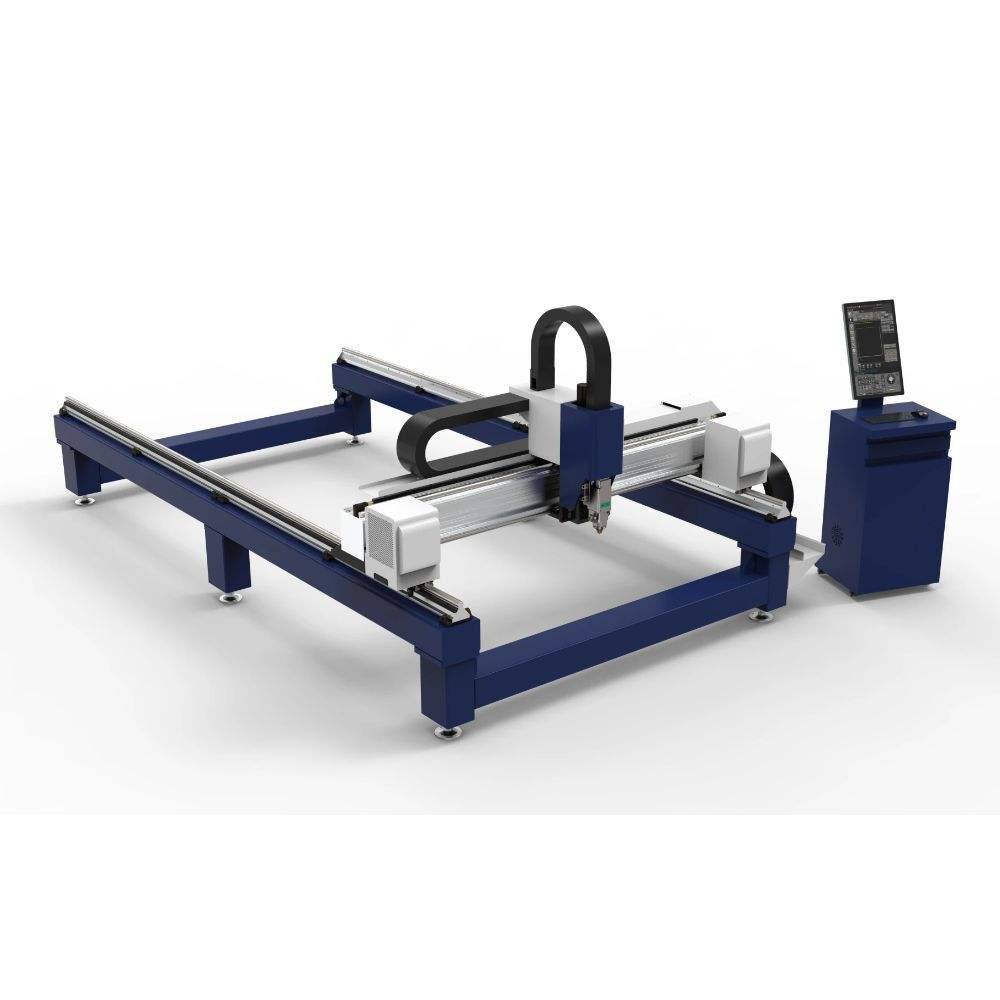
Field Report: Deployment of 20kW 3D Structural Steel Processing Center in Crane Manufacturing
1.0 Executive Summary of Site Integration
The following report outlines the technical deployment and operational efficacy of a 20kW 3D Structural Steel Processing Center within the Charlotte, North Carolina industrial corridor. Charlotte has emerged as a critical hub for heavy infrastructure and material handling equipment manufacturing. The facility in question specializes in the production of overhead bridge cranes and gantry systems, requiring the processing of heavy-duty ASTM A572 Grade 50 steel.
The primary objective of this installation was the replacement of legacy plasma cutting and mechanical drilling stations with a unified 20kW fiber laser system equipped with a 5-axis 3D cutting head and an integrated automatic unloading solution. This report evaluates the synergy between high-wattage photonics and automated material handling in the context of large-scale structural integrity.
2.0 Technical Specifications of the 20kW Fiber Source
The heart of the processing center is a 20kW ytterbium fiber laser source. In the context of crane manufacturing, where flange thicknesses frequently exceed 20mm, the 20kW threshold is not merely for speed, but for the quality of the Heat Affected Zone (HAZ).
2.1 Energy Density and Piercing Dynamics:
The 20kW source allows for high-frequency pulsing during the piercing phase, significantly reducing the “blow-out” radius compared to 10kW or 12kW systems. For structural beams used in crane girders, maintaining the metallurgical integrity around bolt holes is paramount. The high power density achieves a narrower kerf width and a nearly square cut edge, which is essential for friction-grip bolted connections.
2.2 Feed Rates on Heavy Profiles:
On 16mm thick web sections of H-beams, the 20kW system maintains a stable cutting speed of 4.5–5.2 m/min. This represents a 300% increase over conventional plasma systems while eliminating the need for secondary grinding of dross. The Beam Parameter Product (BPP) is optimized to maintain focus stability over the variable distances required by 3D structural geometry.
3.0 5-Axis 3D Head Kinematics in Structural Applications
Unlike flat-sheet cutting, structural steel processing requires the ability to bevel, countersink, and cut across radii. The 3D head utilized in this Charlotte facility features a ±135° tilt and 360°+ rotation capability.
3.1 Weld Preparation (V, Y, and K Cuts):
Crane manufacturing involves significant welding of end carriages to main girders. The 3D laser head enables precision beveling during the primary cutting cycle. By executing a 45° V-prep directly on the laser, the facility has eliminated secondary edge-prep milling. The accuracy of the bevel angle is maintained within ±0.5°, ensuring consistent penetration during Submerged Arc Welding (SAW) processes.
3.2 Compensation for Beam Deviation:
Structural steel, particularly hot-rolled sections, is rarely perfectly straight. The processing center utilizes a non-contact capacitive sensing system combined with a mechanical probe to map the actual camber and sweep of the beam in real-time. The 5-axis head adjusts its coordinate system dynamically to ensure that holes and cutouts remain centered relative to the actual flange geometry, rather than the theoretical CAD model.
4.0 Analysis of the Automatic Unloading Technology
In heavy steel processing, the bottleneck is rarely the “beam-on” time, but rather the material handling. The Charlotte facility processes beams up to 12 meters in length with weights exceeding 150 kg/m.
4.1 Kinematic Synchronization:
The automatic unloading system consists of a multi-stage hydraulic lifting and conveyor matrix. As the laser completes the final cut, the unloading grippers engage the finished part. This synchronization prevents the “drop-off” burr typically seen in manual unloading, where the weight of the part snaps the final few millimeters of the cut.
4.2 Sorting and Buffering:
The system utilizes a lateral chain-driven buffer. This allows the laser to immediately initiate the next program while the previous workpiece is safely moved to a secondary inspection station. In crane manufacturing, where a single girder may require dozens of different stiffener plates and connection holes, the unloading system’s ability to maintain part orientation is critical for downstream assembly.
4.3 Labor and Safety Metrics:
Manual unloading of heavy sections requires overhead cranes and at least two riggers. The automated system reduces this to a single operator monitoring the HMI (Human Machine Interface). This significantly lowers the Risk Priority Number (RPN) regarding workplace injuries in the heavy-duty Charlotte shop environment.
5.0 Structural Integrity and Precision in Crane Components
The application of this technology specifically addresses the tolerances required for Crane Class D and E (Heavy Duty and Severe Service).
5.1 Bolt Hole Precision:
For crane end-truck connections, hole tolerances are typically +0.2mm / -0.0mm. The 20kW laser, when calibrated for thermal expansion, consistently hits these marks. The elimination of mechanical drilling also removes the risk of work-hardening the hole perimeter, which can lead to stress fractures under the cyclic loading conditions of a crane’s lifespan.
5.2 Complex Cutouts for Drive Machining:
Gantry end-carriages require precise cutouts for gearboxes and wheel assemblies. The 3D laser allows for these cutouts to be made across the corner radii of rectangular hollow sections (RHS). The software calculates the change in material thickness as the laser moves from the flat wall through the radius, adjusting the 20kW power output and gas pressure (N2 or O2) in micro-second intervals to prevent over-burning.
6.0 CAD/CAM Integration and Workflow Efficiency
The Charlotte site utilizes a direct Tekla-to-Machine workflow. Structural models are exported via DSTV or STEP files directly into the laser’s nesting software.
6.1 Nesting Optimization:
The software optimizes the “common cut” for structural profiles, which is significantly more complex than sheet nesting. By sharing a cut line between two beam ends, the system reduces the number of pierces and the total travel time. With 20kW of power, the “lead-in” length is minimized, further increasing material utilization by approximately 4%.
6.2 Real-time Monitoring:
The system provides the engineering team with real-time data on gas consumption, power duty cycles, and nozzle wear. In the high-demand environment of Charlotte’s industrial sector, this predictive maintenance data is essential for avoiding unplanned downtime during critical production runs for infrastructure projects.
7.0 Conclusion: The Shift in Heavy Steel Fabrication
The integration of a 20kW 3D Structural Steel Processing Center in Charlotte represents a fundamental shift in how heavy-duty material handling equipment is manufactured. The synergy between high-wattage laser sources and automated unloading solves the dual challenges of precision and throughput.
By eliminating secondary processes (drilling, milling, grinding) and automating the handling of multi-ton sections, the facility has realized a 40% reduction in total fabrication time per girder. The 20kW source provides the necessary “thermal punch” to handle thick-walled structural profiles, while the 3D head and automatic unloading ensure that the output meets the stringent safety and tolerance standards of the crane industry. This configuration stands as the current benchmark for structural steel processing in heavy engineering applications.
End of Report.
Field Engineer: Senior Specialist, Laser Systems & steel structures
Date: October 2023
Location: Charlotte Regional Site Evaluation













