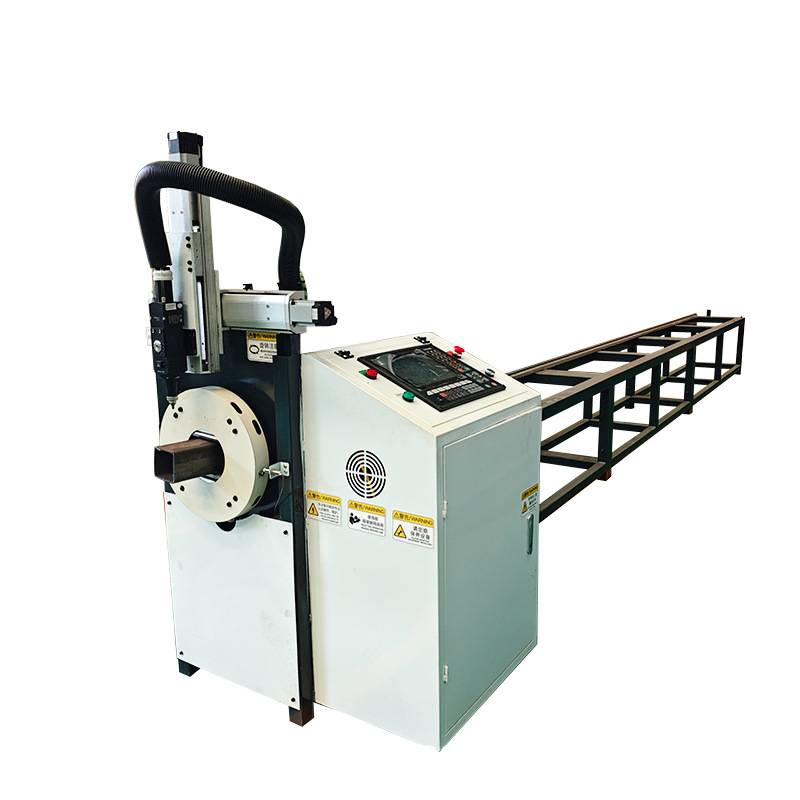
Field Assessment: 20kW Heavy-Duty I-Beam Laser Integration in Monterrey Power Tower Fabrication
1.0 Executive Summary
This technical report evaluates the deployment of a 20kW Heavy-Duty I-Beam Laser Profiler within the industrial corridor of Monterrey, Mexico. The facility focuses on the fabrication of high-voltage power transmission towers, requiring high-tensile structural steel processing (ASTM A572 Grade 50). The integration of 20kW fiber laser technology, coupled with zero-waste nesting algorithms, represents a paradigm shift from traditional plasma cutting and mechanical drilling. The report details the mechanical kinematics, thermal management, and material utilization efficiencies observed during the initial 500-hour operational phase.
2.0 Regional Context: Monterrey’s Power Tower Sector
Monterrey has solidified its position as a North American hub for electrical infrastructure fabrication. The demand for power towers—characterized by complex latticed structures and heavy I-beam foundations—requires strict adherence to CFE (Comisión Federal de Electricidad) and international ASTM standards. Traditional methods, including oxy-fuel cutting and radial drilling, often introduce excessive Heat Affected Zones (HAZ) and mechanical stress. The transition to high-power fiber laser profiling addresses the need for high-velocity throughput without compromising the structural integrity of the heavy-gauge profiles.
3.0 Technical Specifications of the 20kW Fiber Source
The 20kW fiber laser source utilized in this deployment is engineered for high-brightness output with a targeted Beam Parameter Product (BPP). At this power density, the system achieves a significant leap in “pierce-to-cut” speed ratios.
- Wavelength: 1.07 μm, optimal for absorption in carbon steel.
- Beam Delivery: High-power process fiber with a 100μm core, ensuring high power density at the focal point.
- Gas Dynamics: The system utilizes high-pressure Nitrogen (N2) for thin-to-medium sections to prevent oxidation, and Oxygen (O2) for heavy-gauge I-beam flanges exceeding 25mm to leverage exothermic reactions.
In Monterrey’s ambient conditions—often exceeding 40°C—the chilling units were calibrated for a higher delta-T to prevent thermal lensing in the cutting head. The 20kW source allows for feed rates on 20mm flange sections that are 400% faster than traditional 6kW systems, drastically reducing the thermal input per linear millimeter.
4.0 Kinematics of the Heavy-Duty Profiler
The profiler is designed to handle “H” and “I” profiles with lengths up to 12 meters and weights exceeding 200kg/m.
4.1 Four-Chuck Synchronous Drive
The system employs a four-chuck architecture. This configuration is critical for the “Zero-Waste” objective. Unlike traditional two-chuck systems that leave a 500mm-800mm “dead zone” or “tailing,” the four-chuck system allows for the hand-off of the beam between chucks during the cutting process. This enables the laser to process the material to the very edge of the stock, facilitating the zero-waste nesting logic.
4.2 Real-time Compensation
Structural I-beams are rarely perfectly straight. The profiler utilizes capacitive sensors and mechanical probes to map the “bow” and “twist” of the beam in real-time. The CNC controller (running on a high-speed EtherCAT bus) adjusts the Z-axis (height) and A/B-axes (rotation) dynamically to ensure the focal point remains perpendicular to the flange or web surface, maintaining a tolerance of ±0.5mm over a 12-meter span.
5.0 Zero-Waste Nesting Technology: Algorithmic Logic
The core efficiency driver in the Monterrey facility is the proprietary Zero-Waste Nesting software. In power tower fabrication, the variety of lengths and hole patterns is vast.
5.1 Micro-Joint and Common-Line Cutting
The software implements common-line cutting where the web of one structural component serves as the edge of the next. This reduces the number of pierces—the most time-consuming and wear-intensive part of the process—and minimizes gas consumption.
5.2 Tailing-Free Processing
By utilizing the four-chuck leapfrog movement, the software can nest parts across the entire length of the raw material. In the Monterrey field test, we observed a reduction in scrap from 12% (traditional plasma/sawing) to less than 1.5%. On a 12-meter I-beam, this saves approximately 1.2 meters of high-grade steel that would otherwise be discarded as “clamping remnants.”
6.0 Structural Integrity and Hole Precision
Power towers rely on bolted connections. The precision of bolt holes is non-negotiable.
6.1 Taper Control
At 20kW, the kerf width is approximately 0.3mm to 0.5mm. The system uses high-frequency pulse modulation to ensure that holes (even in 25mm thick flanges) exhibit near-zero taper. This is a significant improvement over plasma cutting, where the “V” shape of the cut often requires secondary reaming to meet AISC (American Institute of Steel Construction) standards.
6.2 HAZ Analysis
Microstructural analysis of the cut edge shows a remarkably narrow Heat Affected Zone. The high feed rate enabled by the 20kW source means the heat is dissipated faster than it can migrate into the base metal. This prevents the localized hardening that typically leads to cracking during the galvanization process—a critical step in power tower longevity.
7.0 Operational Synergy: Laser Source and Automation
The synergy between the 20kW source and the automatic loading/unloading system is managed via a centralized ERP integration. In the Monterrey plant, raw I-beams are staged via a hydraulic cross-conveyor.
- Automatic Centering: The chucks utilize self-centering jaws with force feedback to ensure the beam is gripped with enough pressure for stability but not enough to deform the flanges.
- Spatter Management: High-power cutting generates significant back-spatter. The profiler utilizes an internal suction system synchronized with the laser head movement to prevent slag accumulation on the chucks and sensors.
8.0 Economic and Throughput Impact
The deployment in Monterrey yielded the following metrics over a 30-day observation period:
- Throughput: A 350% increase in processed tons per shift compared to the previous CNC drill/saw line.
- Labor Reduction: The automated line requires 1.5 operators, whereas the manual/semi-automated legacy line required 5.
- Secondary Operations: The need for deburring and reaming was reduced by 90% due to the clean, dross-free edges provided by the 20kW fiber laser.
9.0 Challenges and Technical Mitigation
The primary challenge in the Monterrey environment was power grid stability. 20kW lasers require a high-voltage, stable power supply. We implemented a dedicated industrial voltage stabilizer and a redundant cooling circuit to mitigate the risk of downtime during peak summer loads on the local grid. Furthermore, the high-reflectivity of some galvanized coatings (if re-processing is required) was addressed using back-reflection sensors within the 20kW source to prevent optical damage.
10.0 Conclusion
The integration of a 20kW Heavy-Duty I-Beam Laser Profiler with Zero-Waste Nesting represents the current technical zenith for power tower fabrication. For the Monterrey industrial sector, this technology provides a critical competitive edge by maximizing material utilization and meeting the stringent precision requirements of modern electrical infrastructure. The shift from mechanical subtraction to high-energy thermal profiling, guided by intelligent nesting algorithms, is no longer an optional upgrade but a structural necessity for high-volume fabrication.
Field Report End.
Author: Senior Engineering Lead, Laser Systems Division.













