1.0 Technical Overview: The Shift to 6000W High-Density Laser Profiling
In the context of the recent railway infrastructure expansions in Mexico City (CDMX), the transition from conventional plasma cutting to 6000W fiber laser profiling for heavy-duty I-beams represents a fundamental shift in structural engineering capabilities. The 6000W threshold is critical; it provides the necessary power density to achieve high-speed melt-ejection in structural steels (ASTM A36 and A572) typically exceeding 25mm in flange thickness, while maintaining a Heat Affected Zone (HAZ) significantly narrower than traditional thermal cutting methods.
This report evaluates the field performance of the Heavy-Duty I-Beam Laser Profiler equipped with an integrated Automatic Unloading System. The deployment site is specialized in the fabrication of elevated rail supports and station framework, where precision is not merely a matter of aesthetic fit, but a requirement for seismic resilience under Mexico City’s unique geotechnical constraints.
1.1 Fiber Source Synergy and Beam Delivery
The 6000W fiber source is coupled with a 3D cutting head capable of +/- 45-degree beveling. For railway infrastructure, specifically I-beams used in load-bearing columns, the ability to execute precise weld preparations (V, Y, and K-cuts) in a single pass is vital. The 1.07-micron wavelength of the fiber laser ensures high absorption rates in carbon steel, allowing for a concentrated energy footprint that minimizes thermal distortion—a common failure point in heavy-section profiling.
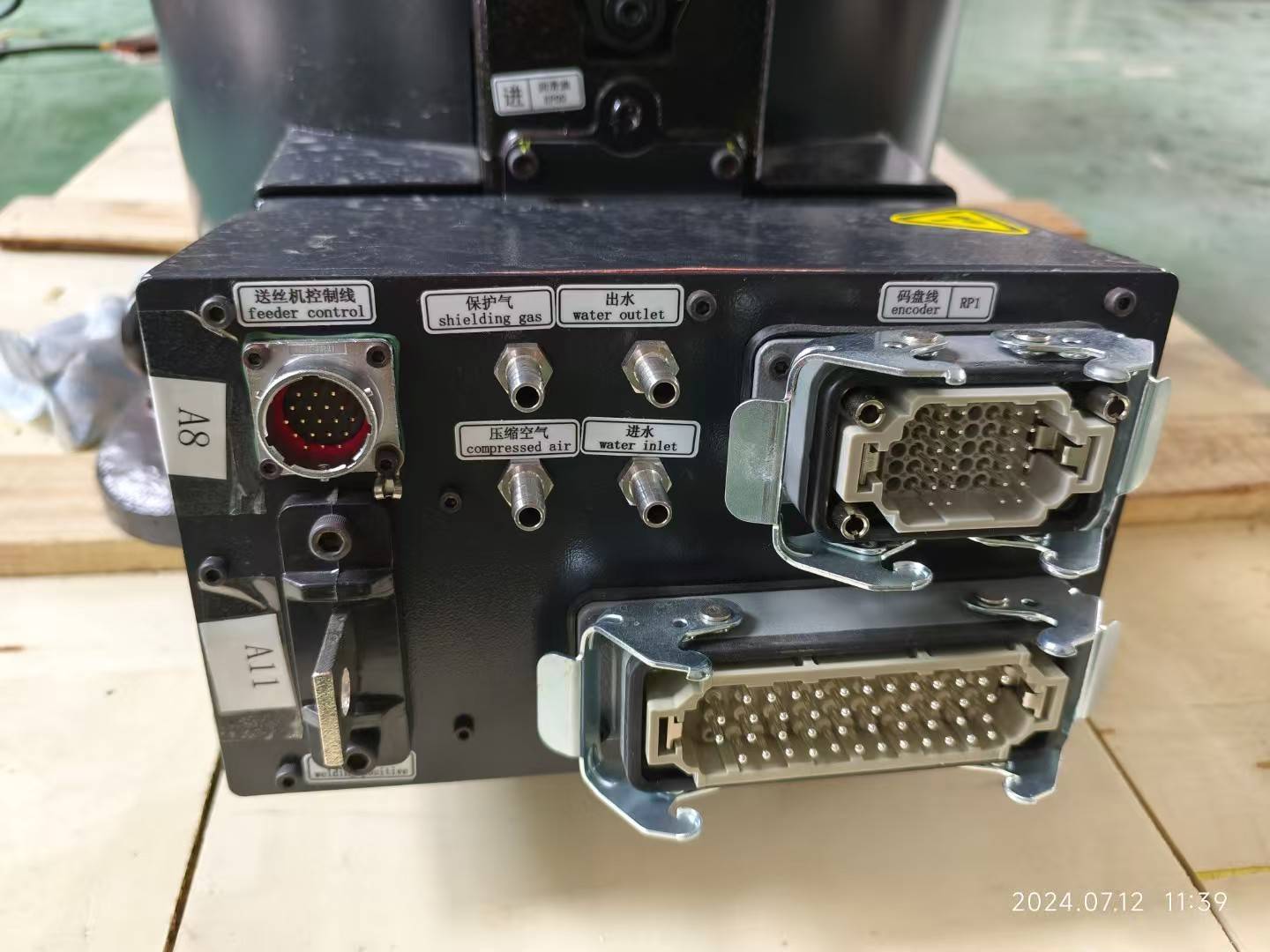
2.0 Automatic Unloading: Solving the Logistical Bottleneck
The primary constraint in heavy-duty steel processing has historically been the “material-handling lag.” While the laser can process a 12-meter I-beam in minutes, manual unloading via overhead cranes introduces significant downtime and safety risks. The implementation of Automatic Unloading technology addresses these specific inefficiencies.
2.1 Mechanical Logic of the Unloading System
The system utilizes a series of synchronized hydraulic lift-and-transfer arms. Once the laser head completes the final profile cut and the beam is severed from the raw stock, the unloading module engages. It supports the finished part along its entire longitudinal axis, preventing the “drop-snapping” that occurs when heavy segments are cut free. In the CDMX facility, where throughput targets are high, this automation reduces the cycle time between beams by approximately 40%.
2.2 Precision Retention and Surface Integrity
Automatic unloading is not merely a labor-saving feature; it is a quality control mechanism. Manual dragging or improper hoisting of heavy I-beams often results in surface scoring or flange deformation. For railway components subjected to high-cycle fatigue, any surface irregularity can act as a stress concentrator. The servo-driven unloading sequence ensures the beam is placed on the outfeed racks with zero-impact force, preserving the dimensional integrity of the laser-cut edges.
3.0 Application in Mexico City Railway Infrastructure
Mexico City’s railway expansion, including the modernization of the STC (Sistema de Transporte Colectivo) and suburban rail links, demands structural components that can withstand both high-frequency vibration and seismic loads. The soil conditions in the Valley of Mexico—characterized by high water content and soft clay—require structures with high ductility and precise tolerances.
3.1 Seismic Compliance and Bolt-Hole Precision
Current CDMX building codes (NTC-2023) mandate strict tolerances for structural steel connections. Traditional drilling or plasma punching often creates micro-fissures or tapered holes. The 6000W laser profiler produces bolt holes with a cylindricity error of less than 0.1mm. This precision ensures “slip-critical” connections in the railway framework, where the friction between the joined I-beams must be maximized to resist seismic shear forces. The automatic unloading system ensures these finished pieces, often weighing several tons, are moved to the next station without compromising the precision of these apertures.
3.2 Large-Scale Joint Fabrication
Railway junctions and station trusses require complex intersecting cuts where I-beams meet at oblique angles. The 6000W profiler’s 5-axis capability allows for the creation of “fish-mouth” joints and complex interlocking geometries. By automating the unloading of these uniquely shaped segments, the facility avoids the risk of damaging the delicate beveled edges that are critical for full-penetration groove welds.
4.0 Thermal Dynamics and Material Metallurgy
A critical technical advantage of the 6000W system is its ability to modulate power density via CNC control. In Mexico City’s ambient environment, controlling the cooling rate of the cut edge is necessary to prevent the formation of martensite—a brittle phase of steel.
4.1 Kerf Width and Assist Gas Optimization
Using Oxygen (O2) as an assist gas for heavy I-beams facilitates an exothermic reaction, increasing cutting speed. However, for railway components that require painting or galvanizing, the 6000W source is powerful enough to utilize High-Pressure Nitrogen (N2) for “clean-cutting” up to certain thicknesses. This eliminates the oxide layer, ensuring superior coating adhesion without secondary grinding. The automatic unloading system further protects this clean edge by preventing contact with other raw materials during the transfer phase.
4.2 Managing Longitudinal Bowing
Long structural beams are prone to longitudinal bowing due to internal residual stresses from the rolling mill process being released during laser cutting. The integrated clamping and unloading system on the 6000W profiler applies counter-pressure during the cutting process. This mechanical synchronization ensures that the beam remains true to its axis, a feature essential for the long-span girders used in CDMX rail overpasses.
5.0 Operational Efficiency and ROI Analysis
From an engineering management perspective, the integration of 6000W power with automatic unloading transforms the fabrication shop into a continuous-flow environment.
5.1 Labor Reduction and Safety
In the heavy steel sector, the “unloading zone” is traditionally the highest-risk area for workplace injuries. By automating the extraction of processed I-beams, the facility reduces personnel exposure to suspended loads. In the CDMX field site, the labor requirement for the cutting station was reduced from four technicians to one operator and one logistics monitor, allowing specialized labor to be reallocated to weld-testing and assembly.
5.2 Energy Consumption and Gas Economy
While 6000W represents a significant power draw, the increased cutting speed results in lower energy consumption per meter cut compared to lower-wattage systems. The efficiency is compounded by the automatic unloading system, which ensures the laser is not idling while waiting for manual clearance of the workspace. The duty cycle of the machine is optimized to exceed 85%, a benchmark for industrial-scale railway fabrication.
6.0 Conclusion: The Standard for Modern Infrastructure
The deployment of the 6000W Heavy-Duty I-Beam Laser Profiler with Automatic Unloading in Mexico City sets a new technical baseline for railway infrastructure projects. The synergy between high-wattage fiber laser precision and automated material handling addresses the three core challenges of the industry: throughput speed, structural precision, and operator safety.
As CDMX continues to expand its transit networks into geologically challenging zones, the requirement for high-tolerance, laser-profiled structural steel will become the standard. This system provides the technological infrastructure necessary to meet these demands, ensuring that the railway components of today are capable of withstanding the seismic and operational stresses of the next fifty years.
Field Report End.
Prepared by: Senior Engineering Consultant, Laser Systems & Structural Steel Division.













