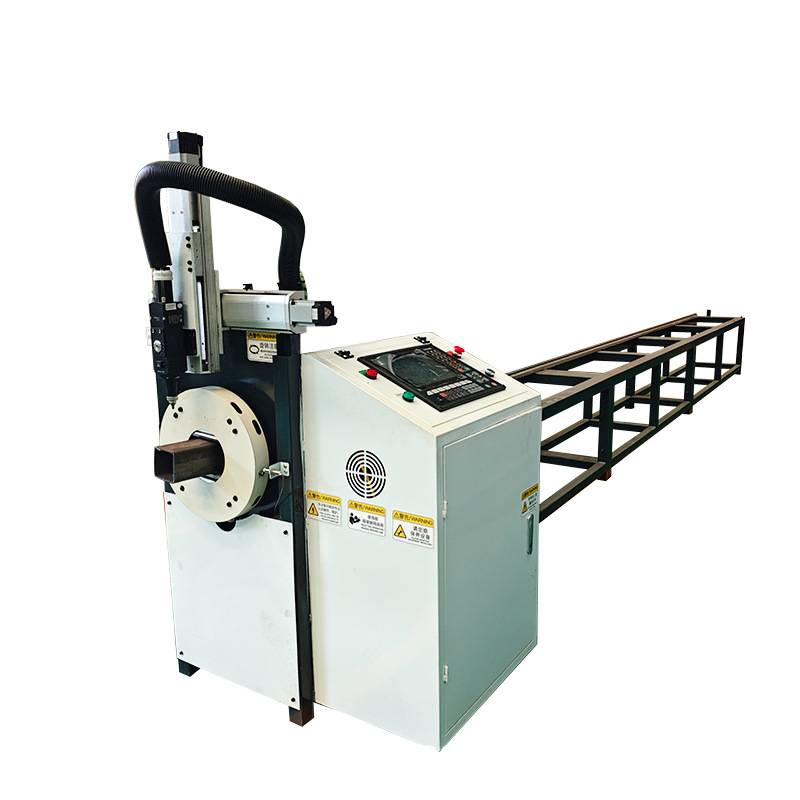
Technical Field Report: 12kW CNC Structural Laser Integration in Edmonton’s Mining Sector
1. Executive Summary: The Shift to High-Wattage Structural Processing
This report evaluates the deployment of 12kW CNC Beam and Channel Laser Cutters equipped with integrated automatic unloading systems within the heavy industrial corridor of Edmonton, Alberta. As the primary logistical and manufacturing hub for the Athabasca oil sands and regional hard-rock mining operations, Edmonton’s steel fabricators face unique challenges regarding material throughput and structural integrity.
Traditional methodologies—consisting of mechanical sawing, radial drilling, and high-definition plasma cutting—are increasingly insufficient for the tolerances required by modern mining machinery. The transition to 12kW fiber laser technology represents a fundamental shift in processing heavy-wall C-channels, I-beams, and H-beams. This report focuses on the synergy between high-density photon energy and mechanical automation to solve the bottleneck of heavy-part logistics.
2. The 12kW Fiber Laser Source: Thermodynamic Advantages
The selection of a 12kW power rating is not arbitrary; it is the threshold where fiber laser technology effectively displaces plasma for structural sections exceeding 16mm in thickness. In the context of Edmonton’s mining machinery—where structural components often utilize ASTM A36 or high-strength G40.21 steel—the 12kW source provides a critical power density for “melt-and-blow” dynamics.
At 12kW, the laser achieves a significantly narrowed Heat Affected Zone (HAZ) compared to plasma. This is vital for mining components subject to high fatigue cycles, such as vibratory screen frames and conveyor skeletons. By minimizing the HAZ, we preserve the metallurgical properties of the base metal, reducing the risk of brittle fractures at the cut edge. Furthermore, the 12kW source allows for high-pressure nitrogen cutting on mid-range thicknesses, yielding an oxide-free surface that is immediately ready for welding without secondary grinding.
3. CNC Kinematics for Beams and Channels
Processing structural profiles requires a multi-axis approach that differs significantly from flat-sheet cutting. The CNC systems deployed in these 12kW units utilize high-torque servomechanisms to manage the rotational inertia of heavy beams.
3.1. Profile Tracking and Compensation:
Mining-grade channels and beams often exhibit dimensional variances, including “camber” and “sweep” along their length. The CNC units discussed herein utilize laser-based sensing to map the actual profile of the workpiece in real-time. This data is fed back into the motion controller to adjust the Z-axis (nozzle height) and the rotational angle of the chucks, ensuring that bolt holes and coping cuts remain concentric and perpendicular despite raw material irregularities.
3.2. Complex Geometry Execution:
The 12kW laser head, often mounted on a 5-axis or 6-axis robotic wrist or bridge, allows for complex beveling and “bird’s mouth” joints. In the assembly of heavy-duty mining chassis, these precision-fit joints increase the load-bearing capacity of the weldment by maximizing the contact surface area between intersecting structural members.
4. Automatic Unloading: Solving the Heavy Steel Bottleneck
In the Edmonton manufacturing environment, the primary inhibitor to efficiency is not the cutting speed, but the material handling of finished components. A single 12-meter I-beam can weigh several tons; manual unloading via overhead crane introduces significant downtime and safety risks.
4.1. Synchronized Hydraulic Support:
The automatic unloading technology integrated into these systems employs a series of synchronized hydraulic lift-and-carry modules. As the laser completes a cut, the unloading system supports the finished part while the CNC chucks maintain their grip on the remaining raw stock. This prevents “part-drop,” which can damage the machine bed or cause the beam to deform under its own weight.
4.2. Sequential Throughput Efficiency:
The unloading system facilitates a continuous workflow. While the laser processes the next segment of the beam, the unloading arms move the finished section to a lateral conveyor. In field observations, this has reduced “cycle-to-cycle” idle time by approximately 65% compared to manual rigging. For mining machinery OEMs, this allows for just-in-time production of large-scale frames.
5. Application in Mining Machinery: Edmonton Case Studies
The Edmonton sector primarily services the extraction and processing stages of mining. Two specific applications highlight the necessity of the 12kW automated laser:
5.1. Vibratory Shaker Frames:
Shaker frames require extreme precision to ensure harmonic balance during operation. Using the 12kW laser, bolt hole tolerances are maintained within ±0.1mm across a 10-meter span. The automated unloading ensures that these long, heavy members are moved without introducing torsional stress that could misalign the frame.
5.2. Heavy-Duty Conveyor Gantry Systems:
The construction of gantries involves repetitive processing of C-channels with varying hole patterns. The integration of CNC laser cutting eliminates the need for physical templates. The 12kW source penetrates the thick flanges of C-channels with high feed rates, while the automatic unloading system sorts the finished channels by length, streamlining the downstream assembly process.
6. Environmental and Operational Considerations in Northern Climates
Edmonton’s climate presents specific operational challenges for high-power laser systems. The 12kW units must be housed in temperature-controlled enclosures to prevent condensation on the optics and to maintain the viscosity of hydraulic fluids in the unloading system.
6.1. Dust Mitigation:
Mining steel processing generates significant particulate matter. The reported systems utilize high-volume pulse-jet dust extraction. Effective filtration is mandatory to prevent the “thermal lensing” effect, where airborne dust settles on the protective window of the 12kW head, leading to catastrophic optical failure.
6.2. Material Temperature Stabilization:
Steel sourced from outdoor storage in Alberta winters can arrive at the machine at -30°C. The technical requirement for the 12kW laser involves a “pre-heat” pass or specific gas pressure adjustments to compensate for the extreme thermal gradient, ensuring consistent penetration and dross-free finishes.
7. ROI Analysis and Structural Integrity
The capital expenditure for a 12kW CNC Beam and Channel Laser with Automatic Unloading is substantial. However, the engineering data suggests a rapid ROI through:
- Elimination of Secondary Operations: Removing the need for drilling, milling, and edge cleaning.
- Reduced Labor Intensity: The automated unloading system allows a single operator to oversee the processing of multiple tons of steel per shift.
- Material Savings: Nesting software for structural profiles minimizes “drop” (scrap) by optimizing the sequence of cuts across the entire raw beam length.
From a structural engineering perspective, the precision of the laser-cut ensures that load distributions in mining equipment are exactly as designed in the CAD/FEA models. Traditional plasma cutting often leaves “start-stop” divots in bolt holes, which act as stress concentrators; the 12kW laser provides a continuous, smooth kerf that preserves the fatigue life of the component.
8. Conclusion
The integration of 12kW fiber laser technology with automatic unloading systems is no longer an optional upgrade for Edmonton’s heavy industrial fabricators—it is a technical necessity. By addressing the physics of high-power photon interaction and the mechanical challenges of heavy-part logistics, this technology ensures that mining machinery manufactured in the region meets the rigorous safety and durability standards required for sub-arctic extraction operations. The synergy of power, precision, and automation defines the current state-of-the-art in structural steel processing.













