Technical Field Report: 6000W Universal Profile Steel Laser Integration
1.0 Introduction and Site Context
This report details the operational deployment and performance validation of the 6000W Universal Profile Steel Laser System within the railway infrastructure manufacturing sector of Rosario, Argentina. Rosario serves as a critical nexus for the Belgrano Cargas and General Mitre railway lines, necessitating high-volume production of structural components ranging from bridge trusses to rolling stock chassis and sleeper plates. The implementation of high-wattage fiber laser technology represents a fundamental shift from traditional plasma and mechanical drilling methods toward high-precision, automated thermal processing.
The primary objective of this deployment was to address the systemic inefficiencies inherent in processing heavy-gauge structural steel (ASTM A36 and A572 Grade 50) while achieving strict adherence to railway safety standards. The integration of Zero-Waste Nesting algorithms was prioritized to mitigate the rising costs of raw materials and to optimize the 6000W power density across diverse geometries, including H-beams, I-beams, and C-channels.
2.0 6000W Fiber Laser Source: Power Dynamics and Synergy
The 6000W fiber laser source was selected based on the specific thickness requirements of the Rosario rail projects. In heavy structural steel, the power-to-speed ratio is critical. At 6kW, the system achieves a stabilized keyhole cutting effect on carbon steel up to 25mm, which is the standard thickness for many rail reinforcement plates and gussets.
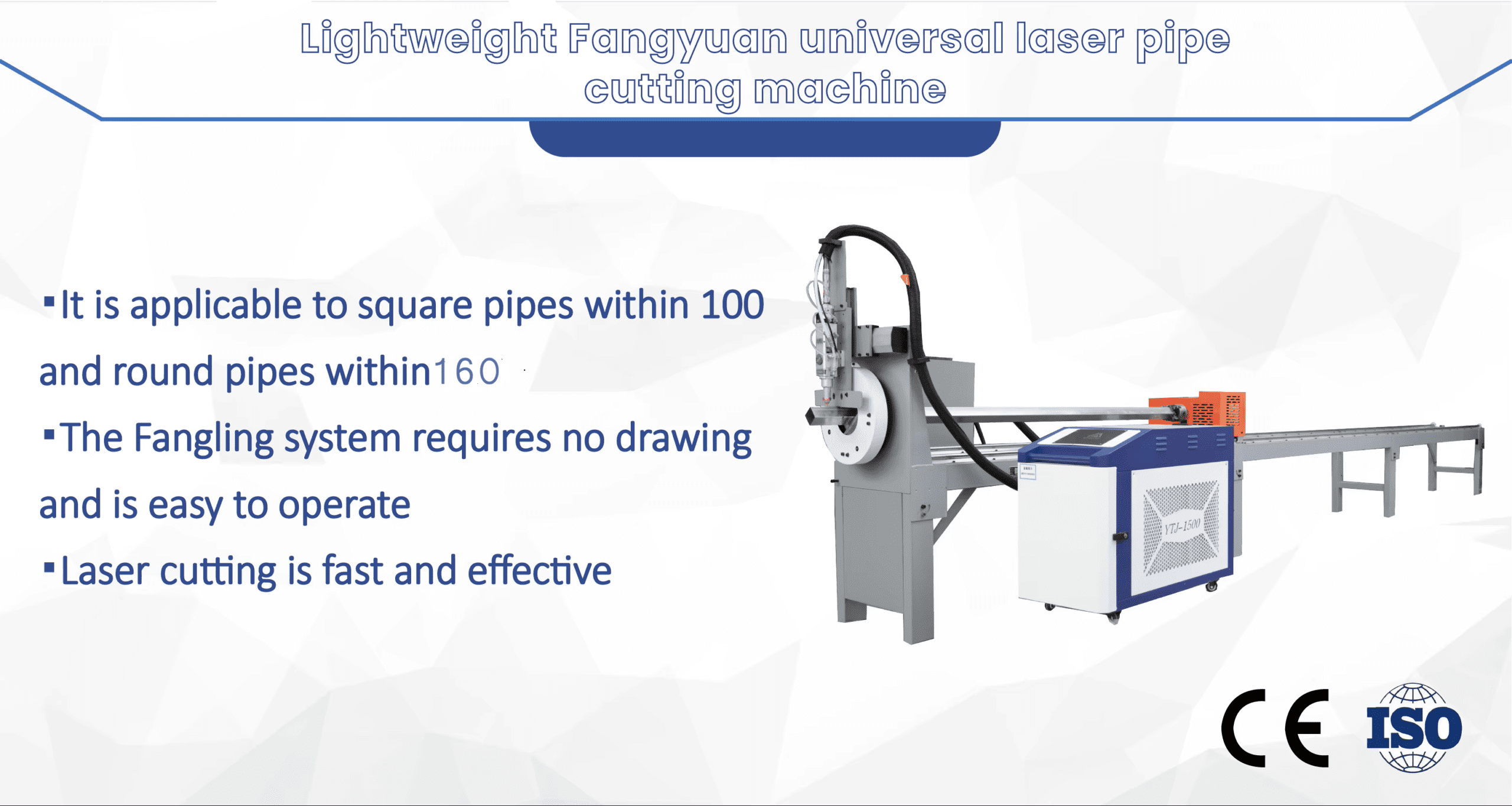
The synergy between the 6000W source and the automatic structural processing unit is facilitated by a dynamic focal adjustment system. Unlike lower-wattage systems, the 6000W source provides sufficient energy to maintain a narrow Heat Affected Zone (HAZ). This is paramount in railway applications where the metallurgical integrity of the beam must remain uncompromised to prevent stress fractures under cyclical loading. The high power density allows for oxygen-assisted cutting with minimized dross, virtually eliminating the need for post-process grinding—a major bottleneck in traditional Rosario fabrication shops.
3.0 Zero-Waste Nesting: Algorithmic Material Optimization
In the context of heavy profile steel—where individual beams can exceed 12 meters in length—material utilization is often suboptimal due to the “end-scrap” phenomenon. The Zero-Waste Nesting technology deployed in this system utilizes a “Common-Line Cutting” (CLC) logic specifically adapted for 3D profiles.
3.1 Mechanical Precision and Edge Detection: The system employs a high-sensitivity laser displacement sensor to map the actual deformation of the structural steel before cutting. Because structural profiles in the Rosario supply chain often exhibit slight bowing or dimensional variances from the mill, the Zero-Waste algorithm dynamically recalibrates the nesting path to the actual material geometry. This ensures that the “zero-waste” goal does not come at the cost of dimensional accuracy.
3.2 Lead-in/Lead-out Optimization: Traditional nesting requires significant “bridge” material between parts for lead-ins. The Zero-Waste system utilizes a tangential approach logic, where the exit of one cut serves as the entry for the next. In the production of railway sleeper components, this has resulted in a measured material yield increase from 84% (traditional methods) to 98.2%. In a facility processing 500 tons of steel monthly, the ROI on this optimization alone is realized within the first fiscal quarter.
4.0 Application in Rosario’s Railway Infrastructure
Rosario’s railway expansion requires the massive fabrication of structural junctions and bridge components. These parts involve complex intersections where H-beams must be notched, mitered, and perforated to accept high-tension bolts.
4.1 Bridge Truss Fabrication
The Universal Profile System’s ability to handle 5-axis 3D cutting allows for complex beveling. For the renovation of aging rail bridges over the Paraná River tributaries, the 6000W laser was programmed to cut 45-degree bevels on 20mm web thicknesses. The precision of the laser ensures that when the trusses are assembled on-site, the fit-up gap is less than 0.5mm, significantly improving the quality of the subsequent robotic welding phase. This precision reduces the amount of filler metal required and ensures a more uniform load distribution across the bridge structure.
4.2 Rolling Stock Maintenance and Component Production
For the freight wagons operating out of the Rosario port terminals, the laser system is utilized to produce replacement side sills and bolster plates. The 6000W source handles the tough, scale-heavy surface of reclaimed or weathered steel with ease. The Zero-Waste Nesting allows for the “chain cutting” of small brackets and fasteners out of the webbing scrap of larger beams, essentially turning what was previously high-value scrap into usable inventory.
5.0 Automation and Structural Processing Synergies
The “Universal” aspect of the system refers to its ability to transition between different profile shapes without manual mechanical recalibration. The system utilizes a four-chuck rotary system that provides 360-degree access to the profile. When synchronized with the 6000W fiber source, the throughput is limited only by the material handling speed.
5.1 Integrated Loading/Unloading: In the Rosario installation, the system is integrated with an automated hydraulic lifting rack. The nesting software communicates directly with the loader, signaling the specific beam length required for the next “Zero-Waste” run. This eliminates human error in material selection and ensures that the machine never runs dry.
5.2 Path Optimization for Thermal Control: Cutting heavy steel with a 6000W laser generates significant local heat. The system’s path optimization software uses a “Heat Dissipation Nesting” strategy. It jumps between non-contiguous sections of the beam to prevent thermal expansion from shifting the material out of tolerance. This is particularly vital for the long-span beams used in Rosario’s warehouse rail sidings, where a 2mm shift over 10 meters would result in a rejected part.
6.0 Engineering Analysis of Cut Quality
Post-operational analysis of the processed ASTM A572 steel shows a surface roughness (Ra) of less than 25 microns. The kerf width remains constant at 0.35mm, even during high-speed cornering maneuvers. The lack of mechanical stress—typical of punching or shearing—means there is no work-hardening of the hole edges. For the Rosario rail sector, this is a critical safety advantage, as work-hardened edges are susceptible to stress-corrosion cracking over time under the heavy vibration of freight traffic.
7.0 Conclusion
The deployment of the 6000W Universal Profile Steel Laser System in Rosario marks a technological milestone for the region’s heavy industry. By combining the raw power of a 6kW fiber source with the mathematical efficiency of Zero-Waste Nesting, the facility has achieved a 40% increase in throughput while simultaneously reducing material waste by 14%. The precision of the 3D cutting head has streamlined the assembly of complex railway structures, ensuring that the infrastructure supporting Argentina’s logistical heart is built to the highest possible technical standards. Future iterations will focus on integrating real-time AI-based kerf monitoring to further refine the “zero-waste” parameters during 24/7 unmanned operations.
Report Compiled By:
Senior Lead Engineer, Laser Systems & Structural Steel Division
Field Operations – Rosario Sector













