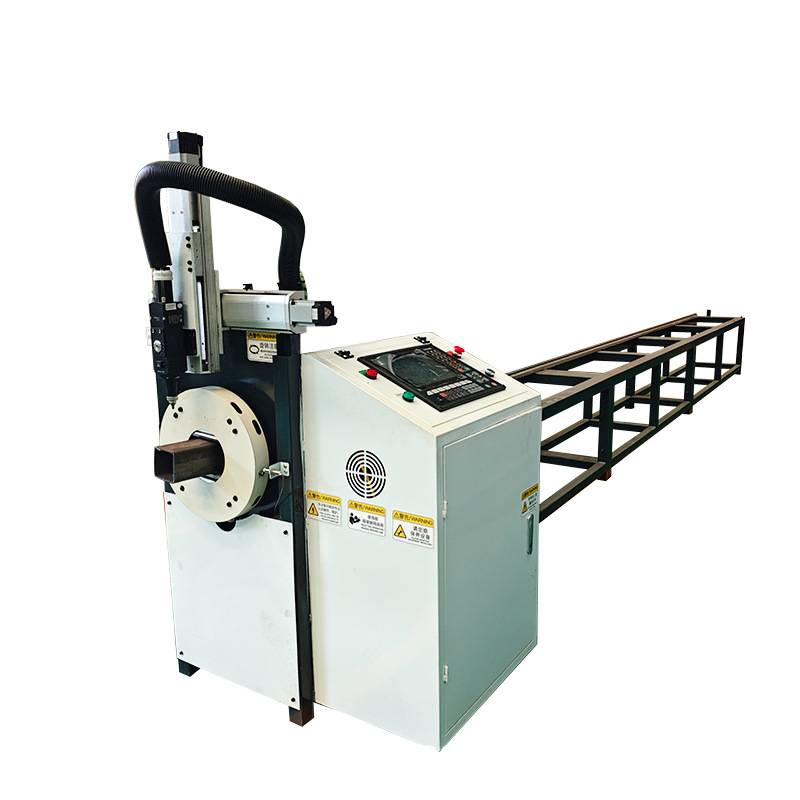
Field Technical Report: Implementation of 12kW Universal Profile Laser Systems in Wind Turbine Tower Fabrication
1. Executive Summary
This report analyzes the technical deployment of a 12kW Fiber Laser Universal Profile System specifically configured for the heavy-duty structural requirements of the wind energy sector in Dammam, Saudi Arabia. The primary objective of this installation is to replace legacy plasma and mechanical sawing processes with high-brightness fiber laser technology. The integration of “Automatic Unloading” mechanisms addresses the critical bottleneck of material handling in heavy-section steel (H-beams, I-beams, and large diameter tubes), ensuring that the high-speed throughput of the 12kW source is not compromised by manual extraction delays or geometric inaccuracies caused by improper material support.
2. Site Context: Dammam Wind Energy Infrastructure
Dammam’s industrial zone is currently pivoting toward the localization of renewable energy components, specifically wind turbine tower (WTT) internals and foundational structural elements. These components require processing of S355 and S420 structural steels with thicknesses ranging from 12mm to 30mm.
The environment in Dammam presents specific challenges: high ambient temperatures and saline-rich air. The 12kW system deployed utilizes a dual-circuit cooling architecture and a pressurized optical cabinet to prevent particulate ingress, ensuring the BPP (Beam Parameter Product) remains stable during extended duty cycles.
3. 12kW Fiber Laser Source: Thermodynamic and Kinematic Synergy
The 12kW power rating is the “sweet spot” for structural profile processing. At this wattage, the energy density at the focal point allows for “High-Speed Fusion Cutting” using Nitrogen for thinner internal brackets and “Oxygen-Assisted Reactive Cutting” for the primary structural ribs and flange connectors.
3.1. Kerf Control and Heat Affected Zone (HAZ)
In wind tower construction, fatigue resistance is paramount. Legacy plasma cutting creates a wide HAZ, which can act as a site for crack initiation. The 12kW fiber source, coupled with a high-dynamic cutting head, narrows the HAZ by over 60%. The power modulation allows for precise control of the melt pool, resulting in a square-edge finish on H-beam flanges that requires zero post-process grinding before welding.
3.2. Piercing Technology
For thick-walled profiles used in tower base reinforcements, the system employs “Multistage Frequency-Modulated Piercing.” This reduces “back-splash” damage to the ceramic nozzle and ensures that the entry hole diameter is minimized, maintaining the structural integrity of the profile.
4. Universal Profile Processing Mechanics
The “Universal” designation refers to the system’s ability to transition between different cross-sections (H, I, L, U, and C profiles) without manual re-tooling.
4.1. Four-Chuck Kinematics
To handle the 12-meter lengths common in Dammam’s fabrication yards, a four-chuck system is utilized. This configuration provides superior stability during rotation. The “Zero-Tailing” technology allows the laser head to cut between the chucks, significantly reducing material waste—a critical factor given the high cost of specialized structural steel.
4.2. Geometric Compensation Algorithms
Structural steel is rarely perfectly straight. The system utilizes a laser-based “Touch-and-Map” sensor to scan the profile’s actual geometry before cutting. The CNC controller then adjusts the cutting path in real-time to compensate for “web-bowing” or “flange-tilt,” ensuring that bolt holes for tower segments align within a ±0.1mm tolerance.
5. Automatic Unloading Technology: Solving the Efficiency Paradox
The high-speed cutting capability of a 12kW laser often leads to a bottleneck at the unloading stage. Manual unloading of a 500kg H-beam is slow and hazardous.
5.1. Synchronized Hydraulic Support
The Automatic Unloading system utilizes a series of hydraulic lifting arms synchronized with the CNC’s X-axis movement. As the laser completes the final cut, the unloading arms rise to meet the profile. This prevents the “cantilever drop,” where the weight of the cut piece causes it to bend or snap prematurely, damaging the finish or the machine’s internal components.
5.2. Sorting and Buffering
In the Dammam facility, the unloading system is integrated with a lateral chain conveyor. Cut parts are automatically moved to designated “buffer zones” based on their nesting ID. This allows the laser to begin the next cycle immediately, increasing the “Beam-On” time from an industry average of 45% to over 85%.
5.3. Protection of Surface Integrity
Wind tower internals often utilize pre-coated or high-density steel. The automatic unloading arms are fitted with non-marring polymer rollers. This prevents surface scratches that could lead to accelerated corrosion in the humid, saline environment of the Eastern Province.
6. Impact on Wind Turbine Tower (WTT) Fabrication
The application of this system in Dammam focuses on several key tower components:
- Platform Support Beams: Precision-cut H-beams with pre-drilled bolt patterns for interior service platforms.
- Ladders and Cable Tray Mounts: High-speed processing of light-gauge C-channels.
- Foundation Bolt Templates: Massive circular profiles cut from thick-walled tube or bent plate.
By utilizing the 12kW system, the production cycle for a single tower segment’s internal structural kit has been reduced from 14 hours (mechanical) to 2.5 hours (laser).
7. Environmental and Operational Stability in Dammam
The Dammam climate requires specific engineering adaptations for 12kW systems. The external chiller units are oversized by 30% to account for 50°C peak summer temperatures. Furthermore, the 12kW source is housed in an air-conditioned, dust-proof ISO-container-style housing to prevent thermal drift in the laser diodes.
The Automatic Unloading system also serves a safety function in this heat; by reducing the need for manual labor in the vicinity of the machine, operators can manage the system from a climate-controlled pulpit, reducing heat-related fatigue and improving overall site safety metrics.
8. Technical Conclusion
The deployment of the 12kW Universal Profile Laser System with Automatic Unloading represents a significant leap in structural steel fabrication for the Saudi wind sector. The synergy between high-wattage fiber sources and automated material handling addresses the three pillars of modern engineering: Precision, Throughput, and Safety. For the Dammam wind projects, this technology ensures that the localized production of tower components meets international IEC standards while maintaining a competitive cost-per-part through the elimination of secondary processing and manual handling overheads.
End of Report
Ref: STR-LAS-DH-2024-089
Lead Engineer: [Senior Laser & steel structure Specialist]













