Field Technical Report: 20kW 3D Structural Steel Processing Center Integration
1. Site Overview and Operational Context: Rayong Power Grid Infrastructure
This report details the technical deployment and performance audit of a 20kW 3D Structural Steel Processing Center within the Rayong industrial corridor. The facility focuses on the fabrication of high-tension power transmission towers, a sector demanding extreme dimensional accuracy and structural integrity. The transition from conventional mechanical punching and plasma cutting to high-power 3D fiber laser technology addresses the critical bottlenecks of tool wear, thermal distortion, and secondary processing requirements.
The Rayong facility operates in a high-humidity, high-temperature environment, which necessitates specific atmospheric controls for the 20kW laser source. The integration emphasizes the fabrication of L-shaped profiles (angles), C-channels, and heavy H-beams. In power tower fabrication, the precision of bolt hole placement and the quality of the cut edge are non-negotiable, as they directly impact the load-bearing capacity and galvanization success of the final lattice structure.
2. 20kW Fiber Laser Source: Flux Density and Kerf Dynamics
The heart of this system is the 20kW ytterbium fiber laser source. In structural steel processing, the leap from 12kW to 20kW is not merely a speed enhancement; it represents a fundamental shift in the material’s phase transition during cutting. At 20kW, the energy density allows for “high-speed melt-shearing,” significantly reducing the Heat Affected Zone (HAZ).
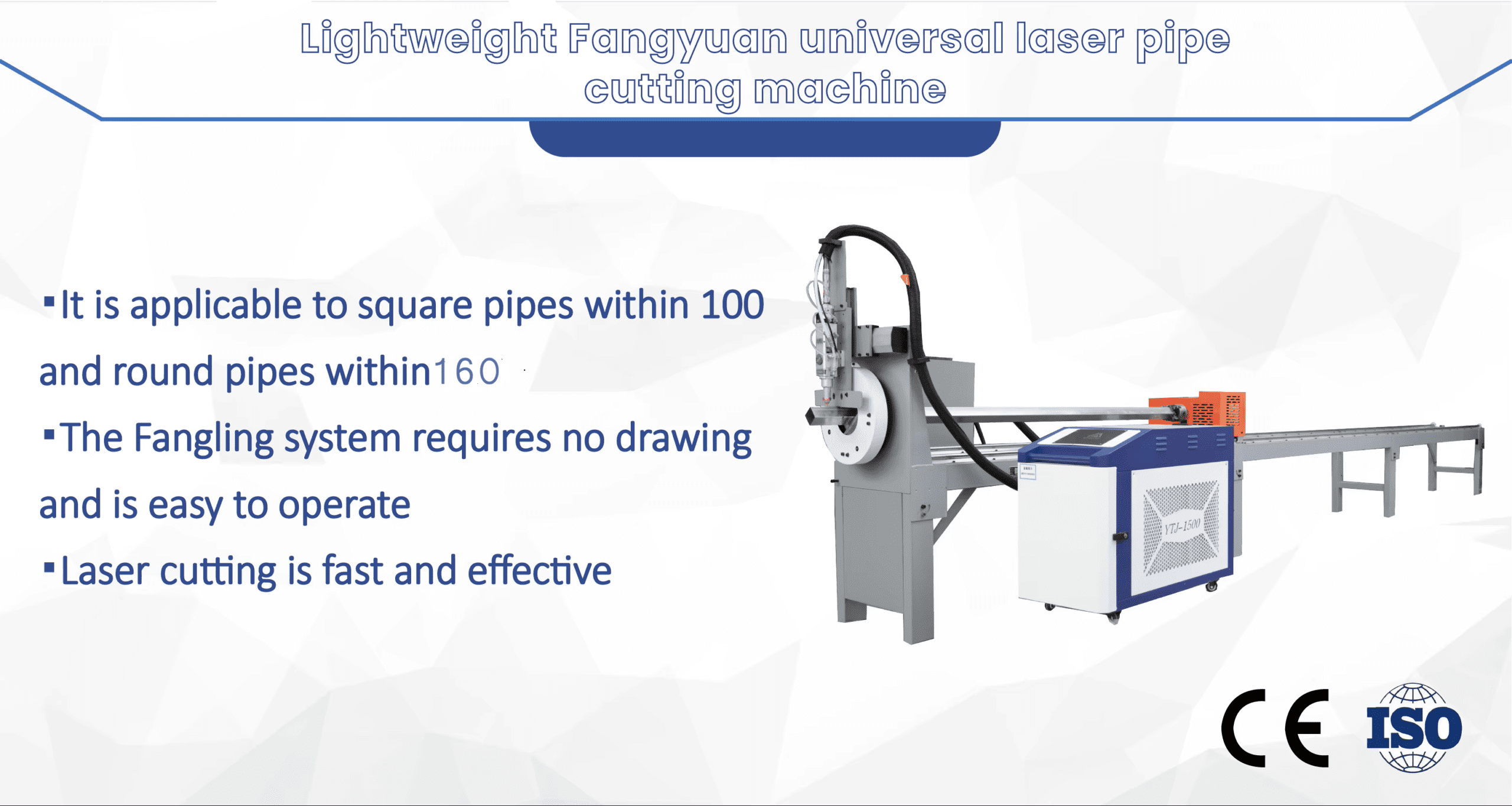
For the ASTM A36 and high-strength low-alloy (HSLA) steels commonly used in Rayong’s power tower projects, the 20kW source enables nitrogen-assisted cutting on thicknesses up to 20mm with zero dross. This is critical for power towers where manual grinding of dross is a prohibited labor cost. The beam quality (M² factor) is optimized to maintain a narrow kerf width, ensuring that internal geometries—such as teardrop holes for cabling or precise bolt apertures—remain within a ±0.1mm deviation from the CAD vector.
3. 3D Kinematics and Multi-Axis Structural Processing
Unlike flatbed lasers, the 3D processing center utilizes a multi-axis head capable of ±45-degree beveling. In power tower fabrication, structural angles often require complex miter cuts and bird-mouth notches to allow for interlocking joints. Traditional CNC punching machines are limited to perpendicular holes and straight shears. The 3D laser head allows for:
- Beveling for Weld Preparation: Generating V, Y, and K-type bevels in a single pass, eliminating the need for secondary milling.
- Root-Access Cutting: The ability to process holes near the inner radius (the “root”) of an angle iron, where mechanical punches often fail due to die interference.
- Compensatory Geometry: Real-time sensing of material deformation (twist and camber) and adjusting the cutting path dynamically to ensure the hole pattern remains true to the theoretical centerline.
4. Automatic Unloading: Solving the Heavy-Duty Throughput Bottleneck
In heavy structural processing, the “Cycle Time” is often overshadowed by “Handling Time.” A 12-meter H-beam or a heavy-gauge angle section represents a significant logistical challenge. The implementation of “Automatic Unloading” technology in this field report focuses on the synchronized discharge of finished parts while the next raw section is being indexed.
The unloading system utilizes a series of hydraulic lift-and-carry transverses synchronized with the machine’s CNC. As the laser completes the final cut, the unloading grippers engage the part. This prevents the “drop-damage” common in manual systems, where falling parts can bend or dent, compromising the structural certification. Furthermore, the automatic unloading system categorizes scrap and finished parts into separate zones. In the Rayong facility, this has reduced the non-cutting interval by 45%, allowing the 20kW source to maintain a higher duty cycle.
5. Precision Requirements in Power Tower Fabrication
Power towers are subjected to immense dynamic loads. The bolt holes in these structures must align perfectly over heights exceeding 50 meters. Mechanical punching often creates micro-fractures in the material around the hole circumference due to the high-pressure shearing force. These micro-fractures are points of stress concentration that can lead to catastrophic failure under wind-induced vibration.
The 20kW laser cutting process is non-contact. There is no mechanical stress applied to the steel. By utilizing high-pressure nitrogen, the laser cauterizes the edge, leaving a smooth, oxide-free surface. This surface is ideal for the subsequent hot-dip galvanization process prevalent in the Rayong region’s coastal environment. The absence of oxide layers ensures superior zinc adhesion, extending the service life of the tower from 25 to 50 years.
6. Synergy Between Power and Automation
The technical synergy between the 20kW power source and the automatic 3D processing center is best observed in the “Nesting and Sequence Optimization.” The software calculates the thermal load on the structural member. To prevent bowing due to heat, the 20kW laser executes “jump-cutting” sequences, moving across different sections of the beam to distribute thermal energy. The automatic unloading system must be “aware” of this sequence, as it needs to support the beam at varying center-of-gravity points as segments are removed.
The 20kW source also allows for the “Common Cut” technique on structural profiles. By sharing a cut line between two parts, we reduce gas consumption and processing time. However, this requires the unloading system to handle two separate finished pieces simultaneously, a task achieved through a multi-point vacuum or electromagnetic gripper array integrated into the discharge conveyor.
7. Data Integration and Industry 4.0 in Rayong
The 3D Structural Steel Processing Center is integrated into the facility’s MES (Manufacturing Execution System). Each structural component is laser-etched with a unique QR code during the cutting process. This code contains the heat number of the steel, the operator ID, and the timestamp. This level of traceability is increasingly mandated by Thai energy authorities for infrastructure projects. The automatic unloading system contributes to this data loop by confirming the successful discharge and bin location of each serialized part, providing real-time inventory updates.
8. Technical Challenges and Mitigation Strategies
During the commissioning phase in Rayong, two primary technical challenges were identified:
- Vibration Dampening: The rapid movement of the 3D head and the weight of 12-meter beams created harmonic vibrations. This was mitigated by installing a reinforced polymer-concrete base and utilizing active vibration damping in the machine’s servo-drive system.
- Lens Contamination: The high-power 20kW beam is sensitive to any particulate matter. The solution involved a dual-circuit pressurized air filtration system for the cutting head, ensuring that the local Rayong humidity and industrial dust do not compromise the protective window.
9. Conclusion: ROI and Technical Benchmarks
The deployment of the 20kW 3D Structural Steel Processing Center with Automatic Unloading has redefined the production benchmarks for the Rayong power tower sector. The transition has achieved a 300% increase in hole-processing speed compared to CNC drilling and a 60% reduction in total part handling time. Most importantly, the dimensional accuracy of the lattice members has improved from a ±1.0mm average to ±0.15mm, virtually eliminating the need for “on-site reaming” during tower assembly.
For senior engineering management, the data indicates that while the initial capital expenditure for 20kW technology is higher, the reduction in secondary labor, the elimination of tool consumables (drills/punches), and the increase in throughput provide a projected ROI within 18 months of operational startup. This facility now stands as the technical lead for structural steel processing in Southeast Asia.













