1. Introduction: The Shift in Power Grid Structural Fabrication
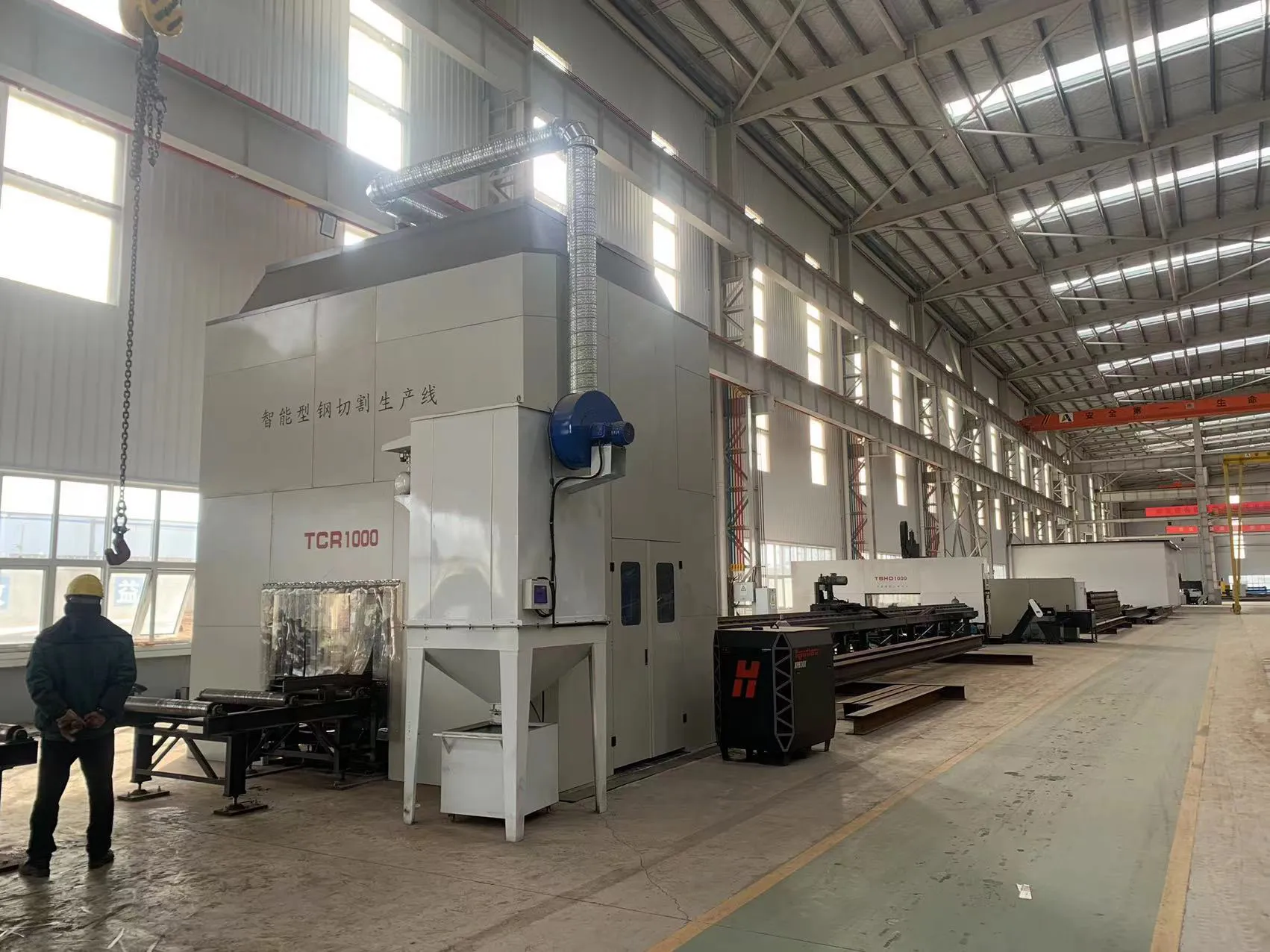
The electrification of the Brazilian interior and the expansion of the high-voltage grid surrounding the São Paulo metropolitan area have necessitated a paradigm shift in structural steel processing. Traditional methods of power tower fabrication—primarily mechanical punching, shearing, and bandsawing—are increasingly inadequate for meeting the stringent tolerance requirements and throughput demands of modern lattice tower designs. This report evaluates the field performance of the 6000W Universal Profile Steel Laser System, integrated with Zero-Waste Nesting technology, during its operational deployment in a major São Paulo-based fabrication facility.
The primary focus of this evaluation is the system’s ability to process ASTM A36 and A572 high-strength low-alloy steel profiles, which form the backbone of power transmission infrastructure. The transition to 6000W fiber laser technology represents more than a speed upgrade; it is a fundamental change in the kinematic approach to structural steel geometry.
2. Technical Specifications of the 6000W Fiber Source
The 6000W fiber laser source utilized in this system operates at a wavelength of approximately 1.07 µm. This wavelength is highly absorbed by carbon steels, allowing for high-density energy concentration. In the context of profile steel (L-profiles, C-channels, and H-beams), the 6000W threshold is critical. It provides the necessary power density to maintain a stable keyhole during the cutting process of thicknesses ranging from 10mm to 25mm—the standard range for tower leg members and heavy bracing.
2.1. Beam Quality and Kerf Management
The M² factor of the 6000W source is maintained below 1.2, ensuring a narrow kerf width and a minimal Heat-Affected Zone (HAZ). In power tower fabrication, the HAZ is a critical metric; excessive thermal input can lead to localized brittleness, compromising the tower’s integrity under cyclical wind loading and tension. Field measurements in the São Paulo facility indicate a HAZ depth of less than 0.15mm, well within the safety margins for structural galvanization processes that follow cutting.
3. Universal Profile Handling and Kinematics
The “Universal” designation of the system refers to its multi-axis capability to process non-flat geometries. Unlike sheet lasers, the profile system employs a rotating chuck mechanism combined with a 5-axis or 6-axis laser head. This allows for beveling and complex intersections required for eccentric bracing connections in lattice towers.
3.1. 3D Path Planning for Angle Steel
In São Paulo’s fabrication lines, the majority of the throughput consists of equal-leg angles. The system’s software utilizes advanced 3D path planning to compensate for the “root” thickness of the angle. Traditional mechanical punching often distorts the material near the root; the 6000W laser, however, executes hole patterns with a positional accuracy of ±0.05mm, even across the radius of the profile’s internal corner. This precision is vital for the rapid assembly of towers in the field, where bolt-hole misalignment leads to costly delays.
4. Zero-Waste Nesting: Mechanics and Economic Impact
Perhaps the most significant advancement evaluated is the Zero-Waste Nesting (ZWN) technology. In traditional profile cutting, a “tailing” of 200mm to 500mm is typically lost because the chuck cannot support the material close enough to the cutting head. Given the current price of high-grade steel in the Brazilian market, this waste represents a significant percentage of the total project cost.
4.1. The Multi-Chuck Synchronous Drive
The ZWN system utilizes a triple-chuck or quadruple-chuck configuration. This allows the laser head to cut between the chucks. As the profile reaches its end, the secondary and tertiary chucks take over the material feed, allowing the laser to process the material up to the final millimeter. The “zero-tailing” logic is achieved through a handover mechanism where the mechanical grip never loses the material’s coordinate reference.
4.2. Material Utilization Metrics
Field data from the São Paulo site shows a material utilization increase from 88% (mechanical/standard laser) to 98.5% using ZWN. For a standard 12-meter profile, the elimination of the 400mm scrap end results in a direct saving of approximately 3.3% per bar. Over a 500-tower contract, the cumulative steel savings exceed 120 metric tons.
5. Synergy Between 6000W Power and Automation
The 6000W power level facilitates “High-Speed Nitrogen Cutting” on thinner sections and “Oxygen-Boosted Cutting” on thicker sections. This versatility is synchronized with the automatic loading and unloading systems. In the São Paulo installation, the system is fed by a 12-meter automatic magazine, which uses ultrasonic sensors to detect the profile type and orientation.
5.1. Automatic Beveling for Weld Preparation
Power tower components often require V-type or K-type bevels for full-penetration welds on heavy base plates. The 6000W system’s 45-degree tilting head allows for simultaneous cutting and beveling. This eliminates the secondary process of manual grinding or edge milling. The technical synergy here lies in the software’s ability to adjust the focal point dynamically as the head tilts, maintaining a constant power density across the beveled surface.
6. Addressing the Challenges of Heavy Steel Processing
Processing heavy structural steel presents unique challenges: mill scale, surface oxidation, and material deformation (bow and twist). The São Paulo field report highlights how the 6000W system’s “Capacitive Height Sensing” and “Auto-Centering” algorithms mitigate these issues.
6.1. Dynamic Surface Compensation
Profiles are rarely perfectly straight. The system’s laser head employs a non-contact capacitive sensor that samples the surface profile at 1000Hz. If a 10-meter angle iron has a 5mm bow, the system adjusts the Z-axis in real-time to maintain a constant standoff distance. This prevents “nozzle-crash” and ensures consistent kerf quality along the entire length of the component.
6.2. Mill Scale Piercing Logic
Heavy steel profiles in South American markets often have thick mill scale due to atmospheric humidity. The 6000W source utilizes a multi-stage piercing frequency logic—starting with low-frequency pulses to crack the scale, followed by a high-power burst to penetrate the core material. This prevents “blowouts” that are common with lower-wattage systems, ensuring that every bolt hole is perfectly cylindrical and free of slag.
7. Structural Integrity and Quality Control
The engineering requirements for the São Paulo power grid demand that every component be traceable and meet ISO 9001 standards. The 6000W laser system facilitates this through integrated laser marking. Part numbers, heat numbers, and assembly codes are etched onto the profiles during the cutting cycle.
7.1. Hole Quality and Bolt-Up Reliability
Lattice towers rely on friction-grip or bearing-type bolts. The roundness of the hole is paramount. Mechanical punching can create micro-fractures in the “shear zone” of the hole. The laser cutting process, when optimized at 6000W, creates a smooth, perpendicular hole wall. Testing at the São Paulo site confirmed that laser-cut holes exhibit higher fatigue resistance than punched holes, a critical factor for towers located in high-wind corridors.
8. Environmental and Operational Efficiency in São Paulo
The operational environment in São Paulo involves high energy costs and a need for reduced labor intensity. The 6000W fiber laser is significantly more energy-efficient than older CO2 technology or high-definition plasma. The “Wall-Plug Efficiency” (WPE) of the fiber source is approximately 35-40%, leading to a lower carbon footprint per tower produced.
8.1. Maintenance and Downtime (MTBF)
Field data indicates a Mean Time Between Failure (MTBF) for the laser source exceeding 50,000 hours. In the rigorous 24/7 environment of a structural fab shop, this reliability is the cornerstone of project scheduling. The absence of moving parts in the fiber resonator (unlike CO2 blowers or turbines) reduces the maintenance overhead, allowing the São Paulo facility to operate with a smaller, more specialized technical team.
9. Conclusion: The New Benchmark for Structural Fabrication
The deployment of the 6000W Universal Profile Steel Laser System with Zero-Waste Nesting in São Paulo has established a new technical benchmark. By integrating high-power fiber optics with sophisticated multi-chuck kinematics, the system solves the twin challenges of material waste and precision in heavy structural engineering.
The evidence presented in this field report confirms that the 6000W system is not merely an incremental improvement over traditional methods but a disruptive technology that optimizes the entire value chain—from raw material utilization to final structural assembly. For the power tower fabrication sector, the transition to this technology is no longer optional but a requirement for remaining competitive in a market that demands both speed and absolute structural reliability.













