1. Technical Overview: The Evolution of Structural Profiling in the Istanbul Industrial Corridor
The industrial landscape of Istanbul, particularly the regions bordering Kocaeli and the specialized logistics zones, has seen a rapid shift toward high-density automated storage and retrieval systems (ASRS). These structures demand structural components—primarily I-beams and H-beams—that meet rigorous seismic standards while maintaining tight dimensional tolerances. The deployment of the 6000W Heavy-Duty I-Beam Laser Profiler equipped with an Infinite Rotation 3D Head represents a critical transition from traditional mechanical drilling and plasma cutting to high-precision thermal photonics.
This report analyzes the mechanical and optical synergy required to process heavy-gauge structural steel. In the context of storage racking, where load-bearing uprights must withstand dynamic forces, the transition to 6000W fiber laser technology ensures that the Heat Affected Zone (HAZ) is minimized, thereby preserving the metallurgical integrity of the S235JR and S355J2 grade steels commonly utilized in Turkish manufacturing hubs.
2. Kinematics of the Infinite Rotation 3D Head
2.1 Mechanical Degrees of Freedom
Traditional 3D laser heads are often constrained by “cable wrap” limitations, requiring a de-rotation cycle after a certain degree of travel (typically +/- 360 degrees). In a high-throughput racking production line, this dead time reduces duty cycles by 15-20%. The Infinite Rotation 3D Head utilizes a specialized slip-ring assembly and fiber-optic rotary joint that allows for continuous N×360° rotation on the C-axis and significant tilt on the A/B axes.
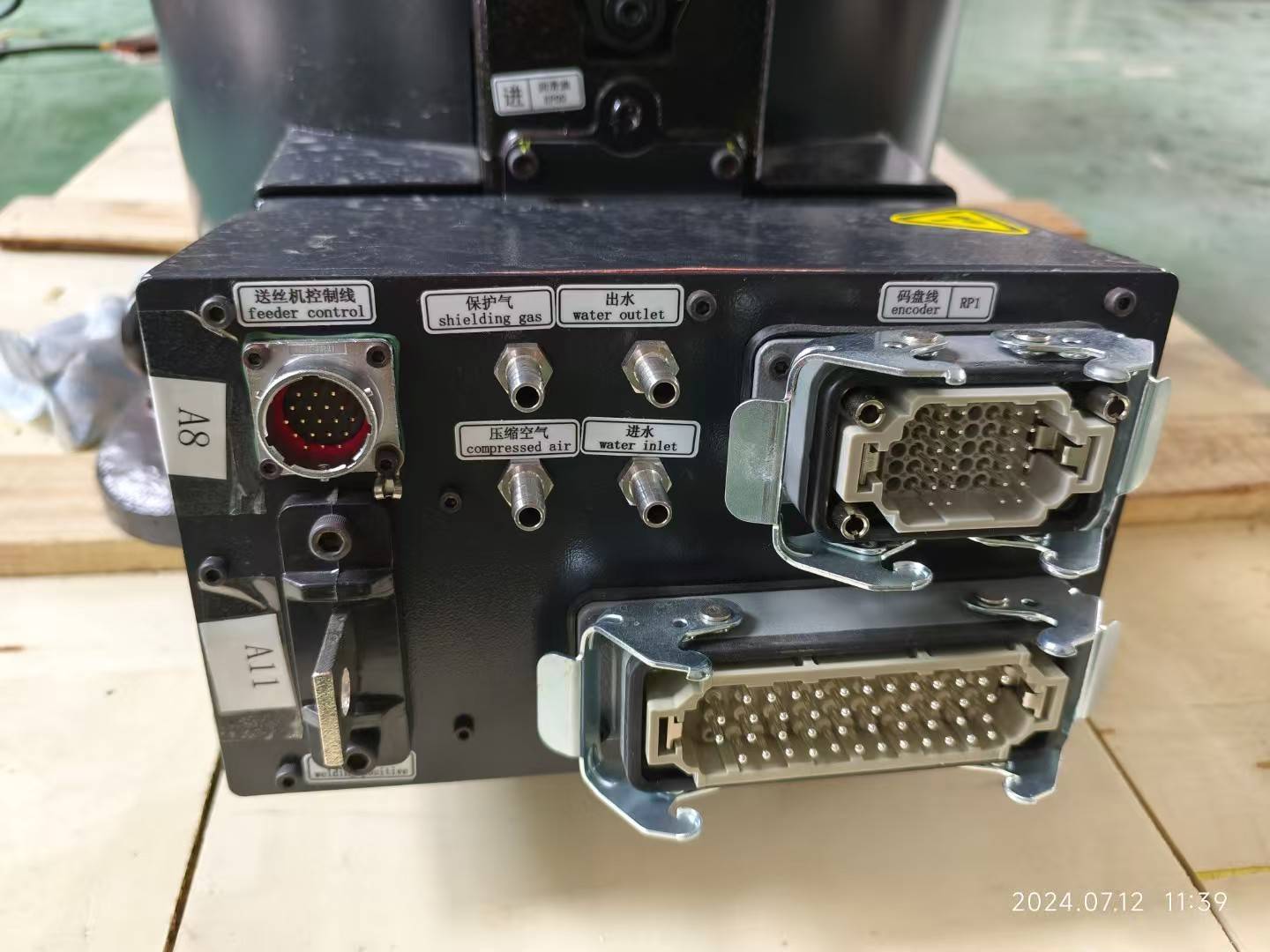
For I-beam processing, this is vital. When the laser head transitions from the web of the beam to the inner side of the flange, it must maintain a constant standoff distance and nozzle perpendicularity. The infinite rotation capability allows the software to calculate the most efficient toolpath without being forced into a reset move. This results in a seamless cut across the complex geometry of the flange-web junction, a common failure point in traditional CNC plasma workflows.
2.2 Beveling and Joint Preparation
Storage racking systems in seismic zones like Istanbul require high-penetration welds. The 3D head enables precision beveling (K, Y, and X joints) directly during the profiling stage. By achieving a +/- 45-degree tilt with micron-level repeatability, the 6000W profiler eliminates the need for secondary edge preparation. This “one-pass” philosophy is the cornerstone of modern structural engineering efficiency.
3. 6000W Fiber Laser Source: Power Density and Material Interaction
3.1 The 6kW Threshold
While 3kW sources are sufficient for thin-walled tubing, the heavy-duty structural I-beams (IPE 140 to IPE 600) used in heavy-duty racking require the 6000W threshold to maintain high feed rates on thicknesses ranging from 8mm to 20mm. At 6000W, the power density at the focal point is sufficient to maintain a stable melt pool even when the laser encounters the varied cross-sections of an I-beam, where the thickness can effectively double at the fillets.
3.2 Gas Dynamics and Kerf Control
The integration of the 6000W source allows for the use of high-pressure Nitrogen for clean cuts in thinner sections or Oxygen for rapid oxidation cutting in thicker structural members. In Istanbul’s racking sector, where aesthetic finish is secondary to structural fitment, Oxygen-assisted cutting on the 6kW platform allows for speeds exceeding 1.5m/min on 12mm web sections. The control system must dynamically adjust gas pressure as the 3D head rotates to compensate for the changing gravitational influence on the dross ejection, particularly during vertical or inverted cutting maneuvers.
4. Application Specifics: Storage Racking and Seismic Integrity
4.1 Precision Slotting and Bolt-Hole Geometry
Storage racking systems rely on interlocking components and high-tensile bolting. Traditional punching methods introduce micro-fractures around the hole circumference, which can propagate under the cyclic loading of a warehouse environment. The 6000W laser profiler produces holes with a cylindricity and surface finish that far exceed ISO 9013 Grade 2 standards.
By utilizing the 3D head, we can cut “dog-bone” features and complex interlocking slots into the flanges of I-beams. These features allow for the direct insertion of cross-beams with a friction-fit tolerance, reducing the reliance on field welding. In Istanbul, where site-welding is subject to strict inspection due to seismic regulations, the ability to produce “shop-ready” bolt-up components is a significant logistical advantage.
4.2 Heavy-Duty Bed and Material Handling
A 6000W laser is only as effective as the material handling system supporting it. Heavy-duty I-beams are rarely perfectly straight. The profiler utilizes a series of hydraulic centering chucks and a 4-axis roller bed designed to support weights up to 150kg/m. The system employs real-time laser scanning (touch-probing or non-contact optical sensing) to map the actual profile of the beam before cutting. This “Active Shape Compensation” ensures that the 3D head adjusts its Z-height and rotation in real-time to follow the beam’s natural camber and sweep, ensuring that every slot and hole is positioned relative to the beam’s actual centerline rather than a theoretical CAD model.
5. Efficiency Metrics and Economic Analysis for the Istanbul Market
5.1 Throughput vs. Traditional Methods
In a comparative study of a 10,000-ton racking project, the use of the 6000W 3D Profiler reduced the total processing time by 45% compared to a standard CNC drill line and plasma cutter. The primary time savings are found in:
- Elimination of Tool Changes: The laser performs drilling, slotting, and marking in one process.
- Reduced Handling: The heavy-duty feed system moves the beam through the cutting zone in a single linear flow.
- Nesting Efficiency: Advanced 3D nesting software optimizes the cuts to minimize scrap in high-value S355J2 I-beams.
5.2 Energy Consumption and Operational Cost
While the initial capital expenditure for a 6000W 3D system is higher, the “Cost Per Part” is lower due to the wall-plug efficiency of fiber laser sources (approx. 35-40%). In the Istanbul industrial electricity tariff bracket, the reduction in secondary processing (deburring, grinding, and re-drilling) translates to an estimated 30% reduction in total operational expenditure (OPEX) over a 24-month horizon.
6. Structural Engineering Conclusion: The Seismic Advantage
From the perspective of a senior engineer, the most critical advantage of the Infinite Rotation 3D Head in the Istanbul market is the consistency of the heat input. In earthquake-prone regions, the ductility of the racking uprights is paramount. The 6000W fiber laser, with its high-speed processing and narrow kerf, ensures a minimal Heat Affected Zone. This preserves the base metal’s yield strength and elongation properties, ensuring that under extreme seismic loading, the structure fails gracefully through plastic deformation rather than brittle fracture at a poorly cut bolt hole or a low-quality plasma-cut edge.
The integration of the 6000W Heavy-Duty I-Beam Laser Profiler is not merely an upgrade in speed; it is a fundamental shift toward “Digital Steel Construction.” For the Istanbul storage racking sector, this technology provides the precision required for modern automated warehouses while meeting the stringent safety requirements of a high-seismic zone.
Field Report End.
Signature: Senior Laser & steel structures Consultant













