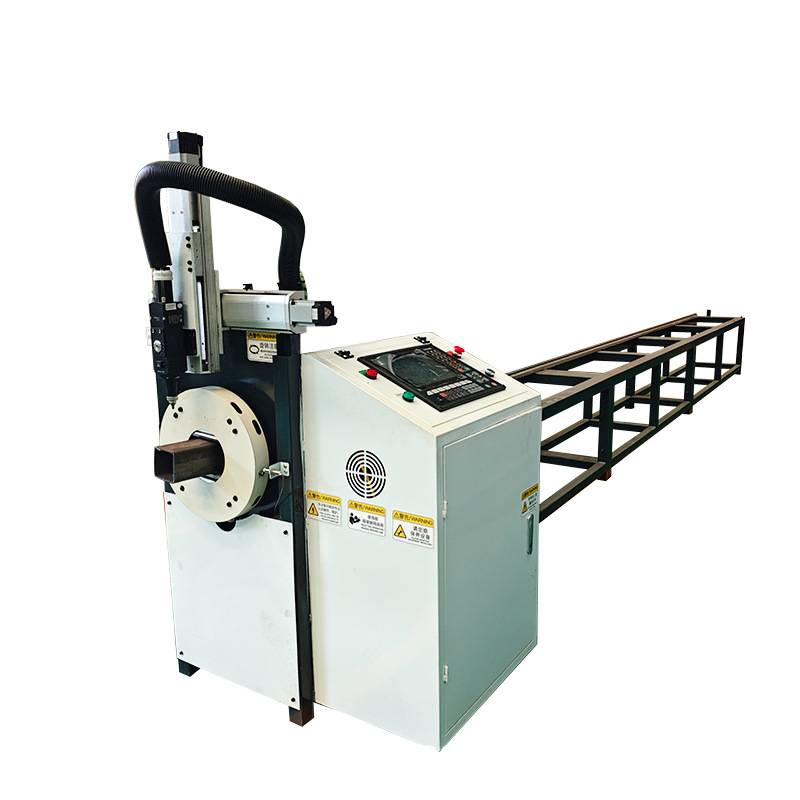
Technical Field Report: Implementation of 6000W Fiber Laser Systems in Structural Steel Fabrication
1. Executive Summary: The Shift in Istanbul’s Power Infrastructure Sector
The industrial landscape of the Marmara region, particularly the concentrated steel fabrication clusters in Istanbul and Kocaeli, is undergoing a rigorous transition from traditional mechanical drilling and plasma cutting to high-density fiber laser processing. This report evaluates the deployment of 6000W CNC Beam and Channel Laser Cutters specifically optimized for the fabrication of power transmission towers.
The primary technical objective is the mitigation of material waste and the enhancement of structural integrity in high-tension lattice towers. In an environment where raw material costs fluctuate significantly, the “Zero-Waste Nesting” protocols provided by modern 4-chuck CNC systems represent a critical evolution in production efficiency.
2. 6000W Fiber Laser Source: Energy Density and Thermal Dynamics
The selection of a 6000W fiber laser source is not arbitrary; it represents the optimal power-to-thickness ratio for the medium-to-heavy structural profiles (L-profiles and U-channels) typical of Istanbul’s power grid expansion.
A. Kerf Precision and HAZ Control: At 6000W, the energy density allows for rapid sublimation of structural steel up to 20mm with minimal Heat-Affected Zones (HAZ). In power tower fabrication, the structural integrity of the bolt holes is paramount. Traditional plasma cutting creates a significant HAZ that can lead to micro-cracking under the cyclic loading of wind-stressed towers. The 6kW laser maintains a narrow kerf (typically 0.15mm to 0.25mm), ensuring that the metallurgical properties of the S355JR or S275JR steel remain within tolerance.
B. Piercing Dynamics: The 6000W source utilizes high-pressure nitrogen or oxygen-assisted piercing. For 10-15mm angle steel, the piercing time is reduced by approximately 60% compared to 3000W systems, significantly decreasing the cumulative cycle time per tower section.
3. Zero-Waste Nesting: Technical Methodology and Chuck Synchronization
The “Zero-Waste” designation in CNC beam processing refers to the system’s ability to process the leading and trailing ends of a profile without leaving the standard 200mm to 400mm “drop” or remnant.
A. The 4-Chuck Kinematic Chain: Standard 2-chuck or 3-chuck systems lose grip on the workpiece as the final cut approaches the rear chuck. The zero-waste architecture utilizes a four-chuck synchronous system. Chucks A and B manage the initial feed and rotation, while Chucks C and D provide handover support. This allows the cutting head to process the material between the chucks, enabling the system to utilize 99.5% of the raw beam length.
B. Nesting Algorithms for Power Tower Geometries: Power tower components consist of high-volume, repetitive angle irons of varying lengths. Zero-waste nesting software utilizes common-line cutting (sharing a single cut line between two parts) and “bridge nesting.” In Istanbul’s high-output facilities, this technology has demonstrated a reduction in scrap rates from the industry average of 8-12% down to less than 1.5%.
4. Application Specifics: Power Tower Fabrication in Istanbul
Istanbul serves as a hub for both domestic grid modernization and export to European and Middle Eastern markets. The technical requirements for these markets are stringent, requiring adherence to EN 1090-2 standards.
A. Geometry Processing (L and U Profiles): Power towers rely heavily on L-shaped profiles (Equal and Unequal Angles) and U-channels. The 6000W CNC laser utilizes a 3D cutting head with a ±45-degree tilt capability. This allows for the simultaneous cutting of bolt holes, slotting, and mitered ends in a single setup. By eliminating the need to move parts between a band saw and a drill line, the spatial footprint of the factory in Istanbul’s high-cost industrial zones is optimized.
B. Galvanization Readiness: A critical factor in Istanbul’s coastal and humidity-prone environment is the subsequent hot-dip galvanization of tower components. Laser-cut edges, when processed with oxygen, can develop a thin oxide layer that inhibits zinc adhesion. However, the high-speed 6kW fiber laser enables high-pressure nitrogen cutting (fusion cutting) for thicknesses up to 10mm, providing a “galvanize-ready” surface that requires no secondary grinding or pickling.
5. Automation and Structural Processing Synergy
The integration of a 6000W laser with an automatic loading and unloading system creates a continuous production loop.
1. Raw Material Intake: 12-meter bundles of structural steel are loaded onto a chain-driven feeder.
2. Automated Measurement: The CNC system performs a laser-based length and cross-section deviation check. This is crucial as hot-rolled profiles often exhibit slight twisting or dimensional variances. The 6kW system’s software compensates for these deviations in real-time by adjusting the focal point of the laser head.
3. Multi-Axis Execution: While the beam rotates, the laser head moves in a 5-axis trajectory to maintain a perpendicular relationship with the surface, or to execute chamfers for welding preparations.
4. Component Sorting: Post-cut, parts are automatically marked (via laser etching) for assembly tracking—an essential requirement for the complex assembly of power towers.
6. Comparative Analysis: Laser vs. Traditional Mechanical Processing
| Feature | Mechanical Drill/Saw | 6000W Fiber Laser | Impact on Istanbul Facilities |
| :— | :— | :— | :— |
| Precision | ±1.0mm | ±0.1mm | Improved assembly speed on-site. |
| Remnant Waste | 5-10% | <1.5% (Zero-Waste) | Substantial material cost savings. |
| Secondary Ops | Deburring required | None (Clean cut) | Reduced labor costs. |
| Flexibility | Limited to holes/cuts | Infinite (Slots, Etching, 3D) | Faster prototyping for new tower designs. |
7. Engineering Challenges and Solutions in the Field
During the implementation of these 6kW systems in the Istanbul sector, several technical challenges were addressed:
A. Beam Divergence over Long Bed Lengths: To maintain 6000W of power over a 12-meter processing bed, the system utilizes a collimator and a constant-path beam delivery system. This ensures that the power density at the 12th meter is identical to the 1st meter, preventing taper in the cut.
B. Vibration Dampening: Processing heavy L-beams at high speeds generates significant kinetic energy. The machine beds are now constructed with mineral casting or heavy-duty reinforced welding, thermally annealed to prevent deformation. This stability is vital for the seismic-prone geography of the Marmara region, ensuring the machine maintains calibration over long duty cycles.
8. Conclusion: The Strategic Advantage of High-Power Structural Lasers
The deployment of 6000W CNC Beam and Channel Laser Cutters with Zero-Waste Nesting represents a paradigm shift for power tower fabrication in Istanbul. By synthesizing high power density with intelligent material handling, fabricators can achieve a level of precision and material yield previously unattainable with mechanical or plasma-based systems.
The technical data indicates that the reduction in secondary processing and the optimization of material utilization provide a return on investment (ROI) within 14 to 18 months, depending on the throughput volume. For the Istanbul steel sector, this technology is no longer an optional upgrade but a foundational requirement for maintaining competitiveness in the global power infrastructure market.
Field Report Prepared By:
Senior Engineering Consultant
Laser Systems & Structural Steel Division
Date: October 2023













