Mastering 3kW Precision Laser Systems for Aluminum Alloy Fabrication in Guadalajara
In the heart of Mexico’s technological hub, Guadalajara has earned its reputation as the “Silicon Valley of Mexico.” This title is not merely a reflection of its software prowess but a testament to its sophisticated manufacturing sector. As the aerospace, automotive, and electronics industries in Jalisco continue to expand, the demand for high-precision component fabrication has surged. At the center of this industrial evolution is the 3kW precision laser system, a powerhouse tool specifically suited for the complexities of aluminum alloy processing. This guide explores the technical nuances, operational strategies, and regional advantages of deploying 3kW laser cutting technology for aluminum in the Guadalajara industrial corridor.
The Rise of Fiber Laser Technology in Jalisco
The transition from CO2 lasers to fiber laser technology has revolutionized the metalworking landscape. For Guadalajara-based manufacturers, the 3kW fiber laser represents the “sweet spot” of power efficiency and capital investment. Unlike older technologies, fiber lasers utilize an optical fiber doped with rare-earth elements to amplify light, resulting in a beam with a significantly smaller focal diameter and higher energy density. When applied to laser cutting, this precision allows for intricate geometries that were previously impossible or cost-prohibitive to achieve with mechanical punching or plasma cutting.

Technical Advantages of the 3kW Power Rating
While higher wattage machines exist, the 3kW threshold is particularly advantageous for aluminum alloys ranging from 1mm to 12mm in thickness. Aluminum is known for its high thermal conductivity and reflectivity, which can pose challenges for lower-powered systems. A 3kW system provides sufficient energy to overcome the initial reflectance of the material while maintaining a high feed rate. This power level ensures a stable keyhole effect during the laser cutting process, leading to smoother edge finishes and reduced dross (residual molten metal) on the underside of the workpiece.
Understanding Aluminum Alloy Characteristics
Aluminum is the material of choice for Guadalajara’s aerospace and automotive suppliers due to its high strength-to-weight ratio and corrosion resistance. However, from an engineering perspective, it is a “stubborn” material to cut. Alloys such as the 5000 series (magnesium-based) and 6000 series (silicon and magnesium-based) are common in the region. Each responds differently to laser energy.
Managing Reflectivity and Back-Reflections
One of the primary risks in laser cutting aluminum is back-reflection. In its solid state, aluminum can reflect up to 95% of infrared light. In early fiber laser models, this reflected light could travel back up the delivery fiber and damage the laser source. Modern 3kW precision systems are equipped with advanced optical isolators and “back-reflection protection” software. These systems detect abnormal light returns and adjust the beam parameters in real-time, protecting the hardware while maintaining the integrity of the cut.
Thermal Conductivity and Heat Management
Aluminum dissipates heat rapidly. While this is a benefit for the final product, it can be a hindrance during laser cutting. If the laser moves too slowly, the heat spreads into the surrounding material, causing the kerf (the width of the cut) to widen and potentially warping thin sheets. The high-speed capabilities of a 3kW system allow the beam to stay ahead of the thermal conduction zone, concentrating the energy exactly where it is needed to vaporize the metal instantly. This results in a narrow heat-affected zone (HAZ), preserving the mechanical properties of the alloy.
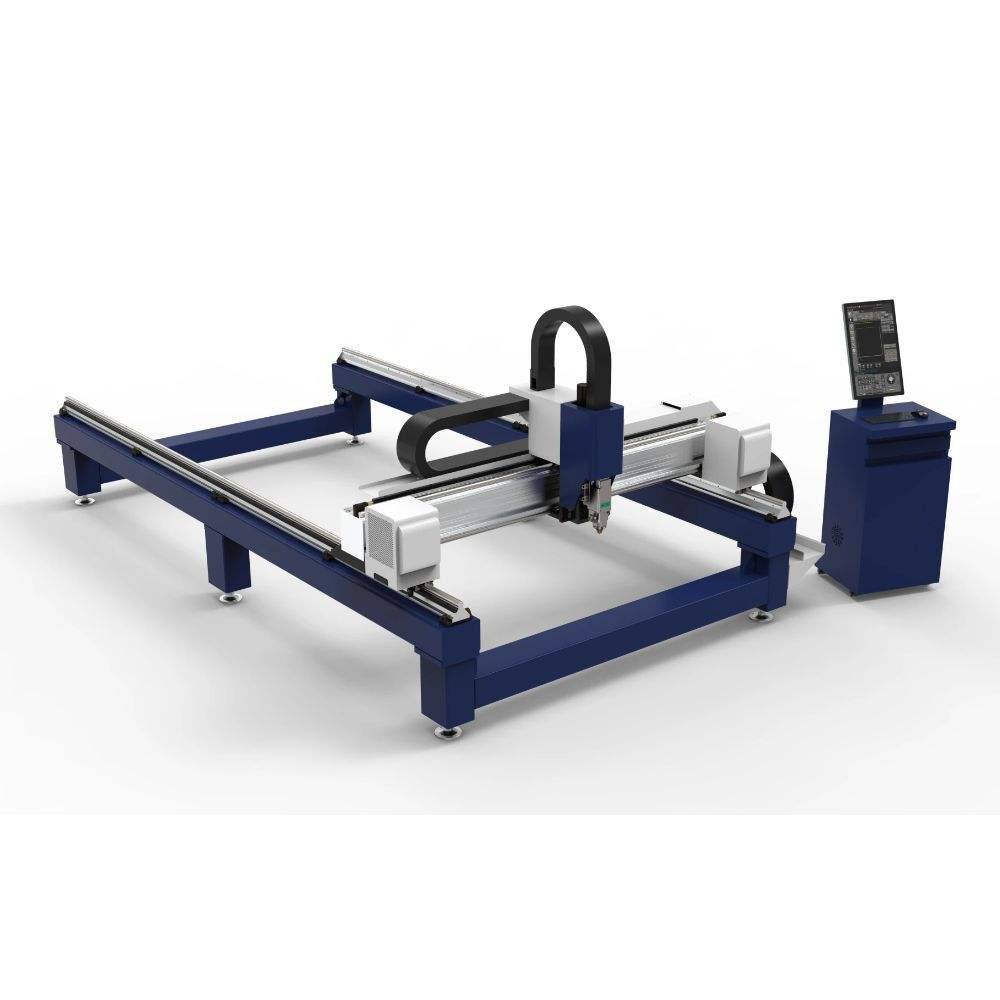
Optimizing the Laser Cutting Process for Guadalajara’s Industry
To achieve aerospace-grade precision in Guadalajara, operators must go beyond simply turning on the machine. Optimization requires a deep understanding of gas dynamics, focal positioning, and CNC programming.
The Role of Assist Gases: Nitrogen vs. Oxygen
For aluminum, the choice of assist gas is critical. While oxygen can be used to increase cutting speeds through an exothermic reaction, it often leaves a heavily oxidized edge that requires secondary cleaning. In Guadalajara’s high-end manufacturing sectors, Nitrogen is the preferred assist gas. Nitrogen acts as a shielding agent, blowing away the molten aluminum before it can react with atmospheric oxygen. This results in a “bright” cut edge that is ready for welding or painting without further processing. High-pressure nitrogen (typically between 12 and 18 bar) is required to ensure the dross is cleanly ejected from the kerf.
Focal Position and Nozzle Calibration
Precision laser cutting of aluminum requires precise control over the focal point. Unlike carbon steel, where the focus is often on the surface, aluminum cutting often requires a “negative focus”—where the beam’s narrowest point is positioned inside or even at the bottom of the material. This helps create a wider exit path for the molten material, preventing it from re-welding to the bottom of the sheet. Modern 3kW systems feature “auto-focus” cutting heads that adjust the lens position dynamically based on the material thickness and type, ensuring consistency across a large production run.
Operational Considerations in the Guadalajara Environment
Guadalajara’s unique geography and climate also play a role in the performance of a 3kW laser system. Situated at an altitude of approximately 1,500 meters, the air density is lower than at sea level, which can affect the cooling efficiency of chillers and the behavior of assist gases.
Climate Control and Chiller Efficiency
Precision lasers generate significant heat within the resonator and the cutting head. In the warm climate of Jalisco, a high-performance, dual-circuit water chiller is non-negotiable. One circuit cools the laser source to maintain wavelength stability, while the other cools the external optics. Operators must ensure that the chiller is rated for the ambient temperatures often seen in Guadalajara’s industrial parks, which can exceed 30°C in the spring. Maintaining a stable temperature prevents thermal expansion of the optical components, which could otherwise cause “focus drift” during long production shifts.
Power Stability and Infrastructure
The 3kW system requires a stable electrical input. Guadalajara’s industrial infrastructure is robust, but voltage fluctuations can still occur. Utilizing a high-quality voltage stabilizer and ensuring proper grounding is essential to protect the sensitive electronics of the CNC controller and the laser source. Consistent power ensures that the laser cutting speed remains uniform, preventing striations or “steps” on the cut surface of the aluminum.
Economic Impact and ROI for Local Manufacturers
Investing in a 3kW precision laser system is a strategic move for Guadalajara-based shops looking to move up the value chain. The ability to handle aluminum with high precision allows these shops to compete for contracts in the medical device and aerospace sectors, which demand tight tolerances (often within +/- 0.05mm).
Reducing Secondary Operations
The primary economic driver for 3kW laser cutting is the elimination of secondary processes. Because the fiber laser produces such a clean edge on aluminum when using nitrogen, the need for deburring, grinding, or edge polishing is virtually eliminated. This speeds up the “dock-to-stock” time and reduces labor costs. In a competitive market like Guadalajara, the ability to deliver finished parts directly from the laser table to the assembly line is a significant competitive advantage.
Material Yield and Nesting Optimization
Aluminum is an expensive raw material. Precision laser systems integrated with advanced nesting software allow manufacturers to place parts incredibly close together. The narrow kerf of the 3kW laser (often as thin as 0.1mm) means that more parts can be harvested from a single sheet of aluminum compared to traditional machining or plasma cutting. For high-volume automotive parts, a 5% increase in material utilization can translate to thousands of dollars in monthly savings.
Maintenance and Future-Proofing Your Laser System
To maintain the precision required for aluminum alloys, a rigorous maintenance schedule is required. The optical path must be kept pristine. In the dusty environments sometimes found in industrial zones, the integrity of the bellows and the cleanliness of the protective windows are paramount.
Optical Health and Consumables
The protective window is the most frequently replaced consumable. If even a tiny speck of aluminum dust settles on the window, the 3kW beam will heat it instantly, potentially cracking the glass or damaging the lens above it. Regular inspections and cleaning in a controlled environment are necessary. Furthermore, nozzle wear must be monitored; a deformed nozzle will disrupt the coaxial flow of nitrogen, leading to turbulent gas flow and a degraded cut quality.
The Path Forward: Automation and Industry 4.0
As Guadalajara moves toward Industry 4.0, 3kW laser systems are becoming increasingly integrated with automated loading and unloading systems. For aluminum fabrication, this means the machine can run “lights-out” shifts, maximizing the ROI. Sensors within the cutting head can now monitor the laser cutting process in real-time, detecting if a “blowout” occurs and pausing the machine before material is wasted. This level of intelligence is what will keep Guadalajara at the forefront of global manufacturing.
Conclusion
The 3kW precision laser system is more than just a tool; it is a gateway to high-tier manufacturing for Guadalajara’s industrial sector. By mastering the specific requirements of aluminum alloy—from managing its reflectivity to optimizing nitrogen assist gas—local manufacturers can produce components that meet the world’s most stringent standards. As the region continues to attract international investment, those who leverage the speed, precision, and efficiency of 3kW laser cutting technology will undoubtedly lead the way in Mexico’s industrial future.













