Introduction: The Evolution of laser cutting in Tijuana’s Industrial Sector
Tijuana has long established itself as a cornerstone of North American manufacturing, serving as a vital hub for the maquiladora industry. As global supply chains shift toward nearshoring, the demand for high-precision metal fabrication has surged. Among the various technologies driving this evolution, the 1.5kW tube laser cutting machine stands out as a critical asset for local manufacturers. Specifically, when dealing with galvanized steel—a material ubiquitous in the construction, HVAC, and automotive sectors of Baja California—the precision of a fiber laser is indispensable.
The 1.5kW power rating represents a “sweet spot” for many medium-to-light industrial applications. It offers a balance between capital expenditure and operational capability, allowing shops in Tijuana to process thin-to-medium wall thicknesses with high efficiency. However, processing galvanized steel introduces unique metallurgical challenges that require a sophisticated understanding of laser physics and gas dynamics. This guide explores the technical nuances of utilizing a 1.5kW tube laser for galvanized applications within the specific industrial context of the Tijuana region.
Technical Specifications of the 1.5kW Fiber Laser Source
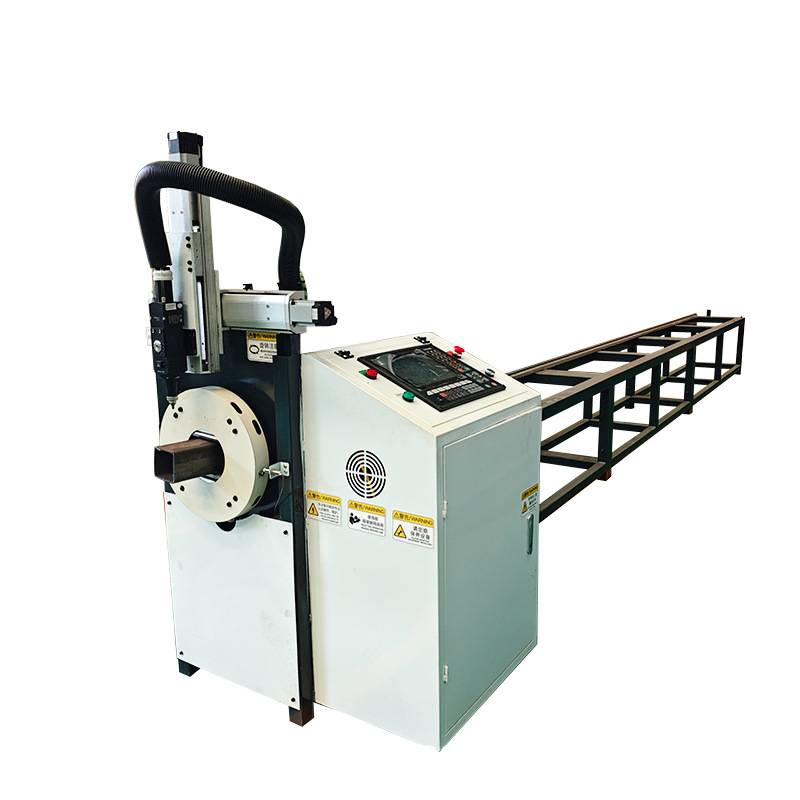
The heart of the tube laser cutting system is the fiber laser source. At 1.5kW, the laser generates a concentrated beam of light with a wavelength of approximately 1.06 microns. This wavelength is highly absorbed by metallic surfaces, making it significantly more efficient than older CO2 technology for cutting reflective materials. For tube processing, the machine integrates a rotary axis (chuck system) that synchronizes with the laser head’s movement along the X and Z axes.
Beam Quality and Focus Dynamics
For a 1.5kW system, the beam quality (M2 factor) is paramount. A high-quality beam allows for a smaller focal spot, which increases the power density at the point of contact. When laser cutting galvanized steel, a tight focus is necessary to pierce the zinc coating quickly and enter the substrate steel. Engineers in Tijuana must calibrate the focal position—often slightly below the material surface for nitrogen-assisted cutting—to ensure a clean kerf and minimal dross attachment.
Chucker and Handling Systems
Tube laser cutting requires precise rotation. Most 1.5kW machines are equipped with pneumatic or hydraulic chucks capable of handling round, square, and rectangular profiles. In the high-volume environments of Tijuana’s industrial parks, automated loading systems are frequently paired with the 1.5kW source to maximize throughput, allowing for continuous operation on 20-foot (6-meter) stock lengths common in the regional supply chain.

The Challenges of Cutting Galvanized Steel
Galvanized steel is carbon steel coated with a layer of zinc to prevent corrosion. While excellent for longevity, the zinc coating poses two primary challenges for laser cutting: a lower melting point than the base steel and the tendency to vaporize violently. Zinc melts at approximately 419°C, while steel melts at around 1370°C. This disparity can lead to “popping” during the pierce and instability in the melt pool.
Managing the Zinc Vapor Barrier
As the laser heats the material, the zinc coating vaporizes before the steel melts. This vapor can interfere with the laser beam and contaminate the protective window of the laser head. In Tijuana’s humid coastal environment, this vapor can also interact with moisture in the air, leading to increased residue buildup. Utilizing a 1.5kW source requires precise parameter management to ensure the vapor is cleared from the cutting path using high-pressure assist gases.
Assist Gas Selection: Oxygen vs. Nitrogen
The choice of assist gas is the most significant factor in the quality of the laser cutting finish on galvanized tubes.
- Oxygen (O2): Acts as an exothermic heat source, speeding up the cut. However, it reacts with the zinc to create a heavily oxidized edge that may require post-processing if the part is to be painted or welded.
- Nitrogen (N2): Uses pure kinetic energy to blow the molten metal out of the kerf. This results in a “bright” edge. For a 1.5kW machine, Nitrogen is preferred for thinner gauges (under 3mm) to maintain the integrity of the galvanized coating near the cut.
Operational Considerations for Tijuana’s Climate
Operating high-precision machinery in Tijuana requires accounting for the local environment. The proximity to the Pacific Ocean introduces salinity and humidity, which can affect both the machine’s electronics and the material’s surface condition. Galvanized steel stored in non-climate-controlled warehouses in Otay Mesa may develop “white rust” (zinc hydroxide), which can slightly alter the laser’s absorption rate during the initial pierce.
Humidity and Laser Optics
High humidity can lead to condensation within the laser’s cooling system or on the optical components. It is essential for Tijuana-based facilities to use high-quality air dryers and chillers that are rated for the local ambient temperature. A 1.5kW fiber laser is sensitive to temperature fluctuations; therefore, maintaining a stable internal environment for the power source is critical for consistent laser cutting performance across multi-shift operations.
Power Stability in Industrial Zones
While Tijuana’s industrial infrastructure is robust, voltage fluctuations can occur. For a fiber laser, clean power is non-negotiable. Installing a voltage stabilizer and an isolation transformer is standard engineering practice to protect the 1.5kW source from surges that could damage the sensitive diodes. This ensures that the laser cutting process remains uninterrupted, preserving the life of the resonator.
Optimizing Parameters for 1.5kW Tube Processing
Achieving a perfect cut on galvanized tube stock involves a delicate balance of power, speed, and frequency. For a 1.5kW system, the following engineering guidelines are typically applied for galvanized carbon steel:
Cutting Speed and Power Modulation
When laser cutting 2mm wall-thickness galvanized square tubing, a 1.5kW machine can typically achieve speeds of 8 to 12 meters per minute depending on the assist gas. It is often beneficial to use “Pulse Mode” when navigating the corners of square or rectangular tubes. Since the material thickness effectively increases at the corner relative to the laser’s path, modulating the power prevents over-burning and maintains a consistent radius.
Nozzle Selection and Stand-off Distance
A double-layer nozzle is generally recommended for oxygen cutting, while a single-layer nozzle is used for high-pressure nitrogen cutting. The stand-off distance—the gap between the nozzle and the tube—must be kept very tight (usually between 0.5mm and 1.0mm). In Tijuana’s competitive manufacturing landscape, reducing dross through precise nozzle calibration can eliminate the need for secondary grinding, significantly lowering the cost per part.
Safety and Environmental Compliance
Laser cutting galvanized steel releases zinc oxide fumes. Inhalation of these fumes can lead to “metal fume fever,” a temporary but serious condition for operators. Engineering controls are mandatory. A high-capacity dust extraction and filtration system must be integrated with the tube laser. In accordance with Mexican STPS (Secretaría del Trabajo y Previsión Social) regulations, facilities in Tijuana must ensure that air quality is maintained and that filters are serviced regularly to capture the fine particulate matter generated by the laser cutting process.
Lens Protection and Maintenance
The vaporization of zinc increases the risk of “back-splatter.” Even with high-pressure assist gas, microscopic particles can reach the protective window. Daily inspection of the optics is required. In a 1.5kW system, a contaminated lens will quickly absorb laser energy, leading to thermal deformation and eventually a cracked lens. Operators should be trained in “clean room” protocols when replacing consumables to prevent dust from entering the cutting head.
Economic Impact for Tijuana Fabricators
The transition to a 1.5kW tube laser represents a significant upgrade from traditional sawing and drilling. For a fabrication shop in Tijuana, the ROI (Return on Investment) is driven by three factors: nesting efficiency, secondary process elimination, and labor reduction. Modern laser cutting software allows for complex “tab-and-slot” designs, which simplify the subsequent welding of galvanized frames, reducing the need for expensive jigs and fixtures.
Market Competitiveness
By offering precision laser cutting of galvanized tubes, local shops can compete for contracts from US-based firms looking for high-quality components without the lead times associated with overseas shipping. The ability to handle diverse profiles—from round fence posts to intricate HVAC ducting supports—positions a 1.5kW-equipped facility as a versatile partner in the regional supply chain.
Conclusion: The Future of Tube Fabrication in Baja
The 1.5kW tube laser cutting machine is more than just a tool; it is a catalyst for industrial sophistication in Tijuana. While galvanized steel presents specific technical hurdles, the precision of fiber laser technology provides the means to overcome them. By focusing on proper assist gas dynamics, environmental controls, and rigorous maintenance, manufacturers in the region can leverage laser cutting to produce world-class components. As the “Made in Mexico” label continues to gain prestige, the integration of such advanced machinery will remain a defining factor in the success of the local engineering community.













