Introduction: The Evolution of Industrial Fabrication in Queretaro
The industrial landscape of Queretaro has undergone a radical transformation over the last decade, transitioning from a regional manufacturing hub into a global powerhouse for aerospace, automotive, and heavy machinery sectors. Central to this evolution is the adoption of advanced thermal processing technologies. Among these, the 2kW precision fiber laser system has emerged as the definitive standard for medium-thickness carbon steel fabrication. As Queretaro’s Tier 1 and Tier 2 suppliers strive for tighter tolerances and higher throughput, understanding the technical nuances of 2kW laser cutting becomes essential for maintaining a competitive edge in the Bajío region.
Carbon steel remains the backbone of structural engineering in Mexico. From chassis components to industrial brackets and architectural frameworks, the demand for clean, burr-free edges is higher than ever. A 2kW system offers a unique balance of electrical efficiency, capital investment, and processing speed, making it the “sweet spot” for shops handling carbon steel plates ranging from 1mm to 16mm in thickness. This guide explores the engineering principles, operational parameters, and localized advantages of deploying these systems within the specific industrial climate of Queretaro.
Technical Specifications of the 2kW Fiber Laser Source
A 2kW fiber laser system operates by generating a high-intensity beam through a series of laser diodes, which is then amplified in a fiber optic cable doped with rare-earth elements like ytterbium. The resulting beam has a wavelength of approximately 1.06 microns, which is significantly better absorbed by carbon steel compared to the 10.6-micron wavelength of traditional CO2 lasers. This high absorption rate translates directly into faster processing speeds and a narrower kerf width.
Beam Parameter Product (BPP) and Focus Stability
The precision of a 2kW system is largely defined by its Beam Parameter Product (BPP). A lower BPP signifies a beam that can be focused into a smaller spot size, increasing the power density at the point of contact. For carbon steel applications, this high power density allows for rapid piercing and consistent vaporization of the material. In Queretaro’s high-production environments, focus stability is critical. Modern 2kW systems utilize autofocus cutting heads that adjust the lens position in real-time, compensating for any thermal expansion or slight variations in material flatness, ensuring that the laser cutting process remains uniform across the entire worktable.

Energy Efficiency and Operational Costs
From an engineering perspective, the Wall-Plug Efficiency (WPE) of a 2kW fiber laser is approximately 30-35%, whereas CO2 systems often struggle to reach 10%. In the context of Queretaro’s industrial electricity tariffs, this efficiency represents a significant reduction in overhead. Furthermore, the solid-state nature of the fiber source eliminates the need for internal moving parts or laser gases, reducing the maintenance interval and increasing the Mean Time Between Failures (MTBF).
Optimizing Laser Cutting for Carbon Steel Grades
Carbon steel is not a monolithic material; its behavior during laser cutting varies significantly based on its carbon content and surface finish. In the Queretaro market, ASTM A36 and SAE 1018 are the most common grades encountered. Processing these materials with a 2kW system requires a deep understanding of the thermo-chemical reactions occurring at the cut edge.
The Role of Oxygen as an Assist Gas
When cutting carbon steel, oxygen is the primary assist gas used. Unlike nitrogen, which acts as a shielding gas to prevent oxidation, oxygen reacts exothermically with the iron in the steel. This reaction adds thermal energy to the process, allowing a 2kW laser to cut thicker sections of carbon steel than would be possible through light energy alone. However, the pressure and purity of the oxygen must be meticulously controlled. Excessive pressure can lead to “burning” or a rough edge profile, while insufficient pressure will fail to eject the molten slag (dross) from the kerf, resulting in a poor finish.
Managing the Heat-Affected Zone (HAZ)
One of the primary concerns for Queretaro’s aerospace contractors is the Heat-Affected Zone. Precision 2kW systems minimize the HAZ by concentrating energy into a very tight area and utilizing high-speed motion control. By maintaining a high feed rate, the duration of thermal exposure to the surrounding material is reduced, preserving the mechanical properties and grain structure of the carbon steel. This is particularly vital for components that will undergo subsequent heat treatment or robotic welding, where edge integrity is paramount.
Mechanical Integration and CNC Control
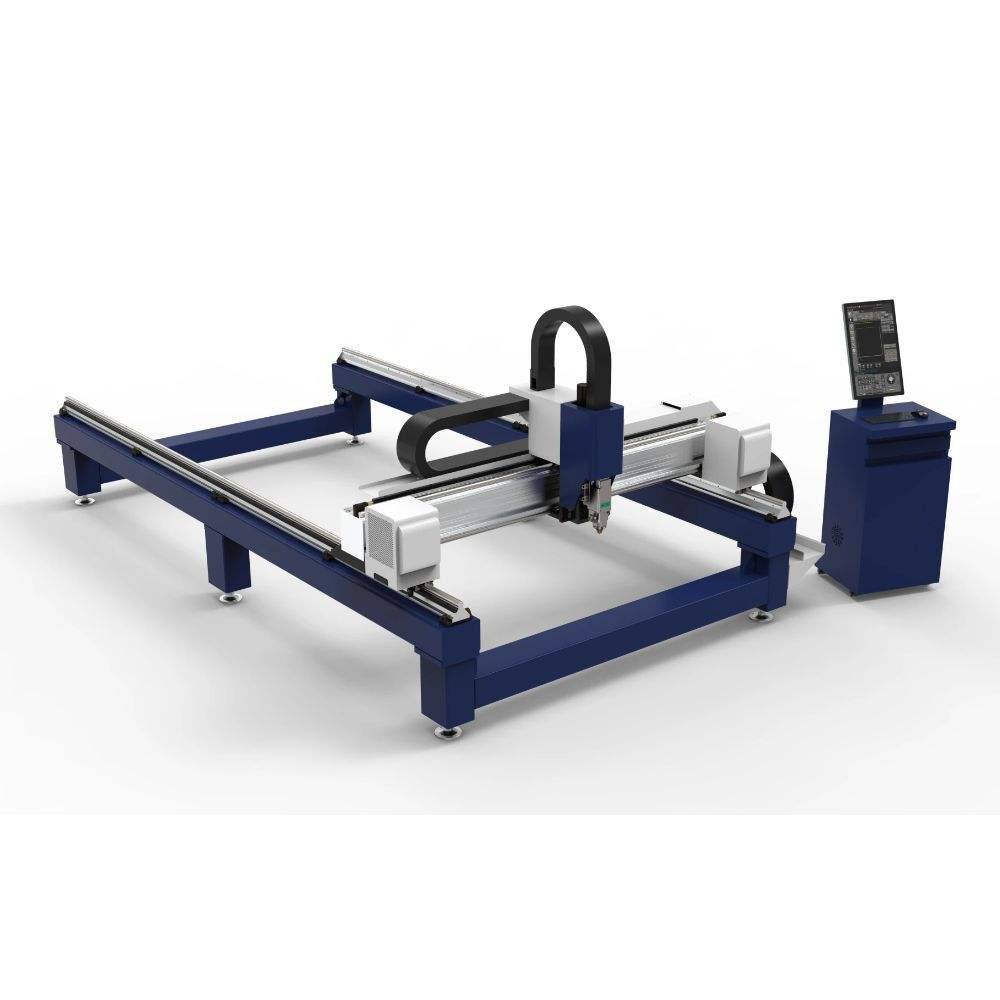
A laser source is only as effective as the motion system that carries it. For 2kW applications, a high-rigidity gantry system is required to handle the accelerations necessary for thin-gauge cutting. In Queretaro’s manufacturing facilities, these machines are often integrated with advanced CNC controllers that utilize “look-ahead” logic to optimize cornering speeds and prevent over-burning at sharp angles.
Nesting Software and Material Utilization
Efficiency in carbon steel fabrication is often measured by material utilization. Advanced nesting software, paired with the narrow kerf of a 2kW laser, allows for “common line cutting.” This technique enables the laser to cut the shared edge of two parts simultaneously, reducing both the time spent and the amount of scrap generated. Given the fluctuating prices of raw steel in the Mexican market, maximizing sheet yield is a critical factor in the ROI of any laser cutting operation.
Stability in Queretaro’s Environment
Queretaro sits at an elevation of approximately 1,820 meters above sea level. While this altitude has a negligible effect on the laser beam itself, it does impact the cooling capacity of air-cooled chillers and the density of compressed air systems used for pneumatic components. Engineering a 2kW system for this region involves ensuring the chiller unit is appropriately sized for the thinner air and that the optics remain pressurized with clean, dry air to prevent contamination from the local industrial particulate matter.
Maintenance Protocols for Precision Longevity
To maintain the precision of a 2kW laser cutting system, a rigorous maintenance schedule must be observed. The fiber optic delivery system is remarkably robust, but the external optics—specifically the protective windows (cover slides)—are sacrificial components. In a high-volume carbon steel shop, these windows can become contaminated by metallic dust or oil mist.
Nozzle Alignment and Calibration
The nozzle is the final point of contact between the machine and the workpiece. For carbon steel, nozzle centering is vital. If the beam is not perfectly centered within the nozzle orifice, the assist gas flow will be asymmetrical, leading to a “good side/bad side” cut quality. Operators in Queretaro should be trained to perform daily nozzle checks and utilize digital calibration tools to ensure the height sensor is accurately mapping the material surface.
Chiller and Filtration Systems
The 2kW laser source generates heat that must be dissipated to maintain wavelength stability. The deionized water used in the chiller must be monitored for conductivity and pH levels. Furthermore, because carbon steel cutting produces significant amounts of fine iron oxide dust, the dust extraction and filtration system must be maintained to prevent the buildup of flammable material and to ensure a healthy working environment for the operators.
Economic Impact and Future Outlook in Queretaro
The transition to 2kW fiber laser technology represents a strategic investment for Queretaro’s metal-mechanic sector. Compared to plasma cutting, the laser offers superior precision and eliminates the need for secondary finishing processes like grinding or deburring. Compared to higher-wattage systems (such as 12kW or 20kW), the 2kW system offers a much lower entry price and lower operating costs, making it accessible for small-to-medium enterprises (SMEs) that form the bulk of the local supply chain.
As the automotive industry in Mexico shifts toward electric vehicles (EVs), the demand for lightweight yet strong carbon steel components is rising. The ability of a 2kW laser to handle high-strength low-alloy (HSLA) steels with precision ensures that local manufacturers can meet the stringent requirements of global OEMs. Furthermore, the integration of Industry 4.0 features—such as remote monitoring and automated loading/unloading—is becoming more common in Queretaro, further enhancing the productivity of these 2kW systems.
Conclusion: Achieving Excellence in Laser Cutting
Mastering a 2kW precision laser system for carbon steel is not merely about owning the hardware; it is about the meticulous integration of beam physics, material science, and mechanical precision. For fabricators in Queretaro, this technology provides the tools necessary to compete on a global stage. By optimizing assist gas dynamics, maintaining rigorous maintenance standards, and leveraging the inherent efficiencies of fiber laser technology, shops can achieve unprecedented levels of accuracy and throughput.
As Queretaro continues to grow as an industrial epicenter, the role of precision laser cutting will only expand. Whether for intricate aerospace components or robust automotive assemblies, the 2kW fiber laser stands as a testament to the power of modern engineering, driving the future of carbon steel fabrication in the heart of Mexico.













