The Strategic Implementation of 12kW Tube laser cutting in Puebla’s Industrial Sector
The industrial landscape of Puebla, Mexico, has undergone a massive transformation over the last decade. As a primary hub for automotive manufacturing and heavy engineering, the region demands high-precision technology to maintain its competitive edge. At the center of this technological shift is the 12kW tube laser cutting system. This high-power fiber laser technology has redefined the capabilities of local fabricators, particularly when processing challenging materials like galvanized steel. In an environment where Tier 1 and Tier 2 suppliers must meet rigorous international standards, the transition to 12kW power levels represents more than just an upgrade; it is a fundamental shift in production efficiency and metallurgical precision.
Laser cutting technology has evolved rapidly, moving from CO2 sources to fiber lasers, and now pushing the boundaries of wattage. For manufacturers in Puebla, the 12kW threshold is a “sweet spot” that offers the perfect balance between high-speed processing of thin-walled tubes and the brute force required for thick-walled structural components. This guide explores the technical nuances of operating a 12kW tube laser cutter, with a specific focus on the intricacies of galvanized steel fabrication within the Mexican industrial context.
Technical Architecture of the 12kW Fiber Laser System
A 12kW tube laser cutting machine is a complex orchestration of optical engineering, motion control, and pneumatic systems. Unlike flatbed lasers, tube lasers require a sophisticated chuck system to rotate and feed profiles—ranging from round and square to rectangular and open “C” channels—through the cutting zone. The 12kW fiber source provides a power density that allows the beam to penetrate the material almost instantaneously, creating a narrow kerf width that minimizes heat-affected zones (HAZ).
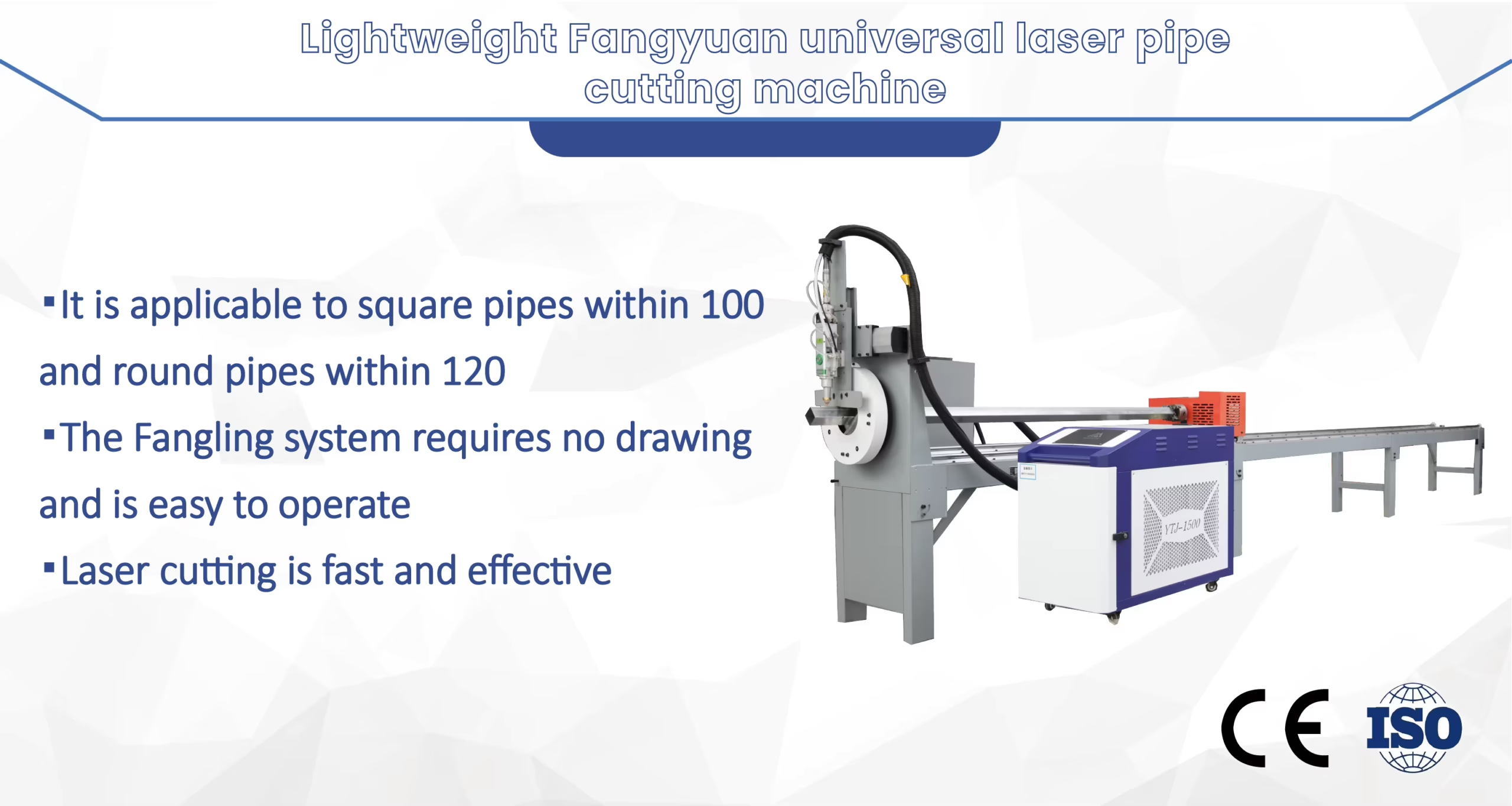
The core components of these machines include the fiber laser generator, the cutting head with autofocus capabilities, and the CNC controller. At 12kW, the cutting head must be equipped with advanced cooling systems and high-durability optics to withstand the back-reflection and thermal load. In Puebla’s high-altitude environment, cooling efficiency is paramount. The thinner air can affect heat dissipation in chillers, requiring robust industrial cooling units to ensure the laser source maintains a stable operating temperature during 24/7 production cycles.
Processing Galvanized Steel: The Metallurgical Challenge
Galvanized steel is a staple in Puebla’s construction and automotive industries due to its superior corrosion resistance. However, for laser cutting, it presents a unique set of challenges. Galvanization involves coating carbon steel with a layer of zinc. The primary issue stems from the fact that zinc has a much lower melting point (approximately 419°C) and boiling point (907°C) than the underlying steel (which melts at around 1,500°C).
When the 12kW laser hits the galvanized surface, the zinc layer vaporizes before the steel melts. This rapid vaporization can create high-pressure gas pockets that interfere with the laser beam’s stability and cause “spitting” or dross accumulation on the underside of the cut. To overcome this, the 12kW system utilizes high-pressure nitrogen as an assist gas. The sheer power of 12,000 watts allows the machine to move at speeds high enough to outrun the thermal conduction that causes excessive zinc vaporization, resulting in a cleaner, burr-free edge that requires no secondary finishing.
Optimizing Parameters for Galvanized Tube Fabrication
Achieving a perfect cut on galvanized tubes in a 12kW system requires precise calibration of several variables. In the industrial parks of Puebla, such as those in Cuautlancingo or Huejotzingo, engineers must focus on the following parameters:
- Assist Gas Selection: While oxygen can be used for thicker carbon steel, nitrogen is the preferred choice for galvanized steel. Nitrogen acts as a mechanical force to blow away the molten metal without inducing an exothermic reaction, preserving the integrity of the zinc coating near the cut edge.
- Nozzle Geometry: A double-layer nozzle is often recommended for 12kW applications to stabilize the gas flow and protect the protective window from zinc oxide dust.
- Frequency and Duty Cycle: Adjusting the pulse frequency is critical when navigating the corners of square or rectangular galvanized tubes. High power at low speeds (during cornering) can lead to over-burning, so the CNC must dynamically modulate the 12kW output based on the instantaneous travel speed.
The Economic Impact on Puebla’s Manufacturing Hub
Puebla is home to some of the world’s largest automotive assembly plants. The supply chain supporting these plants relies on the rapid delivery of tubular frames, exhaust components, and structural reinforcements. Implementing a 12kW laser cutting solution allows local shops to replace multiple traditional machines—such as saws, drills, and milling machines—with a single laser process. This “all-in-one” fabrication reduces part handling, minimizes floor space requirements, and drastically cuts down on lead times.

Furthermore, the precision of laser cutting ensures that parts are “weld-ready.” For galvanized steel components, which are often used in outdoor infrastructure or vehicle chassis, the accuracy of the fit-up is vital for the integrity of subsequent welding processes. The 12kW laser provides the repeatability needed for high-volume production runs, ensuring that every tube produced in a Puebla facility meets the exact specifications required by global OEMs.
Advanced Features: Nesting and Material Handling
To truly leverage 12,000 watts of power, the machine must be supported by intelligent software and automation. Modern tube lasers utilize 3D nesting software that optimizes the layout of parts on a single length of tube, significantly reducing scrap rates. In the context of expensive galvanized materials, reducing waste by even 5% can result in tens of thousands of dollars in annual savings.
Automation is another critical factor. A 12kW laser cuts so quickly that manual loading and unloading often become the bottleneck. In Puebla’s high-output factories, integrated bundle loaders are essential. These systems automatically measure the tube length, detect the weld seam (to ensure the cut doesn’t interfere with the tube’s structural integrity), and feed the material into the chucks. This level of automation allows a single operator to oversee multiple machines, further enhancing the cost-competitiveness of the region.
Maintenance and Safety in High-Power Laser Environments
Operating a 12kW laser cutting system requires a rigorous maintenance schedule. The high power levels mean that even minor contaminants on the optics can lead to catastrophic failure of the cutting head. Daily inspections of the protective window, regular cleaning of the slat supports (or tube supports), and monitoring of the chiller’s conductivity are mandatory tasks. In Puebla, where the industrial environment can be dusty, pressurized and filtered enclosures for the laser source and electrical cabinets are highly recommended.
Safety is equally paramount. A 12kW fiber laser operates at a wavelength (typically around 1.06 microns) that is easily absorbed by the human eye. The machine must be fully enclosed in a Class 1 laser-safe housing with specialized viewing windows. Furthermore, cutting galvanized steel produces zinc oxide fumes, which are toxic if inhaled. A high-capacity dust extraction and filtration system is non-negotiable to protect the health of the workforce and comply with Mexican environmental regulations (PROFEPA/SEMARNAT).
Conclusion: The Future of Fabrication in Puebla
The integration of 12kW tube laser cutting technology is a testament to the sophistication of Puebla’s industrial sector. By mastering the complexities of galvanized steel processing, local manufacturers are positioning themselves as leaders in the global supply chain. The ability to cut faster, thicker, and with greater precision allows for the design of lighter, stronger, and more complex tubular structures.
As the automotive industry shifts toward electric vehicles (EVs) and the construction sector looks for more sustainable, long-lasting materials, the demand for precision-cut galvanized tubing will only grow. For the engineers and business owners in Puebla, investing in 12kW laser cutting is not just about keeping pace with the present—it is about defining the future of Mexican manufacturing. With the right combination of high-power hardware, specialized gas parameters, and automated workflows, the “City of Angels” will continue to be a powerhouse of industrial innovation for decades to come.













