Comprehensive Engineering Guide to 12kW laser cutting of Carbon Steel in Mexico City
The industrial landscape of Mexico City (CDMX) and its surrounding metropolitan areas, such as Naucalpan, Tlalnepantla, and Vallejo, is undergoing a rapid technological transformation. As “nearshoring” continues to drive demand for high-precision metal fabrication, the 12kW fiber laser has emerged as the benchmark for high-volume production. This guide explores the technical nuances of operating a 12kW sheet metal laser, specifically optimized for carbon steel, within the unique environmental and economic context of the Mexican capital.
The 12kW Power Advantage for Carbon Steel
In the realm of laser cutting, power is the primary determinant of both speed and maximum thickness. A 12kW fiber laser represents a significant leap from the previous 6kW and 8kW standards. For carbon steel—the most common material in Mexican structural engineering and automotive sectors—this power level allows for the efficient processing of thicknesses ranging from 1mm to 40mm.
When processing thin-gauge carbon steel (1-4mm), a 12kW system offers speeds that can exceed 60 meters per minute, effectively turning the machine into a high-speed punching alternative. However, the true advantage lies in medium-to-thick plates (12mm to 25mm). In these ranges, the 12kW source provides enough energy density to maintain a stable melt pool, resulting in a cleaner edge with minimal dross, which is critical for parts destined for the heavy machinery sectors in the Estado de México.
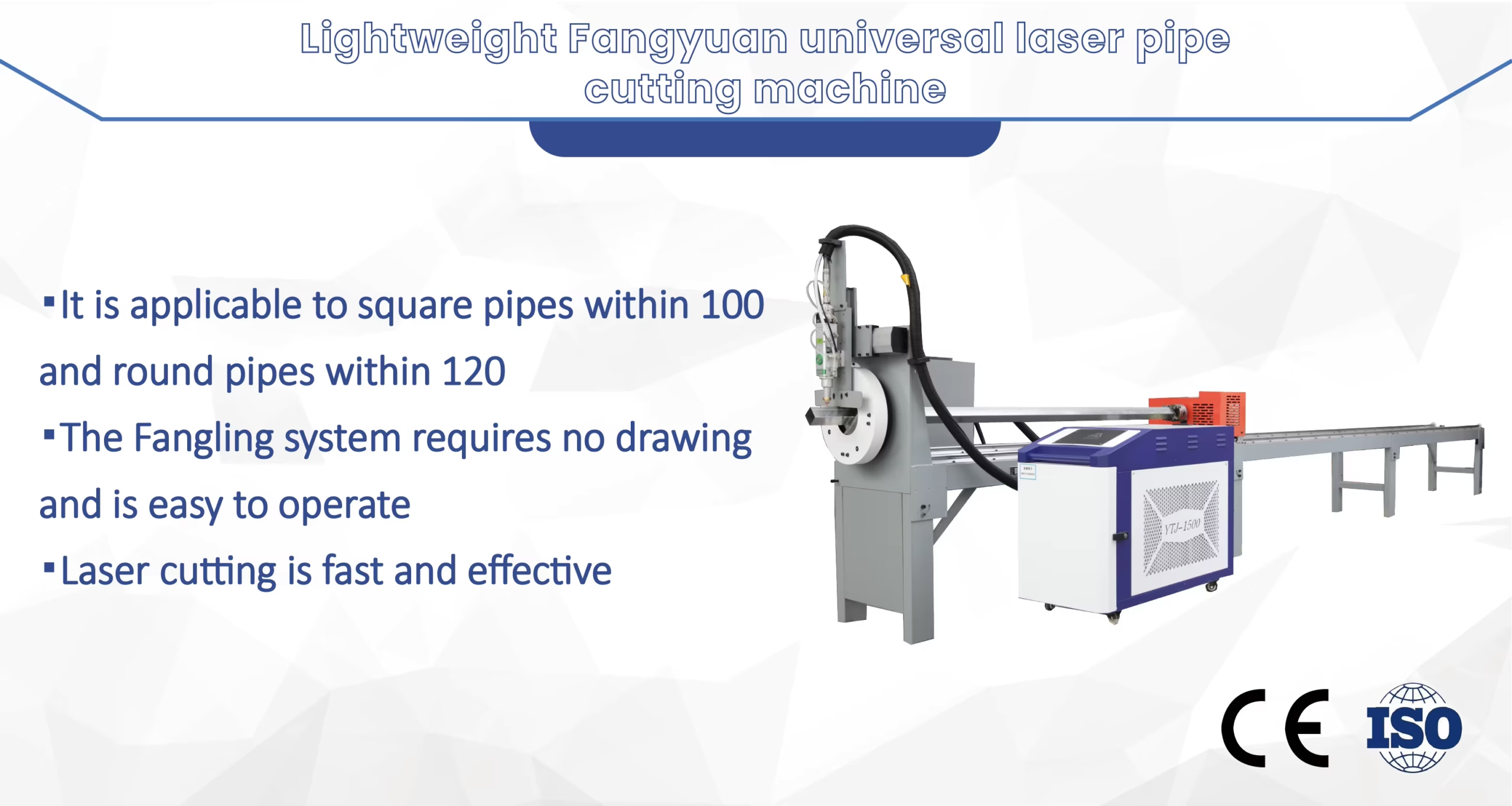 laser cutting machine” style=”width:100%; max-width:800px; height:auto; margin: 20px 0;”>
Material Considerations: Carbon Steel Grades in Mexico
In Mexico, the most frequently processed carbon steel is ASTM A36. While versatile, A36 can have varying levels of impurities, such as silicon and phosphorus, depending on the mill of origin (e.g., AHMSA or Ternium). A 12kW laser cutting system must be tuned to handle these variations. High-quality “laser-grade” carbon steel is preferred for consistent results, but the high power of a 12kW source provides a “process window” wide enough to handle standard structural steel with high reliability.
Atmospheric Impact: Cutting at 2,240 Meters Altitude
Operating a high-power laser in Mexico City presents unique challenges due to its elevation of 2,240 meters above sea level. The lower atmospheric pressure affects the laser cutting process in two primary ways: gas dynamics and cooling efficiency.
1. Assist Gas Dynamics
The density of the air is lower in CDMX. When using Oxygen (O2) as an assist gas for carbon steel, the exothermic reaction is the primary driver of the cut. At high altitudes, the pressure regulators and flow meters must be calibrated to ensure that the mass flow of oxygen is sufficient to sustain the reaction without causing “burning” or “self-cutting” in thick sections. For 12kW systems, the precision of the nozzle distance and gas pressure becomes even more critical to prevent turbulence in the thinner atmosphere.
2. Cooling and Thermal Management
Fiber lasers are highly efficient, but they still generate significant heat. Chiller units operating in Mexico City must work harder because the air used to cool the condenser coils is less dense, leading to less efficient heat exchange. For a 12kW installation, it is recommended to upsize the chiller or ensure it is rated for high-altitude operation to prevent thermal tripping during the hot “Estiaje” season (March to May).

Technical Parameters for 12kW Carbon Steel Processing
To achieve the best results in laser cutting carbon steel, operators must master the relationship between focal position, gas pressure, and feed rate. With 12kW of power, the “sweet spot” for these parameters shifts compared to lower-power machines.
Oxygen vs. Nitrogen Cutting
Traditionally, carbon steel is cut with Oxygen. The O2 reacts with the iron to create heat, allowing the laser to cut thick plates at relatively low pressures. However, with 12kW of power, Nitrogen (N2) cutting becomes a viable option for carbon steel up to 10mm or 12mm. Nitrogen cutting is a purely mechanical process where the laser melts the metal and the high-pressure gas blows it away. This results in an oxide-free edge, which is essential for components that require immediate powder coating or painting without secondary cleaning—a major bottleneck in many Mexican fabrication shops.
Piercing Strategies
Piercing thick carbon steel (20mm+) can be time-consuming and messy. A 12kW system utilizes “Zoom Head” technology to vary the beam diameter during the piercing phase. By starting with a wider beam to create a stable hole and then narrowing the beam for the cut, the 12kW laser reduces piercing time by up to 80% compared to 4kW systems. This significantly increases the overall throughput of the machine when nesting complex parts with many internal geometries.
Maintenance Protocols for the CDMX Environment
The industrial environment in Mexico City can be dusty and prone to power fluctuations. To protect a 12kW investment, several maintenance protocols are mandatory:
- Electrical Stability: The power grid in certain industrial zones can experience voltage spikes. A high-capacity voltage stabilizer and isolation transformer are non-negotiable for protecting the sensitive laser diodes and CNC electronics.
- Dust Filtration: Carbon steel laser cutting produces significant amounts of iron oxide dust. In the confined industrial parks of CDMX, a high-efficiency dust collector with flame-retardant filters is necessary to comply with local environmental regulations (SEDEMA) and to keep the optical path clean.
- Optical Path Integrity: At 12kW, even a microscopic speck of dust on the protective window can absorb enough energy to shatter the lens. Operators must perform daily inspections in a “clean room” style environment before starting the shift.
Economic Impact and ROI for Mexican Fabricators
The transition to 12kW laser cutting is not just a technical upgrade; it is a strategic economic move. In the context of the United States-Mexico-Canada Agreement (USMCA), Mexican manufacturers are under pressure to match the lead times and quality of global competitors.
A 12kW laser can often replace two or three older 4kW machines. This reduction in “footprint” is vital in Mexico City, where industrial real estate prices in prime zones like Azcapotzalco are rising. Furthermore, the increased speed reduces the “cost per part” by distributing fixed overhead costs (labor, rent, insurance) over a much larger volume of finished goods. For a shop focused on carbon steel, the ability to offer Nitrogen-cut, oxide-free edges provides a competitive edge in the export market, as it eliminates the labor-intensive wire-brushing or pickling stages.
Conclusion: The Future of Fabrication in the Valley of Mexico
The adoption of 12kW fiber laser cutting technology represents the maturation of the Mexican metalworking industry. By understanding the specific requirements of carbon steel—from the metallurgical properties of local A36 steel to the atmospheric challenges of high-altitude operation—engineers in Mexico City can maximize the potential of these powerful machines. As the region continues to solidify its role as a global manufacturing powerhouse, the precision, speed, and versatility of the 12kW laser will remain the cornerstone of efficient, high-quality production.













