Introduction to 1.5kW Tube laser cutting in Monterrey
Monterrey, Nuevo León, stands as the undisputed industrial capital of Mexico, hosting a dense ecosystem of automotive, aerospace, and heavy machinery manufacturing. In this high-stakes environment, the demand for precision, speed, and material versatility has led to the widespread adoption of fiber laser technology. Specifically, the 1.5kW tube laser cutter has emerged as a cornerstone for small to medium-sized enterprises (SMEs) and large-scale fabricators alike. This power rating offers an optimal balance between capital investment and operational capability, particularly when processing galvanized steel—a material ubiquitous in the region’s construction and automotive sectors.
The transition from traditional mechanical sawing and plasma cutting to fiber laser cutting represents a significant leap in engineering efficiency. For Monterrey-based engineers, the 1.5kW system provides the necessary beam density to achieve clean, burr-free cuts on various tube profiles, including round, square, rectangular, and oval shapes. This guide explores the technical nuances of operating a 1.5kW system, with a specific focus on the challenges and best practices associated with galvanized steel in the unique climatic and industrial context of Northern Mexico.
The Industrial Landscape of Nuevo León
The manufacturing corridor stretching from Santa Catarina to Apodaca requires equipment that can withstand rigorous duty cycles. The 1.5kW tube laser is favored here because it integrates seamlessly into “Just-in-Time” (JIT) production lines. Unlike flatbed lasers, specialized tube laser cutting machines feature automated chucks and loading systems that handle long profiles (typically up to 6 meters), which are standard in the local supply chain. The ability to perform complex geometries, such as saddle cuts and interlocking joints, without secondary machining is a critical advantage for the Monterrey export market.
Technical Specifications of the 1.5kW Fiber Source
A 1.5kW fiber laser source operates at a wavelength of approximately 1.06 microns. This wavelength is highly absorbable by metallic surfaces, particularly compared to older CO2 technology. In the context of tube processing, the “fiber” refers to the delivery medium—a flexible glass fiber that carries the beam from the resonator to the cutting head. This eliminates the need for complex mirror alignments, which is a major maintenance benefit in the dusty environments often found near Monterrey’s industrial parks.
Power vs. Material Thickness
For a 1.5kW source, the “sweet spot” for high-speed laser cutting lies in material thicknesses ranging from 0.5mm to 4mm for carbon steel and galvanized steel. While the machine can often cut up to 6mm or even 8mm at slower speeds, the efficiency curve peaks at the 1mm to 3mm range. In Monterrey’s construction sector, where galvanized structural tubing (PTR) is frequently used, the 1.5kW output ensures that the laser can penetrate the zinc coating and the steel core with minimal heat-affected zone (HAZ), preserving the structural integrity of the tube.
Challenges and Solutions for Galvanized Steel
Galvanized steel presents unique challenges for laser cutting due to its protective zinc coating. Zinc has a significantly lower melting point (approx. 419°C) than the underlying steel (approx. 1500°C). When the laser strikes the surface, the zinc vaporizes rapidly, which can interfere with the stability of the cutting process and potentially damage the machine’s optics if not managed correctly.
Managing the Zinc Coating
The primary engineering challenge with galvanized tubes is “dross” or slag formation on the interior of the tube. As the zinc vaporizes, it can create a turbulent environment in the kerf. To counteract this, 1.5kW systems must be calibrated with precise nozzle heights and frequency settings. In Monterrey, where humidity can fluctuate, ensuring a dry, clean assist gas is paramount to prevent the zinc vapor from reacting with atmospheric moisture and creating a sticky residue on the tube surface.
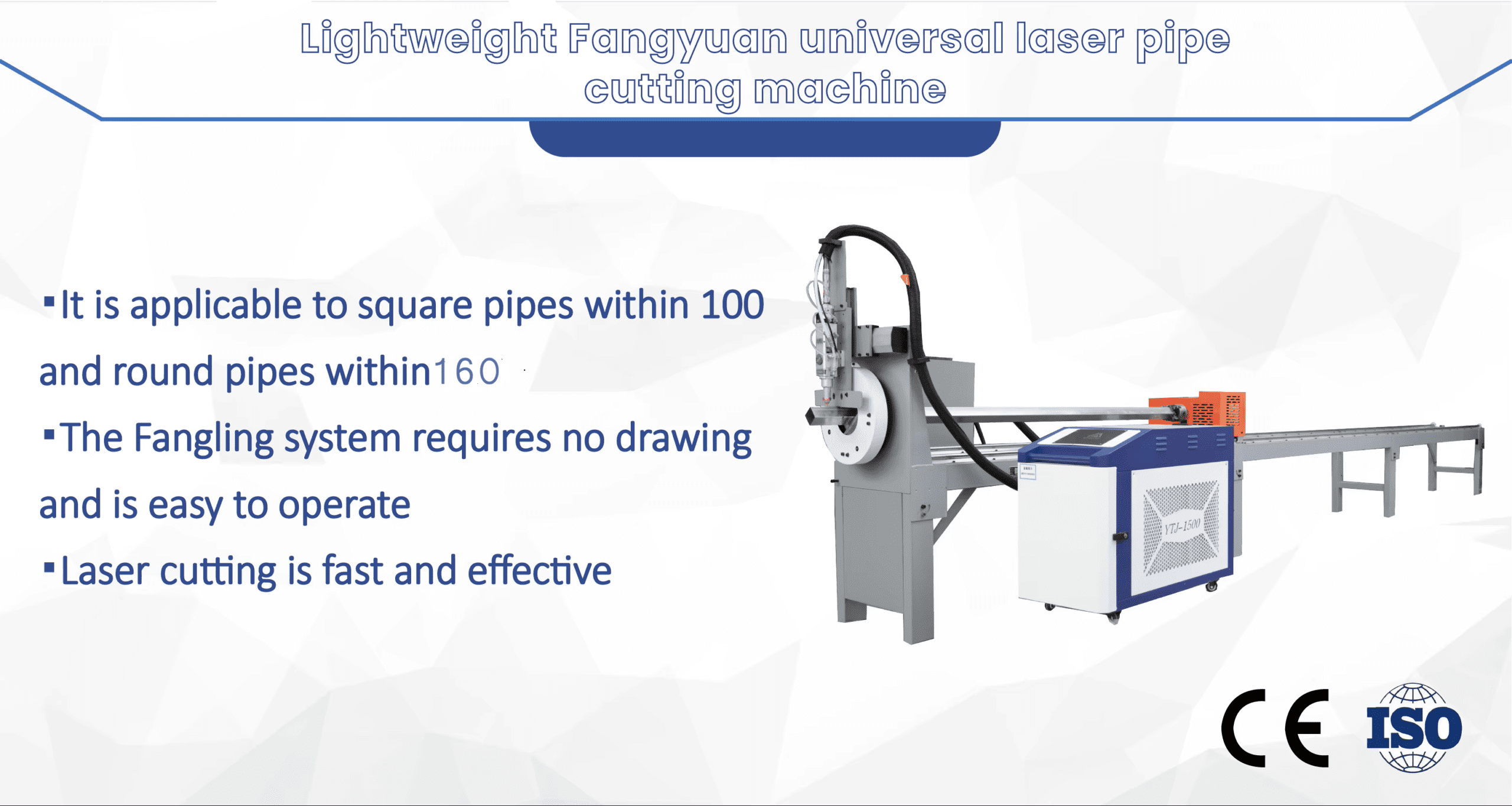 laser cutting machine MAK160″ style=”width: 100%; max-width: 800px; height: auto; margin: 20px 0;”>
Assist Gas Selection: Nitrogen vs. Oxygen
The choice of assist gas is the most critical variable when laser cutting galvanized steel. For a 1.5kW system, Nitrogen is generally preferred for galvanized materials. Nitrogen acts as a shielding gas, blowing away the molten metal and zinc vapor without allowing an exothermic reaction. This results in a “silver” or clean edge that is ready for welding or painting without further cleaning. However, Nitrogen requires higher pressures (often 15-20 bar), necessitating a robust gas delivery system or an on-site Nitrogen generator—a common sight in modern Monterrey facilities.
Oxygen can be used to increase cutting speeds on thicker galvanized tubes, but it leads to oxidation of the cut edge. This oxide layer must be removed if the part is to be powder-coated, adding a secondary process that many fabricators try to avoid. For 1.5kW applications, the precision of Nitrogen usually outweighs the speed benefits of Oxygen.
Precision Engineering in Tube Processing
Unlike flat sheets, tubes are prone to dimensional inaccuracies such as “bow” and “twist.” A high-quality tube laser cutting machine must compensate for these variations in real-time. The 1.5kW systems used in Monterrey typically employ capacitive sensing in the cutting head to maintain a constant distance from the tube surface, even if the profile is slightly deformed.
Chuck Technology and Centering
The mechanics of the tube laser are as important as the laser source itself. Pneumatic or electric chucks must grip the galvanized surface firmly without marring the coating. In Monterrey’s high-volume shops, “self-centering” chucks are essential. They ensure that the center of rotation remains consistent, which is vital when cutting holes on opposite sides of a square tube. If the centering is off by even 0.5mm, the assembly of the final product—such as an automotive frame—will be compromised.
Software Integration and Nesting
Advanced CAD/CAM software is the brain of the laser cutting operation. For tube processing, the software must handle “nesting,” which is the process of arranging parts on a single length of tube to minimize scrap. Given the rising cost of raw materials in the Mexican market, achieving a 95% material utilization rate can be the difference between profit and loss. The software also manages “common line cutting,” where two parts share a single cut path, further reducing processing time and gas consumption.
Operational Excellence in Monterrey’s Climate
Monterrey’s climate, characterized by extreme summer heat (often exceeding 40°C) and occasional high humidity, poses specific challenges for fiber laser electronics and optics. A 1.5kW laser generates significant heat within the resonator and the cutting head, requiring a highly efficient dual-circuit chilling system.

Thermal Management and Cooling Systems
The chiller must maintain the laser source and the optical components at a stable temperature (usually around 22-25°C). In Nuevo León, it is recommended to house the laser system in a temperature-controlled environment or, at the very least, ensure the chiller is oversized for the ambient conditions. Condensation is the enemy of fiber optics; therefore, the chiller’s ability to adjust the water temperature based on the dew point is a critical feature for local operators.
Dust and Fume Extraction
Cutting galvanized steel produces zinc oxide fumes, which are toxic if inhaled and abrasive to machine components. A robust dust extraction and filtration system is not optional in Monterrey—it is a regulatory requirement under Mexican NOM (Normas Oficiales Mexicanas) standards. The extraction system must be synchronized with the cutting head to pull fumes directly from the point of vaporization, ensuring a safe working environment and preventing the accumulation of metallic dust on the machine’s linear guides and racks.
Maintenance Protocols for Longevity
To maintain the precision of laser cutting over a multi-year lifespan, a strict maintenance schedule is required. In the industrial environment of Monterrey, “preventative” is always cheaper than “reactive.”
Optical Path Protection
The most vulnerable part of a 1.5kW tube laser is the protective window (cover glass) in the cutting head. This consumable protects the expensive internal lenses from “spatter” during the piercing process. When cutting galvanized steel, the risk of spatter is higher due to the volatile nature of the zinc. Operators should inspect the cover glass every 4-8 hours of operation. Using high-quality, original manufacturer consumables is vital; “knock-off” lenses can cause beam divergence, leading to poor cut quality and increased gas consumption.
Economic Feasibility and ROI
Investing in a 1.5kW tube laser cutter in Monterrey is often justified by the reduction in labor costs and the increase in throughput. Traditional tube fabrication involves marking, sawing, drilling, and deburring. A laser cutting machine combines all these steps into a single process. For a typical fabricator in the Apodaca region, the ROI (Return on Investment) for a 1.5kW system can often be realized within 18 to 24 months, depending on shift patterns and material volume.
Competitive Advantage in the Mexican Market
As nearshoring continues to bring more manufacturing from Asia to Mexico, Monterrey-based shops must compete on both quality and lead times. A tube laser allows for “tab and slot” designs, which simplify downstream assembly and welding. This level of engineering sophistication makes local suppliers more attractive to international Tier 1 and Tier 2 manufacturers who demand high precision and repeatable results.
Conclusion
The 1.5kW tube laser cutter is a powerful tool that, when properly applied to galvanized steel, offers unparalleled efficiency for Monterrey’s industrial sector. By understanding the interaction between the fiber laser beam and the zinc coating, and by implementing rigorous operational standards tailored to the local climate, engineers can maximize the potential of this technology. As the manufacturing landscape in Nuevo León continues to evolve, the precision of laser cutting will remain a fundamental pillar of regional economic growth and technical excellence.













