Introduction to High-Precision 4kW Laser Systems in Monterrey
Monterrey, Nuevo León, has long been established as the industrial capital of Mexico. With a robust manufacturing ecosystem ranging from automotive assembly to aerospace engineering and domestic appliance production, the demand for high-efficiency fabrication tools is at an all-time high. Among these technologies, the 4kW precision fiber laser system stands out as a cornerstone for modern workshops. Specifically, when dealing with stainless steel—a material prized for its corrosion resistance and aesthetic appeal—the 4kW power threshold represents the “sweet spot” between operational speed and edge quality.
The transition from traditional CO2 lasers to fiber laser technology has revolutionized the laser cutting industry in Monterrey. A 4kW system offers the density and beam quality required to pierce and cut through various gauges of stainless steel with a level of precision that minimizes secondary finishing processes. This guide explores the technical nuances, operational strategies, and regional advantages of deploying a 4kW precision laser system in the Monterrey industrial corridor.
The Technical Architecture of a 4kW Fiber Laser
Core Components and Beam Delivery
A 4kW precision laser system is more than just a power source; it is a synchronized assembly of high-end engineering components. The heart of the system is the fiber laser resonator, where rare-earth elements like ytterbium are used to dope the optical fibers. When excited, these fibers produce a laser beam with a wavelength of approximately 1.06 microns. This wavelength is significantly more efficient for metal absorption compared to the 10.6 microns of a CO2 laser.
The beam is delivered via a flexible fiber optic cable to the cutting head. Unlike older systems that relied on complex mirror configurations, fiber delivery ensures that the beam remains stable and perfectly aligned, regardless of the gantry’s position on the cutting bed. For stainless steel applications, the 4kW output provides enough energy to maintain a stable melt pool even at high traverse speeds, which is critical for preventing dross accumulation.
 laser cutting machine” style=”max-width: 100%; height: auto; margin: 20px 0;”>
Gantry Dynamics and Motion Control
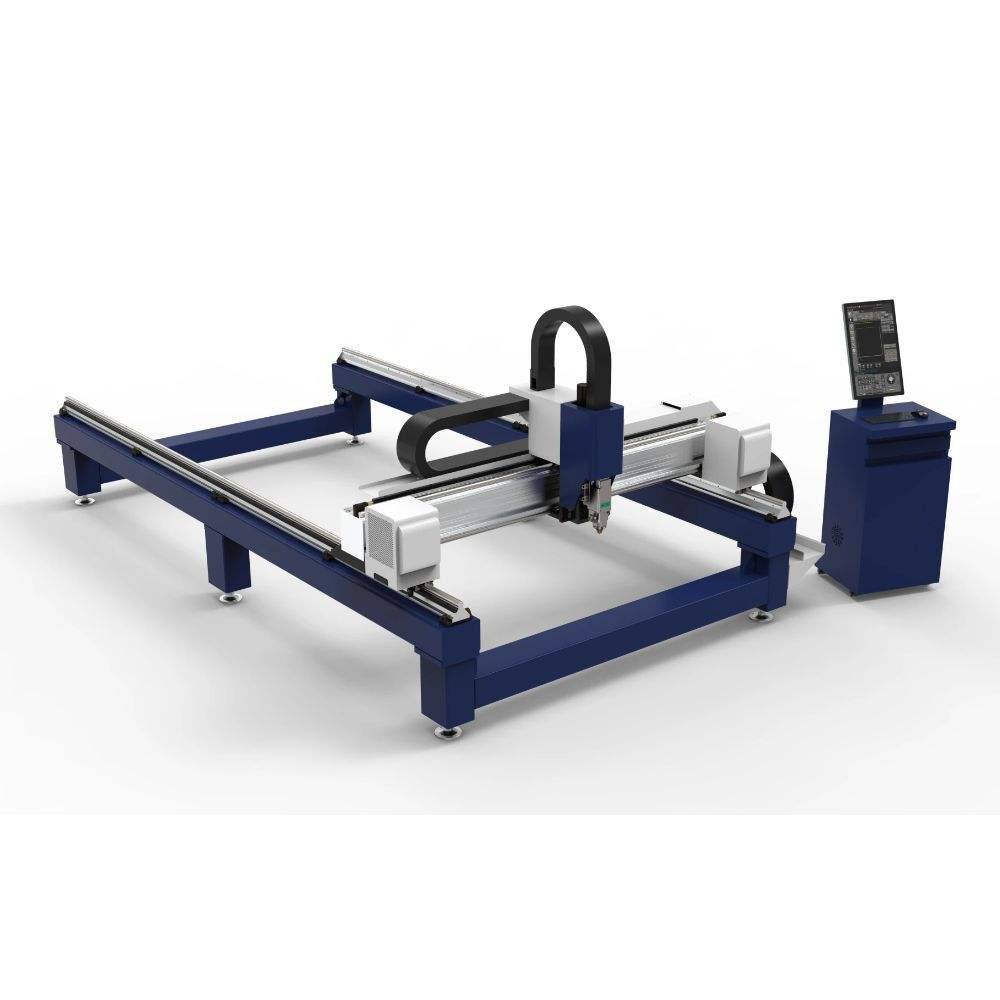
Precision is not solely a function of the laser source; it is heavily dependent on the CNC motion control system. In Monterrey’s high-output environments, machines are often equipped with high-torque AC servo motors and precision rack-and-pinion systems. A 4kW system typically features a reinforced gantry capable of handling high acceleration (often exceeding 1.2G). This allows the machine to navigate complex geometries and tight radii in stainless steel parts without losing dimensional accuracy, ensuring that every laser cutting cycle meets strict aerospace or medical-grade tolerances.
Stainless Steel Processing: Material Science and Challenges
Understanding Grade-Specific Reactions
Stainless steel, particularly the 300 and 400 series common in Monterrey’s appliance and automotive sectors, presents unique challenges. The chromium and nickel content affects the material’s thermal conductivity and reflectivity. While stainless steel is less reflective than aluminum or copper, it still requires a high-intensity beam to initiate the cut. A 4kW system provides the necessary power density to overcome the initial reflectance of polished stainless steel (such as BA or No. 4 finish) without damaging the internal optics of the machine.
Heat-Affected Zone (HAZ) Management
One of the primary goals of precision laser cutting is the minimization of the Heat-Affected Zone (HAZ). Excessive heat can lead to carbide precipitation in stainless steel, which compromises its corrosion resistance. The 4kW fiber laser, characterized by its small spot size and high energy density, allows for faster cutting speeds. Faster speeds mean less time for heat to dissipate into the surrounding material, resulting in a narrower HAZ and a cleaner, more metallurgically sound edge.
Optimizing the Cutting Process: Assist Gases
The Role of Nitrogen in Precision Cutting
For stainless steel, the choice of assist gas is paramount. While oxygen can be used for thicker sections, it causes oxidation on the cut edge, leaving a dark scale that must be removed if the part is to be welded or painted. In Monterrey’s precision shops, Nitrogen is the standard assist gas for 4kW systems. Nitrogen acts as a shielding agent, blowing the molten metal out of the kerf before it can react with atmospheric oxygen. This results in a “bright” or “silver” edge that is ready for immediate assembly.
Pressure and Nozzle Configuration
Operating a 4kW laser requires sophisticated gas pressure management. Precision cutting of 6mm to 12mm stainless steel often requires nitrogen pressures exceeding 20 bar. The nozzle geometry—whether single, double, or high-speed conical—must be matched to the material thickness. Modern 4kW systems feature automatic nozzle changers and cleaning stations, ensuring that the laser cutting process remains consistent during long production runs in high-capacity Monterrey facilities.
Monterrey’s Industrial Context: Why 4kW?
Nearshoring and the USMCA Impact
The “nearshoring” trend has brought a wave of manufacturing back to North America, with Monterrey being a primary beneficiary. Companies producing components for the US market must adhere to stringent quality standards. A 4kW laser cutting system provides the versatility to handle both thin-gauge sheet metal for electronics enclosures and medium-thickness plates for structural components. This flexibility is vital for job shops in industrial parks like Santa Catarina or Apodaca, where project requirements can change weekly.
Integration with Industry 4.0
Monterrey is at the forefront of Mexico’s transition to Industry 4.0. Precision 4kW lasers are now integrated with IoT sensors that monitor power consumption, gas flow, and beam stability in real-time. This data-driven approach allows local manufacturers to predict maintenance needs and optimize nesting patterns, reducing material waste in expensive stainless steel alloys. The ability to integrate the laser cutting workflow with ERP systems ensures that Monterrey-based firms remain competitive on a global scale.
Operational Best Practices for Precision Results
Focus Positioning and Beam Shaping
With 4kW of power, the focal point’s position relative to the material surface is critical. For thin stainless steel, the focus is typically on the surface or slightly above. As thickness increases, the focus must be shifted deeper into the material to ensure a consistent kerf width. Advanced 4kW heads feature motorized focus adjustment, allowing the CNC to change the focal position dynamically during the piercing and cutting phases. This level of control is what defines “precision” in high-end laser cutting.
Cooling and Environmental Control
Monterrey’s climate, characterized by high temperatures and varying humidity, can affect laser performance. A 4kW system generates significant heat within the resonator and the cutting head. A high-capacity, dual-circuit industrial chiller is mandatory to maintain the laser source and optics at a constant temperature. Furthermore, clean, dry air is required for the pneumatic systems and to protect the beam path from contaminants. Shops in Monterrey must invest in high-quality air filtration and desiccant dryers to ensure the longevity of their 4kW investment.
Maintenance Protocols for High-Uptime Environments
Optical Health and Consumables
In a 24/7 manufacturing environment like those found in Nuevo León, maintenance is not optional. The protective windows (cover slips) of the laser head must be inspected daily for dust or splatter. Even a microscopic contaminant can absorb 4kW of energy, leading to thermal runaway and damage to the lens. Regular replacement of nozzles and ceramic rings is also essential to maintain the capacitive height sensing accuracy, which is vital for high-precision laser cutting on uneven stainless steel sheets.
Mechanical Calibration
Over time, the vibrations from high-speed acceleration can affect the squareness of the machine. Quarterly calibrations using ball-bar tests or laser interferometers ensure that the machine maintains its micron-level precision. For Monterrey shops serving the automotive sector, where tolerances are often within +/- 0.05mm, these mechanical check-ups are the difference between a passed inspection and a rejected batch.
Conclusion: The Future of Fabrication in Monterrey
The 4kW precision laser system has become an indispensable tool for the stainless steel fabrication industry in Monterrey. By offering a perfect balance of power, speed, and accuracy, it enables local manufacturers to meet the rigorous demands of international supply chains. As technology continues to evolve, the integration of artificial intelligence in laser cutting paths and the further refinement of fiber delivery will only solidify Monterrey’s position as a leader in advanced manufacturing. For any facility looking to upgrade its capabilities, the 4kW fiber laser represents a future-proof investment in quality and productivity.













