Introduction to 3kW Tube laser cutting in Queretaro’s Industrial Sector
The industrial landscape of Queretaro has undergone a radical transformation over the last decade, evolving into one of Mexico’s primary hubs for aerospace, automotive, and heavy appliance manufacturing. At the heart of this evolution is the adoption of advanced fabrication technologies, specifically fiber laser cutting. For facilities handling structural components and fluid transport systems, the 3kW tube laser cutter has emerged as the industry standard for balancing throughput, precision, and operational cost. This guide examines the technical nuances of utilizing 3kW fiber technology, with a specific focus on processing galvanized steel—a material ubiquitous in the Bajío region’s construction and automotive supply chains.
The Technical Superiority of 3kW Fiber Lasers
A 3kW fiber laser source represents a significant “sweet spot” in laser cutting technology. While lower wattage systems may struggle with the reflective properties of certain coatings, and higher wattage systems (6kW+) involve substantially higher capital expenditure and power consumption, the 3kW variant provides the necessary energy density to vaporize galvanized steel efficiently. The fiber laser operates at a wavelength of approximately 1.06 microns, which is absorbed more readily by metallic surfaces compared to the 10.6 microns of traditional CO2 lasers. This high absorption rate is critical when dealing with the zinc-rich surface of galvanized tubing.
Wavelength and Absorption Dynamics
In the context of laser cutting, the efficiency of the process is dictated by how much energy the material absorbs versus how much it reflects. Galvanized steel presents a unique challenge because the zinc coating has a lower melting point than the underlying carbon steel. A 3kW fiber laser delivers a concentrated beam that penetrates the zinc layer almost instantaneously, minimizing the heat-affected zone (HAZ). This prevents the “bubbling” or excessive burning of the zinc coating near the cut edge, which is essential for maintaining the material’s corrosion resistance.

Processing Galvanized Steel: Challenges and Solutions
Galvanized steel is carbon steel coated with a layer of zinc to prevent oxidation. In Queretaro’s humid-subtropical climate, corrosion protection is vital for outdoor structures and automotive chassis. However, during the laser cutting process, the zinc coating poses two primary hurdles: fume generation and dross formation.
Managing Zinc Vaporization
When the laser beam strikes the galvanized surface, the zinc (which boils at 907°C) vaporizes before the steel (which melts at approximately 1500°C). This creates a high-pressure vapor that can interfere with the stability of the laser plasma. To counteract this, 3kW systems utilize high-pressure assist gases. Nitrogen is the preferred choice for galvanized steel because it acts as a mechanical force to blow away the molten zinc and steel without causing an exothermic reaction. This results in a “silver” cut edge that requires little to no post-processing.
Dross and Edge Quality
Dross, or the solidified metal remnants at the bottom of a cut, is a common issue when laser cutting galvanized tubes. By fine-tuning the 3kW laser’s frequency and duty cycle, operators in Queretaro can achieve a dross-free finish. In a 3kW system, the power is sufficient to maintain a high feed rate, which is the most effective way to prevent heat buildup and subsequent dross accumulation. For a standard 2mm wall thickness galvanized square tube, a 3kW laser can typically achieve cutting speeds exceeding 15 meters per minute, depending on the complexity of the geometry.
Integration of Tube Laser Technology in Queretaro’s Supply Chain
Queretaro’s industrial parks, such as Parque Industrial Querétaro and El Marqués, host numerous Tier 1 and Tier 2 suppliers. These companies often require high volumes of perforated and notched tubing for seat frames, exhaust systems, and warehouse racking. The transition from manual sawing and drilling to automated tube laser cutting has reduced lead times by as much as 70% for local fabricators.
Versatility in Tube Geometries
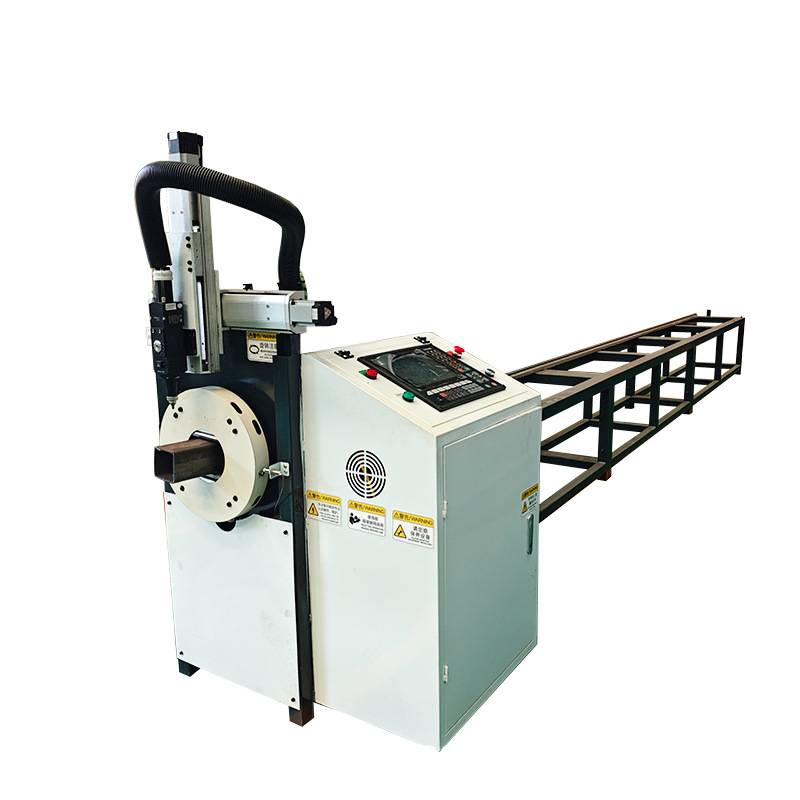
A 3kW tube laser cutter is not limited to round pipes. Modern machines are equipped with sophisticated chuck systems and software capable of handling square, rectangular, oval, and even open profiles like C-channels or L-angles. This versatility is crucial for Queretaro’s construction sector, where custom structural sections are often required for specialized architectural projects. The ability to cut complex interlocking tabs and slots directly into the galvanized tube allows for “Lego-like” assembly on-site, significantly reducing welding time and human error.
Optimizing Parameters for 3kW Laser Cutting
To maximize the ROI of a 3kW machine, technical teams must optimize several key parameters specifically for galvanized materials. The interaction between the nozzle, the focal point, and the gas pressure determines the final quality of the part.
Assist Gas Selection: Nitrogen vs. Oxygen
While oxygen can be used to cut thicker carbon steel by adding thermal energy through oxidation, it is generally avoided for galvanized steel. Oxygen causes the zinc to burn violently, leading to a charred, blackened edge that compromises the galvanization’s protective properties. Nitrogen, at pressures between 12 and 18 bar, ensures that the laser cutting process remains purely a thermal-mechanical separation, preserving the integrity of the zinc coating right up to the edge of the cut.
Nozzle Design and Stand-off Distance
For galvanized tube processing, a double-layer nozzle is often recommended. This design helps stabilize the gas flow and protects the internal optics from the “spatter” that occurs when the laser first pierces the zinc layer. Maintaining a consistent stand-off distance (the gap between the nozzle and the tube) is critical, especially since tubes often have slight deviations in straightness. Advanced 3kW systems use capacitive sensors to follow the tube’s surface in real-time, adjusting the Z-axis height millisecond by millisecond.
Maintenance and Longevity in Industrial Environments
Operating a 3kW laser in an industrial environment like Queretaro requires a disciplined maintenance schedule. The local dust and temperature fluctuations can impact the sensitive optical components of the fiber laser.
Optical Path Integrity
Unlike CO2 lasers, fiber lasers deliver the beam through a flexible fiber optic cable, which is sealed. However, the cutting head contains several lenses and a protective window (cover glass). When laser cutting galvanized steel, the vaporization of zinc creates a fine metallic dust. If the fume extraction system is not optimized, this dust can settle on the cover glass. Even a microscopic particle can absorb laser energy, heat up, and shatter the lens. Daily inspection and cleaning of the cover glass in a clean-room environment are mandatory.
Chiller Calibration
The 3kW laser source and the cutting head generate significant heat. A dual-circuit water chiller is used to maintain a stable temperature (usually around 22-25°C). In Queretaro, where summer temperatures can rise significantly, the chiller must be sized correctly to prevent “thermal drift,” which can cause the laser beam to lose focus and reduce the quality of the laser cutting.
Safety and Environmental Regulations
Safety is paramount when operating high-power fiber lasers. A 3kW beam is Class 4, meaning it can cause permanent eye damage or skin burns from direct or reflected radiation. Furthermore, the environmental impact of zinc fumes must be addressed.
Fume Extraction and Filtration
Laser cutting galvanized steel produces zinc oxide fumes. Inhalation of these fumes can lead to “metal fume fever,” a temporary but painful flu-like condition. Facilities in Queretaro must comply with SEMARNAT (Secretaría de Medio Ambiente y Recursos Naturales) regulations regarding air quality. This requires a high-capacity dust collector equipped with HEPA filters and, in some cases, activated carbon stages to neutralize the metallic particles before the air is exhausted or recirculated.
Enclosure Standards
Modern tube laser cutters are fully enclosed with laser-safe glass (OD6+ rating). This enclosure not only protects the operator from reflections but also contains the fumes for more efficient extraction. In Queretaro’s competitive labor market, providing a safe and clean working environment is a key factor in technician retention.
Economic Outlook: The ROI of 3kW Systems in the Bajío
The investment in a 3kW tube laser cutter is substantial, but for Queretaro-based shops, the payback period is often under 24 months. The primary drivers of this ROI are the elimination of secondary operations. Traditionally, a tube would be cut to length, moved to a drill press, then to a milling machine for slotting, and finally deburred. A tube laser performs all these steps in a single continuous process.
Reduced Material Waste
Nesting software allows for the optimal placement of parts along a standard 6-meter or 9-meter tube. By minimizing the “remnant” or the scrap piece left in the chuck, 3kW systems significantly reduce material costs. Given the rising price of galvanized steel, a 5% improvement in material utilization can translate to thousands of dollars in monthly savings for a high-volume manufacturer.
Conclusion
The 3kW tube laser cutter is a cornerstone of modern manufacturing in Queretaro. Its ability to process galvanized steel with speed and precision makes it an indispensable tool for the automotive, aerospace, and construction industries. By understanding the specific requirements of zinc-coated materials—from gas dynamics to fume extraction—local engineers can leverage this technology to produce world-class components. As the Bajío region continues to grow as a global manufacturing powerhouse, the role of high-precision laser cutting will only become more central to its industrial success.













