Mastering 3kW Precision Laser Systems for Galvanized Steel in Toluca
The industrial landscape of Toluca, State of Mexico, has evolved into one of the most significant manufacturing hubs in North America. As automotive, aerospace, and heavy machinery sectors continue to expand, the demand for high-precision fabrication has skyrocketed. Central to this evolution is the implementation of 3kW precision laser systems. These machines represent a critical balance between power and finesse, particularly when processing challenging materials like galvanized steel. In an environment where efficiency and tight tolerances are non-negotiable, understanding the synergy between fiber laser technology and material science is essential for any engineering-driven facility.
The Industrial Landscape of Toluca and Laser Technology
Toluca’s unique position—characterized by its high altitude and dense industrial clusters—presents both opportunities and challenges for advanced manufacturing. For companies operating in this region, the transition from traditional mechanical shearing or plasma cutting to fiber laser cutting has become a prerequisite for remaining competitive. A 3kW system provides the necessary energy density to maintain high feed rates without the excessive heat-affected zones (HAZ) associated with lower-power alternatives.
The automotive supply chain, which dominates the Toluca-Lerma corridor, relies heavily on galvanized steel for its corrosion resistance and structural integrity. However, cutting this material requires more than just raw power; it requires a system capable of managing the volatile nature of the zinc coating that protects the underlying steel.
Technical Challenges of Laser Cutting Galvanized Steel
Galvanized steel is essentially carbon steel coated with a layer of zinc. While this coating is excellent for longevity, it introduces significant variables during the laser cutting process. The primary challenge lies in the difference between the melting and boiling points of the two metals. Zinc vaporizes at approximately 907°C, while steel melts at around 1,500°C.
When the 3kW laser beam interacts with the workpiece, the zinc layer vaporizes before the steel melts. This rapid vaporization can create high-pressure gas pockets that interfere with the stability of the laser beam and the assist gas flow. Without precise control, this leads to “spatter” or “dross,” where molten zinc and steel are ejected onto the surface of the part or the nozzle, compromising the cut quality and requiring extensive post-processing.

Why 3kW is the Optimal Power Rating
In the context of precision fabrication, 3kW is often considered the “sweet spot” for galvanized materials ranging from 1.0mm to 6.0mm in thickness. While 1kW or 2kW systems can struggle with feed rates on thicker galvanized sheets, and 6kW+ systems might be overkill for high-detail precision work, the 3kW fiber laser offers a stable beam profile that minimizes the thermal impact on the zinc coating.
The 3kW power level allows for high-speed Nitrogen-assisted cutting. Using Nitrogen as an assist gas is critical for galvanized steel because it acts as a cooling agent and prevents oxidation of the cut edge. This results in a clean, silver-colored finish that is ready for welding or painting without the need for secondary cleaning—a major cost-saver for Toluca’s high-volume production lines.
Optimization Strategies for High-Precision Results
To achieve “precision” in the truest sense, operators in Toluca must calibrate their 3kW systems to account for local atmospheric conditions. The high altitude of Toluca (approximately 2,660 meters above sea level) results in lower atmospheric pressure, which can affect the dynamics of the assist gas as it exits the nozzle.
Overcoming the “Zinc Effect” with Parameter Tuning
Precision laser cutting of galvanized steel requires a specific approach to focal position and gas pressure. Typically, a slightly negative focus—where the beam’s narrowest point is just below the surface of the material—helps in creating a wider kerf that allows the vaporized zinc to escape more freely.
Furthermore, the choice of nozzle is paramount. A double-layer nozzle is often recommended for galvanized steel to stabilize the gas flow and protect the optics from back-reflection and zinc vapor. By maintaining a consistent standoff distance and utilizing high-pressure Nitrogen (often exceeding 15 bar for 3kW systems), manufacturers can achieve burr-free edges even on complex geometries.
The Role of Modulation and Frequency
Modern 3kW systems utilize advanced CNC controllers that allow for power modulation. When the laser cutting head approaches a sharp corner or a small radius, the system automatically reduces the power and adjusts the frequency. This prevents “over-burning” at the corners, a common issue where the heat builds up because the head must slow down to change direction. For galvanized steel, this precision control ensures that the zinc coating remains intact as close to the cut edge as possible, preserving the material’s anti-corrosive properties.
System Integration and Workflow Optimization
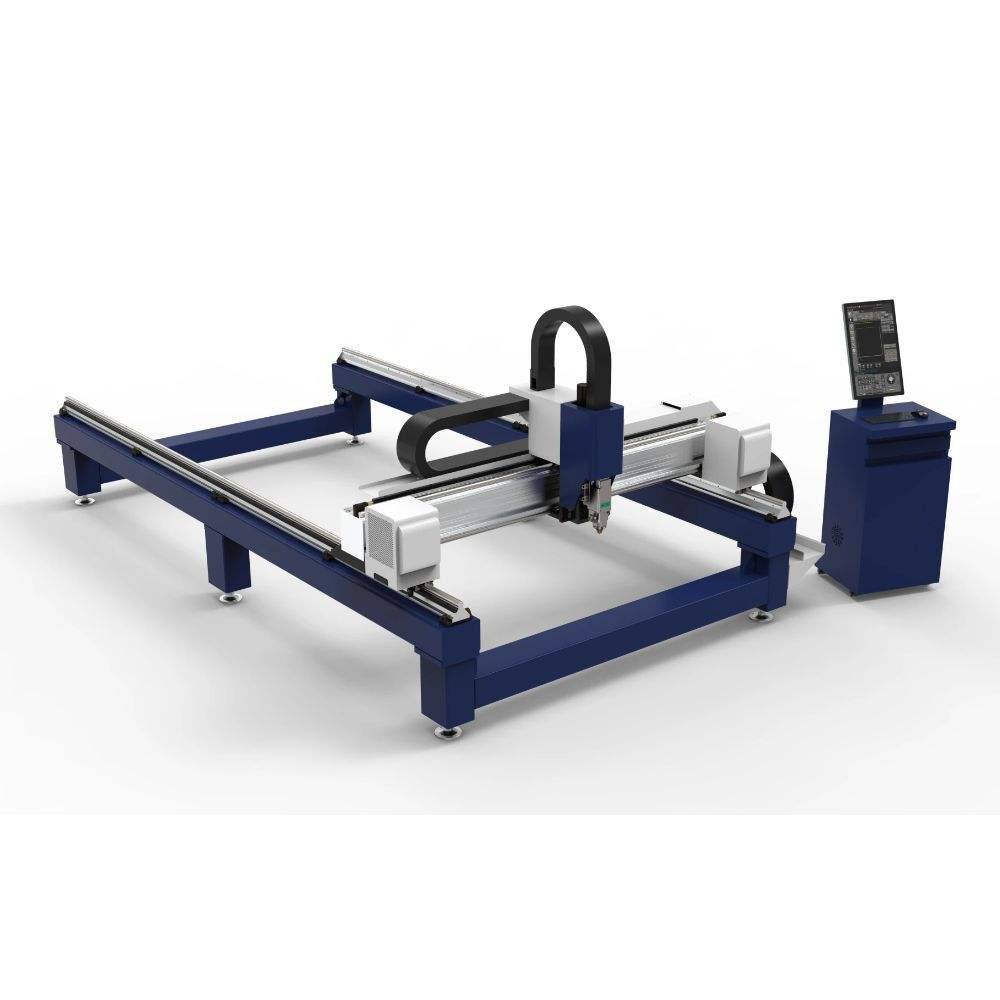
Investing in a 3kW precision laser system is only the first step. For Toluca-based manufacturers, the integration of this technology into the broader production workflow is what determines the return on investment (ROI). This involves selecting the right machine configuration, such as a shuttle table system to minimize downtime or a tube-cutting attachment for versatile processing.
Essential Hardware Components
A high-performance 3kW system is comprised of several critical sub-systems:
1. **The Fiber Laser Source:** Usually a solid-state source with a lifespan exceeding 100,000 hours, requiring minimal maintenance compared to legacy CO2 lasers.
2. **The Cutting Head:** Auto-focus heads are standard in precision systems, allowing the machine to adjust the focal point dynamically based on the material thickness and type.
3. **The Chiller System:** In the temperate but variable climate of Toluca, a high-stability dual-circuit chiller is necessary to maintain the temperature of both the laser source and the cutting head.
4. **The Motion System:** High-precision linear motors or rack-and-pinion systems with high acceleration rates (up to 1.2G or higher) are required to take full advantage of the 3kW laser’s speed capabilities.
Environmental and Safety Considerations
Laser cutting galvanized steel produces zinc oxide fumes, which are hazardous if inhaled. In an enclosed industrial environment, a robust filtration and extraction system is mandatory. Engineering teams in Toluca must ensure that their 3kW systems are equipped with high-efficiency particulate air (HEPA) filters and that the extraction volume is sufficient for the machine’s bed size.
Maintenance Protocols for Sustained Precision
Precision is a function of maintenance. In the dusty environments often found in industrial zones, the optical path must be kept pristine. Even a microscopic particle on the protective window of the cutting head can cause “thermal lensing,” where the laser beam is distorted, leading to poor cut quality and potential damage to the internal optics.
Regular calibration of the height sensor and the centering of the nozzle are daily tasks that ensure the 3kW system operates at peak performance. For Toluca’s manufacturers, establishing a rigorous preventative maintenance schedule is the difference between a machine that lasts 15 years and one that requires costly repairs within five.
Economic Advantages and ROI for Mexican Manufacturers
The shift toward 3kW precision fiber lasers in Toluca is driven by economics. When compared to traditional methods, laser cutting offers a significantly lower cost-per-part due to increased speed, reduced scrap, and the elimination of tool wear. For galvanized steel specifically, the ability to produce high-quality parts that do not require secondary grinding or edge cleaning allows shops to take on higher-margin work.
Moreover, the energy efficiency of fiber laser technology is a major advantage. A 3kW fiber laser consumes significantly less electricity than a CO2 laser of equivalent cutting capacity, which is a vital consideration given the rising energy costs in industrial sectors.
Conclusion: The Future of Fabrication in Toluca
As we look toward the future of manufacturing in central Mexico, the role of the 3kW precision laser system is clear. It is the workhorse of the modern fabrication shop, providing the versatility needed to handle everything from thin-gauge galvanized components for electronic enclosures to structural parts for the automotive industry. By mastering the technical nuances of laser cutting galvanized steel—from gas dynamics to focal modulation—engineers in Toluca can ensure their operations remain at the forefront of global manufacturing standards. Precision is no longer an option; it is a requirement, and the 3kW fiber laser is the tool that delivers it.













