Introduction to 1.5kW Fiber laser cutting in Tijuana’s Manufacturing Sector
The industrial landscape of Tijuana, Baja California, has evolved into one of North America’s most critical manufacturing hubs. Known for its robust “maquiladora” system, the city serves as a primary site for aerospace, medical device, and automotive production. Central to this productivity is the adoption of advanced fabrication technologies, specifically the 1.5kW fiber laser cutting machine. This power specification represents a strategic balance between capital investment and operational capability, particularly when processing non-ferrous metals like aluminum alloys.
Laser cutting technology has undergone a paradigm shift with the transition from CO2 to fiber optics. For manufacturers in Tijuana, the 1.5kW fiber laser offers a wavelength of approximately 1.06 microns, which is absorbed much more efficiently by reflective materials than the 10.6 microns of traditional gas lasers. This efficiency is the cornerstone of modern aluminum fabrication, allowing for higher speeds, narrower kerfs, and reduced thermal distortion.
The Technical Architecture of 1.5kW Fiber Laser Systems
A 1.5kW fiber laser cutting system is engineered for precision and endurance. At its core, the “fiber” refers to the gain medium—an optical fiber doped with rare-earth elements such as ytterbium. The laser light is generated within the fiber and delivered via a flexible armored cable to the cutting head. This solid-state design eliminates the need for complex mirrors and bellows, which are prone to misalignment in high-vibration industrial environments.
Optical Efficiency and Beam Quality
The beam quality of a 1.5kW system is characterized by its BPP (Beam Parameter Product). A lower BPP allows the laser to be focused into a smaller spot size, increasing the energy density at the point of contact. For aluminum alloy processing, this high energy density is vital to overcome the material’s initial reflectivity and high thermal conductivity. Once the “pierce” is established, the 1.5kW beam maintains a stable melt pool, ensuring consistent edge quality throughout the geometry of the part.
Processing Aluminum Alloys: Challenges and Solutions
Aluminum is notoriously difficult to process using traditional thermal methods due to its physical properties. It is highly reflective to infrared light and dissipates heat rapidly. However, the 1.5kW fiber laser cutting process is specifically tuned to mitigate these issues. Common alloys found in Tijuana’s supply chain, such as 6061-T6 and 5052-H32, require specific parameters to ensure “dross-free” results.
Overcoming High Reflectivity
Back-reflection is a primary concern when laser cutting aluminum. If the laser beam is reflected back into the delivery fiber, it can cause catastrophic damage to the laser source. Modern 1.5kW machines are equipped with back-reflection isolators and advanced sensors that can shut down the beam in microseconds if a reflection is detected. This allows operators in Tijuana’s fast-paced shops to push the limits of the machine without risking expensive downtime.
Managing Thermal Conductivity
Because aluminum conducts heat so well, the area surrounding the cut (the Heat Affected Zone, or HAZ) can become brittle or deformed if the cutting speed is too slow. The 1.5kW power level provides sufficient “punch” to move quickly through gauges ranging from 1mm to 5mm, ensuring that the heat is concentrated only where the material needs to be vaporized or melted. This results in superior dimensional stability, which is a non-negotiable requirement for the aerospace components often manufactured in the region.
Tijuana’s Strategic Role in the Laser Cutting Supply Chain
The proximity of Tijuana to the United States border creates a unique economic environment for laser cutting services. Local shops must adhere to international standards (ISO 9001, AS9100) while remaining cost-competitive. The 1.5kW fiber laser is the “workhorse” of these facilities because it handles the most common material thicknesses used in electronics enclosures and automotive brackets.
Integration with Regional Industries
In the medical device sector, which has a massive footprint in Tijuana, precision is paramount. Laser cutting allows for the fabrication of intricate stainless steel and aluminum components with tolerances as tight as +/- 0.05mm. The 1.5kW system is ideal for these applications, providing a level of repeatability that mechanical punching or waterjet cutting cannot match in a high-volume production environment.

Operational Best Practices for 1.5kW Systems
Achieving the best results with a 1.5kW fiber laser requires a deep understanding of assist gases and focal dynamics. In aluminum alloy fabrication, the choice of gas can be the difference between a part that is ready for assembly and one that requires hours of manual deburring.
The Role of Assist Gases: Nitrogen vs. Oxygen
For most aluminum applications in Tijuana, Nitrogen is the preferred assist gas. Nitrogen acts as a shielding agent, preventing the molten aluminum from oxidizing during the cut. This results in a clean, silver edge that is weld-ready. While Oxygen can be used to increase cutting speeds in thicker sections by creating an exothermic reaction, it often leaves a rough, oxidized surface on aluminum that is undesirable for high-end finishes.
Focal Point Management
Because aluminum is a soft metal with a lower melting point than steel, the focal point of the laser cutting head must be precisely set. Typically, for aluminum, the focus is positioned slightly below the surface of the material. This ensures that the widest part of the beam cone interacts with the bottom of the kerf, helping to “push” the molten metal out of the cut more effectively, thereby reducing dross. 1.5kW machines often feature auto-focusing heads, which adjust the focal position in real-time based on the material thickness programmed into the CNC controller.
Maintenance and Longevity in Industrial Environments
Tijuana’s industrial zones can be dusty and subject to power fluctuations. Maintaining a 1.5kW fiber laser cutting machine requires a rigorous schedule to protect the sensitive optical components. The “clean room” environment within the cutting head must be preserved; even a single speck of dust on the protective window can absorb laser energy, heat up, and shatter the lens.
Chiller Systems and Temperature Regulation
Fiber lasers are highly efficient, but they still generate heat. A dual-circuit water chiller is essential. One circuit cools the laser source, while the other cools the cutting head and optics. In the warmer months in Baja California, ensuring the chiller is operating at peak efficiency is critical. If the laser source exceeds its operating temperature, the system will automatically throttle the power, leading to inconsistent laser cutting performance and potential “incomplete cuts” in aluminum sheets.
Economic Impact and ROI for Tijuana Manufacturers
From a financial perspective, the 1.5kW fiber laser is often the most logical entry point for a growing job shop in Tijuana. The return on investment (ROI) is driven by three factors: speed, low maintenance, and energy efficiency. Fiber lasers convert roughly 30-35% of electrical input into laser light, compared to less than 10% for CO2 lasers. This translates to significantly lower utility bills, which is a major operational cost in Mexico.
Labor and Secondary Processing
By producing high-quality edges that require no secondary grinding or finishing, the 1.5kW fiber laser reduces labor costs. In the competitive Tijuana market, where lead times are often measured in days rather than weeks, the ability to move a part directly from the laser cutting table to the welding or assembly station is a massive competitive advantage. Furthermore, the nesting software integrated with these machines maximizes material utilization, reducing the scrap rate of expensive aluminum alloys.
Conclusion: The Future of Fabrication in Baja California
As Tijuana continues to attract high-tech investment, the demand for precision laser cutting will only increase. The 1.5kW fiber laser machine stands as a testament to how accessible high-end technology has become. It allows local manufacturers to compete on a global scale, providing the aerospace and medical industries with the high-quality aluminum components they require. By mastering the technical nuances of aluminum alloy processing—from reflectivity management to gas selection—Tijuana’s fabrication shops are securing their place in the future of North American manufacturing.
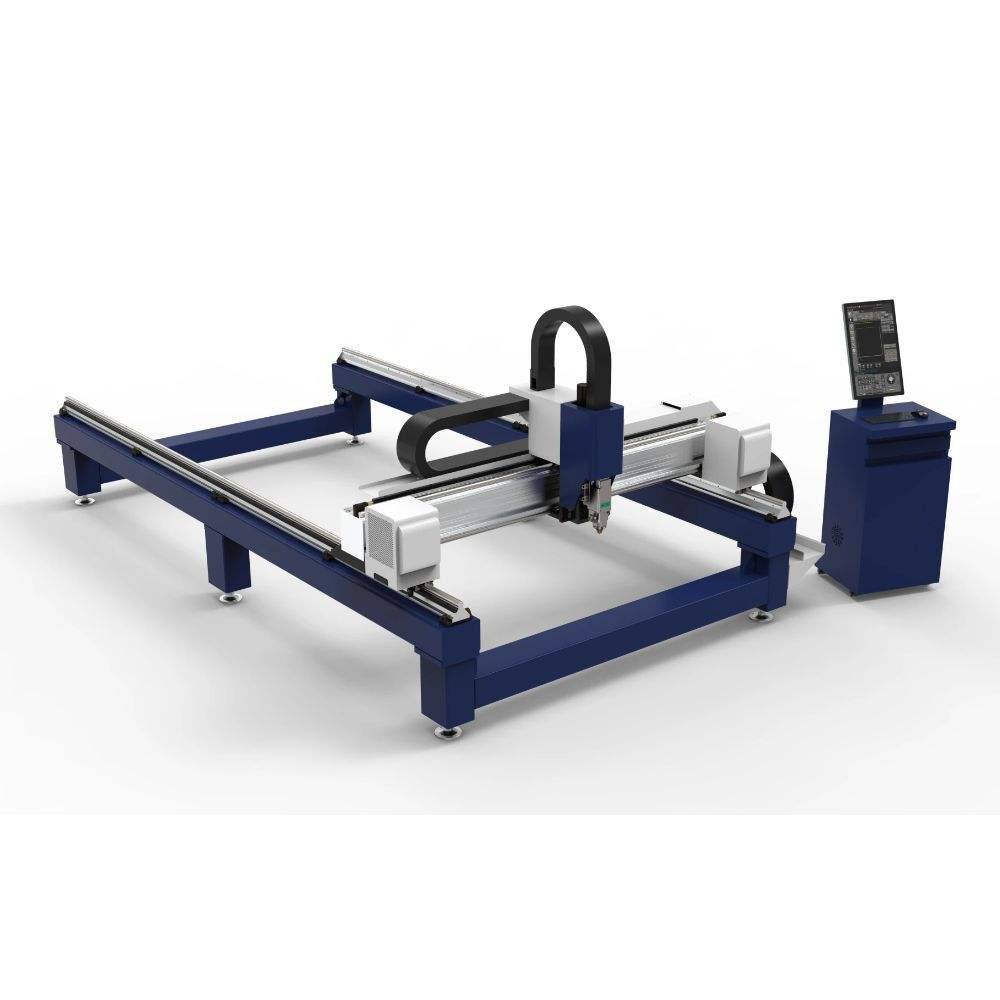
Whether it is a small gantry system for prototype work or a large-scale tube and plate cutter for industrial frames, the 1.5kW fiber laser remains the versatile heart of the modern machine shop. Its ability to handle the unique challenges of aluminum ensures that it will remain a staple of the region’s industrial infrastructure for years to come.













