Introduction to 4kW Fiber laser cutting in the Mexican Industrial Sector
The manufacturing landscape in Mexico City (CDMX) and its surrounding metropolitan areas, such as Naucalpan and Tlalnepantla, has undergone a significant technological shift. At the forefront of this evolution is the 4kW fiber laser cutting machine. For metal fabricators specializing in carbon steel, the 4kW power rating represents the “sweet spot” of industrial efficiency, balancing capital investment with high-performance output. As the automotive, aerospace, and construction industries in Central Mexico demand tighter tolerances and faster turnaround times, understanding the nuances of fiber laser technology is essential for maintaining a competitive edge.
Laser cutting technology has largely superseded traditional methods like plasma cutting and CO2 lasers for mid-range thickness applications. The 4kW fiber laser, specifically, offers a wavelength of approximately 1.06 microns, which is absorbed much more efficiently by metallic surfaces compared to the 10.6 microns of a CO2 laser. This efficiency translates directly into faster processing speeds and lower energy consumption, factors that are critical in the high-cost energy environment of Mexico’s industrial zones.

Technical Capabilities for Carbon Steel Processing
Carbon steel, particularly grades like ASTM A36 and SAE 1018, is the backbone of Mexican infrastructure. A 4kW fiber laser cutting machine is capable of processing carbon steel with remarkable precision across a wide range of thicknesses. Generally, a 4kW system can comfortably handle carbon steel plates from 0.5mm up to 22mm. However, the “productive range”—where the machine maintains high speed and excellent edge quality—typically falls between 1mm and 16mm.
When processing thicker carbon steel, the laser cutting process relies heavily on an exothermic reaction between the iron in the steel and the oxygen used as an assist gas. The 4kW power output provides sufficient energy density to maintain a stable kerf even at the upper limits of the material thickness. This stability is vital for preventing dross (slag) accumulation on the underside of the workpiece, which would otherwise require secondary grinding operations, increasing labor costs in a market where efficiency is paramount.
The Impact of Mexico City’s Altitude on Laser Cutting Operations
Operating a 4kW fiber laser cutting machine in Mexico City presents unique engineering challenges due to the city’s high altitude (approximately 2,240 meters above sea level). The atmospheric pressure in CDMX is significantly lower than at sea level, which affects several critical components of the laser system. Engineering teams must calibrate the equipment to account for these environmental variables to ensure consistent performance.
Cooling System Efficiency and Air Density
The primary concern at high altitudes is the efficiency of the chiller unit. Fiber lasers are highly sensitive to temperature fluctuations. Because the air is thinner in Mexico City, the heat exchange capacity of air-cooled chillers is reduced. It is often recommended that shops in the Valley of Mexico oversize their cooling systems or opt for high-efficiency heat exchangers to prevent the laser source from overheating during intensive cutting cycles. Furthermore, the air compressors used for pneumatic systems and air-assist cutting must work harder to achieve the same PSI/Bar ratings, necessitating robust filtration and drying systems to prevent moisture contamination in the beam path.
Gas Dynamics and Beam Quality
The lower atmospheric pressure also influences the dynamics of the assist gas as it exits the nozzle. When laser cutting carbon steel with oxygen, the flow rate and pressure must be precisely controlled. In the thinner atmosphere of CDMX, the expansion of the gas jet can differ from sea-level calibrations. Modern CNC controllers on 4kW machines allow for fine-tuning of these parameters, enabling operators to compensate for local conditions and maintain a laminar flow that produces clean, square edges on heavy plate carbon steel.
Optimizing Assist Gas Selection for Carbon Steel
In the context of carbon steel fabrication, the choice of assist gas is a critical operational decision. For a 4kW fiber laser, there are three primary options: Oxygen, Nitrogen, and Compressed Air. Each has specific implications for the finished product and the cost per part.
Oxygen Cutting (The Standard for Carbon Steel)
Oxygen is the most common assist gas for carbon steel. It facilitates an exothermic reaction that adds thermal energy to the cutting process, allowing the 4kW laser to penetrate thicker materials. While this allows for lower laser power usage, it results in an oxidized edge. For many structural applications in Mexico’s construction sector, this oxide layer is acceptable. However, if the parts are to be powder-coated or painted later, the oxide layer must be removed to ensure proper adhesion.
Nitrogen and High-Pressure Air Cutting
With 4kW of power, nitrogen cutting (often called “fusion cutting”) becomes viable for thinner gauges of carbon steel (up to 4mm or 6mm). Nitrogen acts as a shielding gas, blowing away the molten metal without reacting with it. This results in a bright, oxide-free edge that is ready for immediate painting or welding. Given the rising cost of industrial gases in Mexico, many shops are also turning to high-pressure compressed air. While air cutting introduces some oxidation, it is significantly cheaper than nitrogen and provides faster speeds on thin carbon steel than oxygen.
Structural Design and Machine Longevity
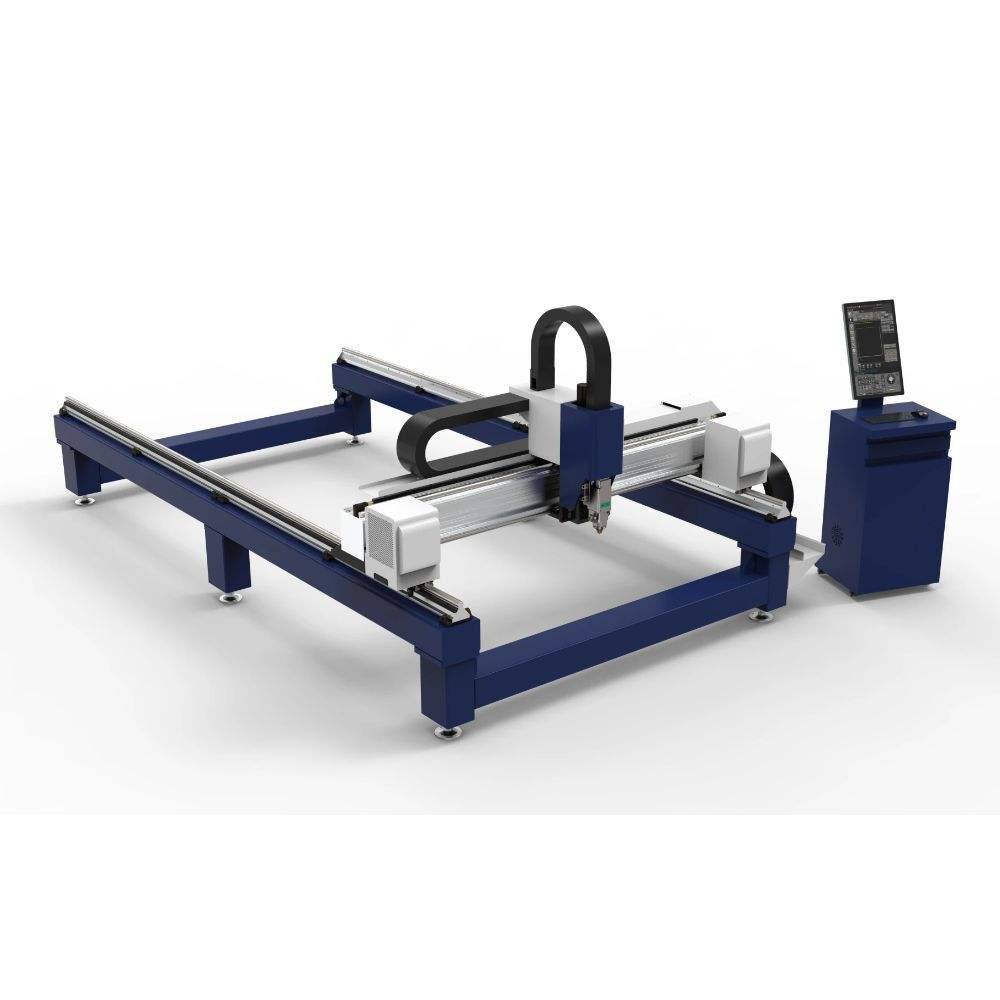
A 4kW fiber laser cutting machine is a significant investment, and its longevity depends on the structural integrity of the machine bed. In the heavy-duty industrial environments of areas like Iztapalapa or Tultitlán, machines must be built to withstand 24/7 operation. Engineering-grade machines typically feature a plate-welded or cast-iron bed that has been stress-relieved through heat treatment. This ensures that the frame does not warp over time, maintaining the micron-level accuracy required for precision laser cutting.
Linear Motors vs. Rack and Pinion
For a 4kW system, the motion system is critical. High-acceleration rack and pinion systems are standard, allowing the machine to reach speeds of up to 120m/min. This is particularly important when cutting complex geometries in carbon steel sheet metal, where the laser spends a significant amount of time transitioning between cuts. The integration of high-end Japanese or German servo motors ensures that even at high speeds, the “laser cutting” path remains accurate to within ±0.03mm.
Maintenance Protocols for the Mexico City Environment
The urban environment of Mexico City can be harsh on precision machinery. Airborne particulates and fluctuations in the electrical grid require a proactive maintenance strategy. For a 4kW fiber laser, the most critical maintenance areas are the optical components and the electrical stability.
Optical Path Protection
Fiber lasers deliver the beam through a flexible fiber optic cable, which is sealed. However, the cutting head contains protective windows (cover slips) that shield the internal lenses from sparks and dust. In the dusty environments of many Mexican workshops, these windows must be inspected daily. Any contamination can lead to “thermal lensing,” where the laser beam distorts, resulting in poor cut quality and potential damage to the expensive collimating lenses.
Electrical Regulation
The power grid in some of the older industrial sectors of CDMX can experience voltage sags and surges. A 4kW fiber laser requires a stable power supply to protect its sensitive diode banks. Installing a dedicated voltage regulator and a robust grounding system is non-negotiable for Mexican fabricators. This protects the laser source—the most expensive component of the machine—from electrical damage and ensures the consistency of the laser cutting beam output.
Economic Impact and ROI for CDMX Fabricators
The decision to implement a 4kW fiber laser cutting machine is often driven by the need to increase throughput. In the Mexican market, where labor costs are rising and the demand for “Just-in-Time” delivery is increasing, the ROI of a fiber laser is typically realized within 12 to 24 months. By replacing multiple older CO2 lasers or plasma cutters with a single 4kW fiber unit, a shop can significantly reduce its footprint and energy bill.
Furthermore, the versatility of the 4kW power level allows shops to take on a wider variety of contracts. From thin-gauge electrical enclosures to thick structural base plates for the booming real estate developments in Santa Fe and Reforma, the 4kW fiber laser provides the flexibility needed to pivot between industries. This adaptability is the key to long-term sustainability in the volatile global manufacturing market.
Conclusion
The 4kW fiber laser cutting machine is more than just a tool; it is a transformative technology for the carbon steel fabrication industry in Mexico City. By understanding the technical requirements of the material, the environmental challenges of the altitude, and the necessity of rigorous maintenance, Mexican engineers can leverage these machines to produce world-class components. As the “Made in Mexico” label continues to gain prestige globally, the precision and efficiency of fiber laser cutting will remain a cornerstone of the nation’s industrial success.













