Introduction to 3kW Precision Laser Systems for Aluminum Fabrication
In the evolving industrial landscape of Leon, the demand for high-precision manufacturing has reached an all-time high. As a central hub for automotive and aerospace components, the region requires technology that can handle the rigorous demands of non-ferrous metal processing. The 3kW precision laser system has emerged as the industry standard for processing aluminum alloys, offering an optimal balance between power consumption, cutting speed, and edge quality. This guide explores the technical intricacies of utilizing fiber laser technology to master aluminum alloy fabrication within the specific industrial context of Leon.
The transition from traditional CO2 lasers to high-power fiber lasers has revolutionized how we approach laser cutting. Aluminum, known for its high reflectivity and excellent thermal conductivity, has historically been a challenge for laser systems. However, the 1.06-micron wavelength of a 3kW fiber laser is absorbed much more efficiently by aluminum than the 10.6-micron wavelength of older gas lasers. This efficiency is the cornerstone of modern precision engineering in the region.

The Material Science of Aluminum Alloys in Precision Engineering
Aluminum alloys, particularly the 5000 and 6000 series commonly used in Leon’s manufacturing sectors, possess unique physical properties that dictate the parameters of the laser system. The high thermal conductivity of aluminum means that heat dissipates rapidly from the point of contact, requiring a concentrated energy source to maintain a consistent melt pool. A 3kW system provides the necessary power density to overcome this “heat sink” effect without causing excessive thermal distortion in the surrounding material.
Overcoming Reflectivity Challenges
One of the primary hurdles in aluminum laser cutting is the material’s initial reflectivity. In its solid state, aluminum reflects a significant portion of laser energy back toward the source. The 3kW precision system utilizes advanced optical isolators and back-reflection protection mechanisms to prevent damage to the fiber source. Once the initial “pierce” is achieved and the material reaches its melting point, the absorption rate increases dramatically, allowing for high-speed processing.
Alloy-Specific Considerations
Different alloys react differently to the laser beam. For instance, 6061-T6 aluminum, widely used in structural applications, requires precise gas pressure management to avoid dross accumulation on the underside of the cut. Conversely, the 5052 alloy, favored for its corrosion resistance, allows for slightly higher feed rates but demands strict focus control to maintain a narrow kerf width. Engineering teams in Leon must calibrate their 3kW systems to account for these subtle metallurgical variations.
Technical Specifications of the 3kW Laser System
A 3kW laser system is defined not just by its raw power, but by its beam quality (M2 factor) and power stability. For precision work, a beam quality close to 1.1 is ideal, as it allows the energy to be focused into a incredibly small spot size, typically between 100 to 150 microns. This high power density is what enables the clean vaporization and expulsion of molten aluminum during the cutting process.
Motion Control and Gantry Dynamics
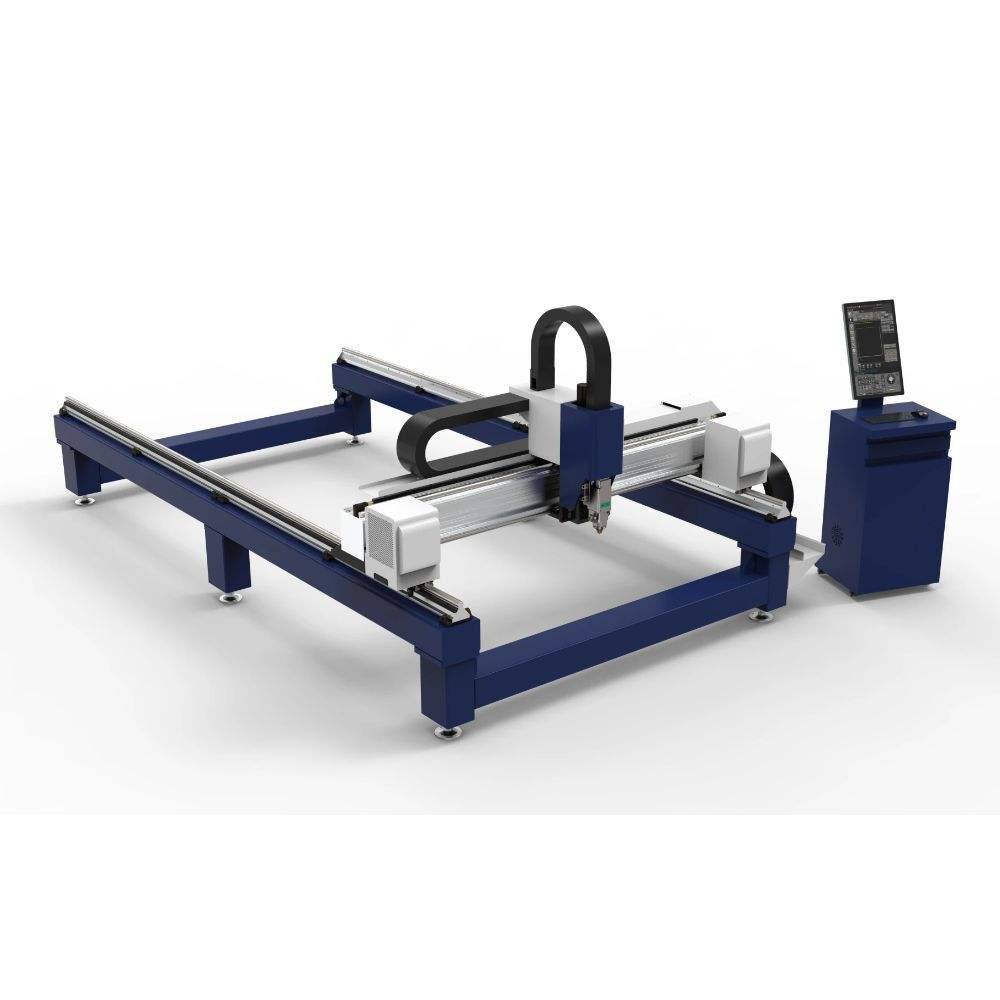
To fully utilize the 3kW output, the machine’s motion system must be capable of high acceleration and deceleration rates. In Leon’s high-throughput environments, a gantry system with linear motors is often preferred over rack-and-pinion setups for its superior positioning accuracy (±0.03mm) and repeatability. When laser cutting complex geometries in aluminum sheets, the synchronization between the laser pulsing and the gantry movement is critical to prevent “burning” at sharp corners.
Optical Configuration and Focus Tracking
The cutting head of a 3kW system is a masterpiece of optomechanical engineering. It features a collimating lens and a focusing lens, often protected by a replaceable cover glass. For aluminum, an automated focus tracking system is essential. Because aluminum sheets can have slight undulations, the capacitive sensor in the nozzle maintains a constant distance from the material, ensuring that the focal point remains at the optimal depth—usually slightly below the surface for thicker plates or exactly on the surface for thin gauges.
Optimizing the Laser Cutting Process in Leon
Leon’s industrial sector benefits from standardized operational protocols that maximize the efficiency of 3kW systems. Optimization involves a delicate interplay between laser power, cutting speed, assist gas type, and gas pressure. When these variables are correctly aligned, the result is a burr-free edge that requires little to no post-processing.
Assist Gas Dynamics: Nitrogen vs. Oxygen
In the realm of aluminum laser cutting, the choice of assist gas is paramount. Nitrogen is the most common choice for a 3kW system when processing aluminum. It acts as a shielding gas, preventing oxidation and ensuring a clean, shiny cut edge. High-pressure nitrogen (typically 12-18 bar) is used to mechanically blow the molten metal out of the kerf. While oxygen can be used to increase cutting speeds in thicker sections through an exothermic reaction, it often results in a heavily oxidized, rough edge that is unsuitable for aerospace or high-end automotive applications in Leon.
Parameter Matrix for 3kW Systems
For a standard 3mm aluminum sheet, a 3kW system typically operates at a speed of 10-15 meters per minute when using nitrogen. As the thickness increases to 6mm, the speed drops to approximately 3-4 meters per minute. Engineering leads must develop a comprehensive parameter matrix that includes “lead-in” and “lead-out” strategies to ensure the start and end of the cut are as precise as the continuous path. Piercing protocols are also vital; a multi-stage pierce with ramping power prevents “splatter” which can damage the nozzle or the protective lens.
Applications within the Leon Industrial Corridor
The 3kW precision laser system is the workhorse of several key industries in Leon. Its versatility allows it to transition from thin-gauge decorative panels to structural components for heavy machinery.
Automotive Component Manufacturing
Leon is a vital node in the global automotive supply chain. Aluminum is increasingly used in vehicle frames and heat shields to reduce weight and improve fuel efficiency. The 3kW laser provides the precision needed for complex hole patterns and intricate cutouts in 5000-series aluminum alloys, which are then used in chassis assemblies. The ability to maintain tight tolerances ensures that these parts integrate seamlessly with robotic welding and assembly lines.
Aerospace and Defense
For the aerospace sector in the region, material integrity is non-negotiable. Laser cutting with a 3kW fiber system minimizes the Heat Affected Zone (HAZ), preserving the mechanical properties of high-strength alloys like 7075 aluminum. The precision of the fiber laser ensures that components meet the stringent safety standards required for flight-critical parts, where even a micron-scale deviation can lead to structural failure.
Maintenance and Longevity of High-Precision Systems
To maintain peak performance in Leon’s demanding manufacturing environment, a rigorous maintenance schedule for the 3kW laser system is essential. The high reflectivity of aluminum puts additional stress on the optical path, making cleanliness a top priority.
Optical Path Integrity
The most frequent maintenance task involves the inspection and cleaning of the protective windows. Even a single speck of aluminum dust on the lens can absorb laser energy, leading to thermal deformation or catastrophic failure of the optic. Technicians must use specialized cleaning solutions and lint-free wipes in a controlled environment to ensure the beam remains undistorted.
Cooling and Filtration Systems
A 3kW laser generates significant heat within the fiber source and the cutting head. A high-stability dual-circuit chiller is required to maintain the laser source at a constant temperature (usually within ±1°C). In Leon, where ambient temperatures can fluctuate, the chiller’s performance is critical. Furthermore, because laser cutting aluminum produces fine metallic dust, a high-efficiency dust extraction and filtration system is necessary to protect both the machine’s internal components and the health of the operators.
Conclusion: The Future of Laser Fabrication in Leon
The 3kW precision laser system represents the pinnacle of current fabrication technology for aluminum alloys. As the industrial base in Leon continues to modernize, the integration of these systems with Industry 4.0 features—such as real-time monitoring, AI-driven nesting, and remote diagnostics—will further enhance productivity. For engineers and facility managers, mastering the nuances of laser cutting aluminum is not just about owning the hardware; it is about understanding the synergy between light, material, and motion to produce components of unparalleled quality.
By investing in 3kW technology and adhering to the technical principles outlined in this guide, Leon’s manufacturing sector can remain competitive on a global scale, delivering high-precision aluminum solutions that meet the evolving needs of the 21st-century economy.













