Optimizing 3kW Fiber laser cutting for Brass in the Queretaro Industrial Sector
The industrial landscape of Queretaro, Mexico, has undergone a radical transformation over the last decade, evolving into a premier hub for aerospace, automotive, and high-tech manufacturing. At the heart of this evolution is the adoption of advanced fabrication technologies, specifically the 3kW fiber laser cutting machine. For engineers and facility managers in the Bajío region, the ability to process non-ferrous metals like brass with precision and speed is no longer a luxury—it is a competitive necessity. Brass, known for its high thermal conductivity and reflective properties, presents unique challenges that a 3kW fiber laser is uniquely equipped to handle through superior beam quality and wavelength efficiency.
Laser cutting technology has transitioned from the traditional CO2 resonators to solid-state fiber systems, which operate at a wavelength of approximately 1.06 microns. This wavelength is absorbed much more efficiently by “yellow metals” such as brass and copper compared to the 10.6-micron wavelength of CO2 lasers. In a 3kW configuration, the power density is sufficient to overcome the initial reflectance of brass, allowing for a stable melt pool and high-speed processing. This guide explores the technical nuances of utilizing 3kW fiber systems for brass fabrication within the specific context of Queretaro’s demanding industrial environment.
The Technical Advantage of 3kW Fiber Systems
A 3kW fiber laser represents the “sweet spot” for many medium-to-heavy fabrication shops in Queretaro. While 1kW or 2kW systems may struggle with thicker brass plates or require extremely slow feed rates, the 3kW resonator provides the necessary “punch” to pierce and cut brass up to 8mm or even 10mm in thickness, depending on the alloy and gas pressure. The core advantage lies in the Beam Parameter Product (BPP). A high-quality 3kW laser maintains a tight focal spot, which results in a higher energy density at the point of impact. This is critical for brass because the material tends to dissipate heat rapidly away from the cut zone.

Furthermore, modern 3kW machines are equipped with advanced CNC controllers and height-sensing cutting heads. In the high-altitude environment of Queretaro (approximately 1,820 meters above sea level), atmospheric pressure can affect gas dynamics. The precision of a 3kW system’s autofocus head ensures that the standoff distance remains constant, compensating for any slight material warping or atmospheric variations. This reliability is essential for the just-in-time (JIT) manufacturing cycles common in the Aerotech Industrial Park and other local zones.
Material Science: Challenges of Laser Cutting Brass
Brass is an alloy of copper and zinc, and its physical properties make it a “difficult” material for laser cutting. Its high reflectivity means that a significant portion of the laser energy can be bounced back into the cutting head, potentially damaging the optical fibers or the resonator. However, 3kW fiber lasers are designed with “back-reflection” protection. These systems use optical isolators and sensors that can detect reflected light and shut down the beam in microseconds, or more commonly, utilize a design that prevents the reflected light from reaching sensitive components.
The thermal conductivity of brass is another factor. Because heat moves quickly through the workpiece, the laser must deliver energy faster than the material can conduct it away. A 3kW power level allows for feed rates that are high enough to maintain a narrow kerf and a small heat-affected zone (HAZ). This is particularly important for decorative architectural components or precision electrical connectors manufactured in Queretaro’s electronics sector, where edge quality and dimensional accuracy are paramount.
Optimizing Cutting Parameters for Queretaro Manufacturers
To achieve the best results when laser cutting brass with a 3kW machine, operators must balance several variables: assist gas, nozzle selection, and focal position. Nitrogen is the most common assist gas for brass, as it provides a high-pressure mechanical force to eject the molten metal from the kerf without causing oxidation. For Queretaro-based shops, sourcing high-purity nitrogen is critical. Using oxygen can increase cutting speeds for thicker sections due to the exothermic reaction, but it often results in a darker, oxidized edge that requires secondary cleaning.
Nozzle geometry also plays a vital role. For 3kW applications on brass, a double-nozzle configuration is often preferred to stabilize the gas flow. The focal position is typically set “negative” (below the surface of the material) to ensure that the widest part of the beam energy is concentrated within the thickness of the plate. This promotes a cleaner exit at the bottom of the cut, reducing “dross” or burrs that would otherwise require manual grinding—a significant labor cost in any Mexican fabrication facility.
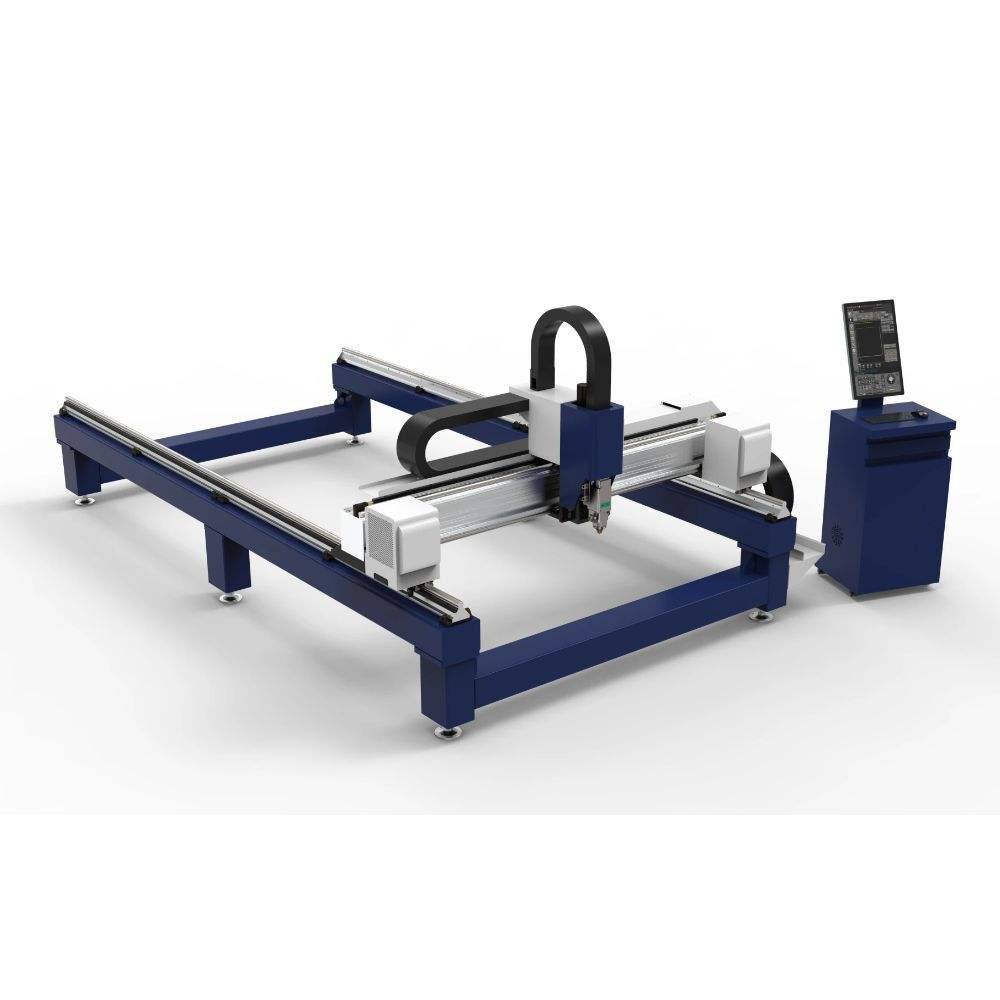
The Queretaro Industrial Context: Aerospace and Automotive
Queretaro is home to a massive cluster of aerospace companies, including Bombardier, Safran, and Airbus. In these industries, brass is often used for bushings, specialized fasteners, and instrumentation components. The 3kW fiber laser cutting machine offers these manufacturers the ability to prototype rapidly and move into small-batch production without the expensive tooling costs associated with traditional stamping or die-cutting. The precision of the laser ensures that parts meet the stringent AS9100 quality standards required by the aerospace sector.
In the automotive sector, which is equally prominent in the Bajío region, brass components are frequently found in electrical systems and cooling assemblies. As the industry shifts toward electric vehicles (EVs), the demand for high-conductivity components is increasing. A 3kW laser provides the throughput necessary to keep up with the high-volume requirements of Tier 1 and Tier 2 suppliers located in the El Marqués and Balvanera industrial parks. The efficiency of the fiber laser also aligns with the sustainability goals of many multinational corporations operating in Mexico, as it consumes significantly less electricity than older CO2 or plasma systems.
Maintenance and Longevity of the 3kW Fiber Laser
For a 3kW fiber laser cutting machine to maintain its performance when processing brass, a rigorous maintenance schedule is required. The most critical component is the protective window (cover glass) of the cutting head. During the laser cutting process, especially during the piercing phase, “spatter” or molten brass droplets can fly upward. If these droplets adhere to the cover glass, they will absorb laser energy, heat up, and eventually crack the lens or degrade the beam quality. Operators in Queretaro should inspect the cover glass every few hours of operation when cutting brass.
Additionally, the chiller system must be meticulously maintained. A 3kW laser generates considerable heat within the resonator and the cutting head. In Queretaro’s climate, which can range from very dry to humid during the rainy season, ensuring the coolant is at the correct conductivity and temperature is vital. Most modern systems utilize a dual-circuit chiller to independently cool the laser source and the optics, preventing thermal drift and ensuring consistent cutting performance throughout a 24-hour shift.
Economic Impact and ROI for Local Fabricators
The investment in a 3kW fiber laser cutting machine represents a significant capital expenditure for a Queretaro fabrication shop. However, the Return on Investment (ROI) is often realized within 18 to 24 months. The primary drivers of this ROI are increased processing speeds and the elimination of secondary operations. When cutting 3mm brass, a 3kW fiber laser can achieve speeds several times faster than a 1kW system, effectively doubling or tripling the machine’s daily output. Furthermore, the precision of the laser cutting process reduces material waste, which is a major factor given the high cost of brass scrap and raw material.
Moreover, the versatility of the 3kW system allows shops to diversify their service offerings. While this guide focuses on brass, the same machine can effortlessly switch to cutting stainless steel, carbon steel, and aluminum. This flexibility is crucial in the Queretaro market, where a job shop might be cutting aerospace parts in the morning and automotive brackets in the afternoon. The ability to handle “reflective” materials like brass safely and efficiently opens doors to high-margin contracts that shops with older technology simply cannot fulfill.
Conclusion: The Future of Fabrication in Queretaro
The 3kW fiber laser cutting machine is more than just a tool; it is a cornerstone of modern industrial capability in Queretaro. By mastering the complexities of laser cutting brass—managing reflectivity, optimizing gas flows, and maintaining optical integrity—local manufacturers can position themselves at the forefront of the global supply chain. As the Bajío region continues to attract international investment, the reliance on high-precision, high-efficiency technology will only grow. Engineers who understand the synergy between 3kW fiber power and material science will lead the way in delivering the next generation of Mexican-made industrial excellence.
In summary, the transition to 3kW fiber technology provides the power, precision, and reliability needed to conquer the challenges of brass fabrication. For the workshops and factories of Queretaro, this technology represents a clear path toward increased productivity, lower operational costs, and the ability to meet the most exacting standards of the modern global market.













