The Rise of High-Power laser cutting in Queretaro’s Industrial Sector
Queretaro has solidified its position as the heart of Mexico’s manufacturing industry, particularly within the automotive, aerospace, and heavy machinery sectors. As the demand for precision components increases, the adoption of 20kW fiber laser technology has become a transformative force. For fabrication shops in the Bajío region, transitioning to a 20kW sheet metal laser is no longer just an upgrade—it is a strategic necessity to remain competitive in a high-volume, high-precision market.
The 20kW power threshold represents a significant leap in laser cutting capabilities. Unlike the 6kW or 12kW systems that were industry standards for years, the 20kW fiber laser offers a unique combination of extreme speed on medium-thickness materials and the ability to process ultra-thick carbon steel plates that were previously reserved for plasma or waterjet cutting. In the industrial parks of El Marqués, Balvanera, and Querétaro Park, this technology is driving a new era of efficiency.
Understanding the 20kW Fiber Laser Advantage
The primary advantage of a 20kW system lies in its energy density. A fiber laser at this power level can concentrate an immense amount of energy into a microscopic focal point, allowing for rapid sublimation of carbon steel. This results in significantly higher feed rates. For instance, when processing 12mm carbon steel, a 20kW machine can operate at speeds three to four times faster than a 6kW counterpart. This throughput is essential for Queretaro-based suppliers who must meet the rigorous “Just-In-Time” (JIT) delivery schedules of global OEMs.
Furthermore, the increased power allows for “high-speed air cutting” on thinner gauges and “high-quality oxygen cutting” on thicker plates. The stability of the beam at 20,000 watts ensures that even at high speeds, the kerf remains narrow and the heat-affected zone (HAZ) is minimized, preserving the structural integrity of the carbon steel.
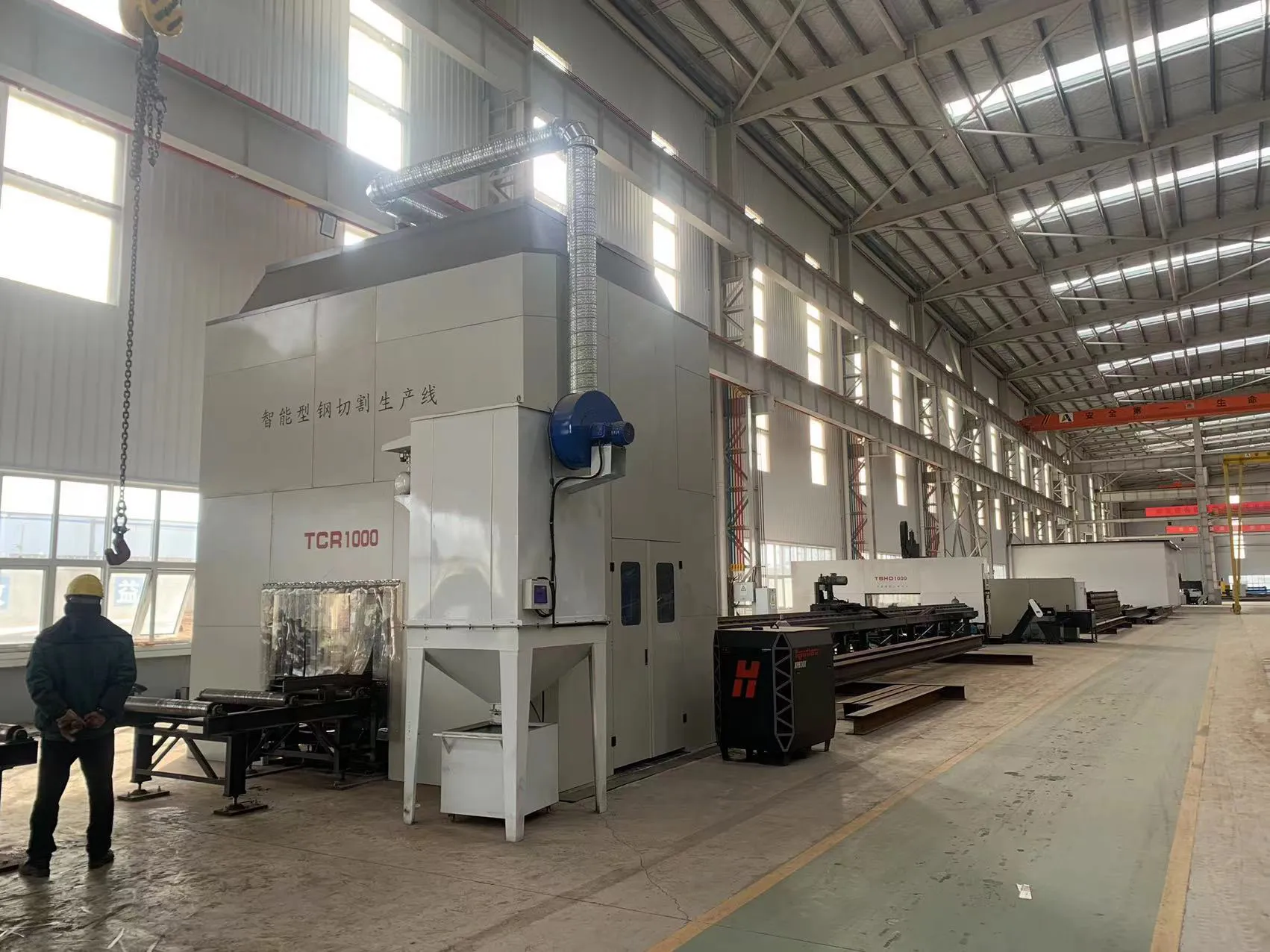 laser cutting machine in operation” style=”width: 100%; max-width: 800px; height: auto; margin: 20px 0;”>
Technical Mastery: Processing Carbon Steel at High Wattage
Carbon steel is the backbone of industrial construction and automotive chassis manufacturing. In Queretaro’s industrial landscape, grades such as A36, A572, and SAE 1018 are processed in massive quantities. The 20kW laser excels in handling these materials, but it requires a deep understanding of metallurgy and laser physics to optimize the results.
Material Grades and Laser Compatibility
When laser cutting carbon steel, the composition of the material—specifically its carbon and silicon content—plays a critical role. High-quality “laser-grade” carbon steel is preferred for 20kW systems to ensure consistent absorption of the fiber laser’s 1.07-micron wavelength. In Queretaro, sourcing consistent material is vital; variations in surface scale or impurities can lead to dross formation or inconsistent piercing when operating at such high power.
The 20kW system allows for the processing of carbon steel up to 50mm or even 70mm in thickness. While plasma was traditionally used for these thicknesses, the fiber laser provides a much cleaner edge, reducing the need for secondary grinding or finishing processes, which are labor-intensive and costly.
The Role of Assist Gases: Oxygen vs. Nitrogen
The choice of assist gas is a defining factor in the quality of the cut. For carbon steel, oxygen (O2) is the traditional choice. The oxygen reacts with the iron in the steel, creating an exothermic reaction that adds heat to the process and allows for the cutting of very thick sections at lower pressures. However, this creates an oxide layer on the cut edge, which must be removed if the part is to be painted or powder-coated—a common requirement in the Queretaro automotive sector.
With 20kW of power, nitrogen (N2) or high-pressure air becomes a viable alternative for carbon steel up to 16mm or 20mm. Nitrogen cutting is purely a mechanical process where the laser melts the metal and the high-pressure gas blows it away. This results in a “bright cut” that is free of oxides, allowing for immediate welding or painting. The 20kW power allows the machine to overcome the lack of an exothermic reaction, maintaining high speeds even without the help of oxygen.
Strategic Implementation in the Queretaro Manufacturing Corridor
Queretaro’s logistics and infrastructure make it an ideal hub for heavy-duty metal fabrication. The proximity to major highways and the presence of specialized labor mean that shops equipped with 20kW lasers can serve clients across the Bajío region and into the United States. Implementing such a machine requires more than just floor space; it requires a robust infrastructure.
Supporting the Automotive and Aerospace Supply Chains
The automotive industry in Queretaro demands components for heavy-duty truck frames, suspension systems, and structural reinforcements. These parts often require thick carbon steel with complex geometries. A 20kW laser cutting system can handle these intricacies with a level of precision that older technologies cannot match. In the aerospace sector, where tooling and jigs are often made from carbon steel, the 20kW laser provides the necessary dimensional accuracy (often within +/- 0.1mm) to meet stringent international standards.

Operational Best Practices for 20kW Systems
Operating a 20kW laser is significantly different from operating a 2kW or 4kW machine. The sheer amount of energy involved means that thermal management and optical health are paramount. For engineers in Queretaro, maintaining these systems involves a proactive approach to maintenance and a deep dive into software optimization.
Thermal Management and Nozzle Technology
At 20kW, the cutting head is subjected to extreme thermal stress. Modern systems utilize sophisticated cooling circuits that circulate chilled water through the head and the internal optics. Any contamination on the protective window or the lens can lead to “thermal lensing,” where the beam deforms due to heat, resulting in poor cut quality or catastrophic failure of the optical components. Regular inspection of the optics is a daily requirement in high-power environments.
Nozzle selection is equally critical. For thick carbon steel, larger diameter nozzles are often used with oxygen to provide a stable gas column. Conversely, for high-speed nitrogen cutting, specialized high-flow nozzles are utilized to ensure the molten material is cleared efficiently. Automatic nozzle changers and cleaning stations are essential features for 20kW machines operating in Queretaro’s 24/7 production environments.
Software Integration and Nesting Efficiency
To truly capitalize on the speed of a 20kW laser, the CAD/CAM software must be optimized. In Queretaro, where material costs for carbon steel fluctuate, maximizing sheet utilization through advanced nesting algorithms is vital for profitability. “Fly-cutting” techniques—where the laser head moves in a continuous path without stopping for each hole—are particularly effective at 20kW, as the machine can maintain high velocity across the sheet.
Furthermore, the software must manage the “piercing” process carefully. Piercing 25mm carbon steel can generate significant heat and splatter. 20kW systems utilize multi-stage piercing cycles, often using frequency modulation to “drill” through the plate before the main cut begins. This protects the nozzle and ensures a clean start to the geometry.
Economic Viability and Return on Investment
The investment in a 20kW sheet metal laser is substantial, but the ROI for a Queretaro-based facility is often realized through the consolidation of processes. By replacing two 6kW machines with one 20kW system, a shop can reduce its footprint, lower its labor costs, and significantly decrease the cost-per-part. In the competitive landscape of Mexican manufacturing, the ability to offer faster lead times on thicker materials allows shops to capture higher-margin work that was previously outsourced.
Electricity consumption is another factor. While a 20kW laser uses more power per hour, its speed means it uses less power *per part* compared to lower-wattage machines. In a region like Queretaro, where energy efficiency is becoming a key metric for industrial sustainability, the fiber laser’s high wall-plug efficiency (often over 40%) is a major advantage over older CO2 laser technology.
Conclusion
The integration of 20kW laser cutting technology is a defining moment for the Queretaro industrial sector. For fabricators working with carbon steel, this power level unlocks new possibilities in thickness, speed, and precision. By mastering the technical nuances of high-power fiber lasers—from gas selection to thermal management—local manufacturers can secure their place in the global supply chain. As Queretaro continues to grow as a manufacturing powerhouse, the 20kW laser will remain the tool of choice for those who demand excellence in every cut.













