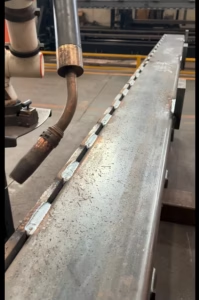
Introduction to 12kW Fiber laser cutting Technology
The industrial landscape of Puebla, Mexico, has undergone a radical transformation over the last decade. As a primary hub for automotive and aerospace manufacturing, the demand for high-precision, high-speed fabrication has never been greater. At the center of this revolution is the 12kW fiber laser cutting machine. This specific power rating represents a “sweet spot” in modern engineering, providing enough energy to penetrate thick materials while maintaining the agility required for intricate, high-speed processing of thinner sheets.
For manufacturers in Puebla working extensively with aluminum alloys, the transition from traditional CO2 lasers or plasma cutting to 12kW fiber technology is not merely an upgrade—it is a competitive necessity. Fiber lasers operate at a wavelength of approximately 1.06 microns, which is absorbed much more efficiently by non-ferrous metals like aluminum compared to the 10.6-micron wavelength of CO2 lasers. This efficiency allows for faster processing speeds and superior edge quality, which are critical in the high-stakes production environments of Central Mexico.
The Strategic Importance of Puebla’s Industrial Sector
Puebla is home to some of the world’s most advanced automotive assembly plants and a growing network of Tier 1 and Tier 2 suppliers. These facilities increasingly rely on aluminum alloys to meet lightweighting requirements for both internal combustion and electric vehicles (EVs). Aluminum’s high strength-to-weight ratio makes it ideal for structural components, heat shields, and battery enclosures. However, aluminum is notoriously difficult to process due to its high thermal conductivity and reflectivity. The 12kW fiber laser cutting system addresses these challenges head-on, offering the power density required to overcome the material’s initial reflectivity and maintain a stable melt pool.

Technical Specifications of the 12kW Power Class
A 12kW laser cutting machine is characterized by its massive photon density. When focused through a high-quality cutting head, this 12,000-watt beam can achieve cutting speeds that were once thought impossible. For instance, while a 4kW or 6kW machine might struggle with 20mm aluminum, a 12kW source glides through it with a clean, dross-free finish. This power level also allows for the use of compressed air or nitrogen as an assist gas at thicknesses where lower-power machines would require oxygen, thereby reducing the need for secondary cleaning or de-burring.
Beam Quality and Fiber Optics
The “fiber” in fiber laser refers to the gain medium, which is an optical fiber doped with rare-earth elements. This design ensures that the beam is generated and delivered entirely within a closed fiber optic environment. For the Puebla-based fabricator, this means there are no mirrors to align and no bellows to maintain. The beam quality (BPP) remains consistent regardless of where the cutting head is on the table, ensuring that a part cut in the far corner of a 6-meter bed is identical to one cut in the center. This consistency is paramount for the rigorous quality control standards demanded by the aerospace firms operating in the region.
Processing Aluminum Alloys: Challenges and Solutions
Aluminum is a “red metal” in the context of laser cutting, meaning it reflects a significant portion of laser energy, especially in its solid state. Furthermore, its high thermal conductivity causes heat to dissipate rapidly from the cut zone, which can lead to an unstable kerf if the power is insufficient. The 12kW laser cutting machine overcomes these hurdles through sheer energy output and advanced pulse modulation.
Overcoming Reflectivity
When the 12kW beam first hits the aluminum surface, a portion of the energy is reflected. However, because the power density is so high, the material reaches its melting point almost instantaneously. Once the aluminum transitions to a liquid state, its absorption of the 1.06-micron fiber wavelength increases dramatically. Modern 12kW machines are also equipped with back-reflection protection systems. These optical isolators prevent reflected light from traveling back up the fiber and damaging the laser source, a common failure point in older or lower-power systems when processing 5000 or 6000 series aluminum alloys.
Optimizing Edge Quality in Puebla’s Workshops
In the competitive Puebla market, the finish of the cut edge can be the difference between a won contract and a rejected batch. For aluminum, the 12kW laser allows for “High-Speed Nitrogen Cutting.” By using high-pressure nitrogen, the molten material is expelled from the kerf before it can react with atmospheric oxygen. This results in a bright, silver edge that is ready for welding or painting without further treatment. This is particularly beneficial for Puebla’s architectural and decorative aluminum fabricators who require aesthetic perfection.
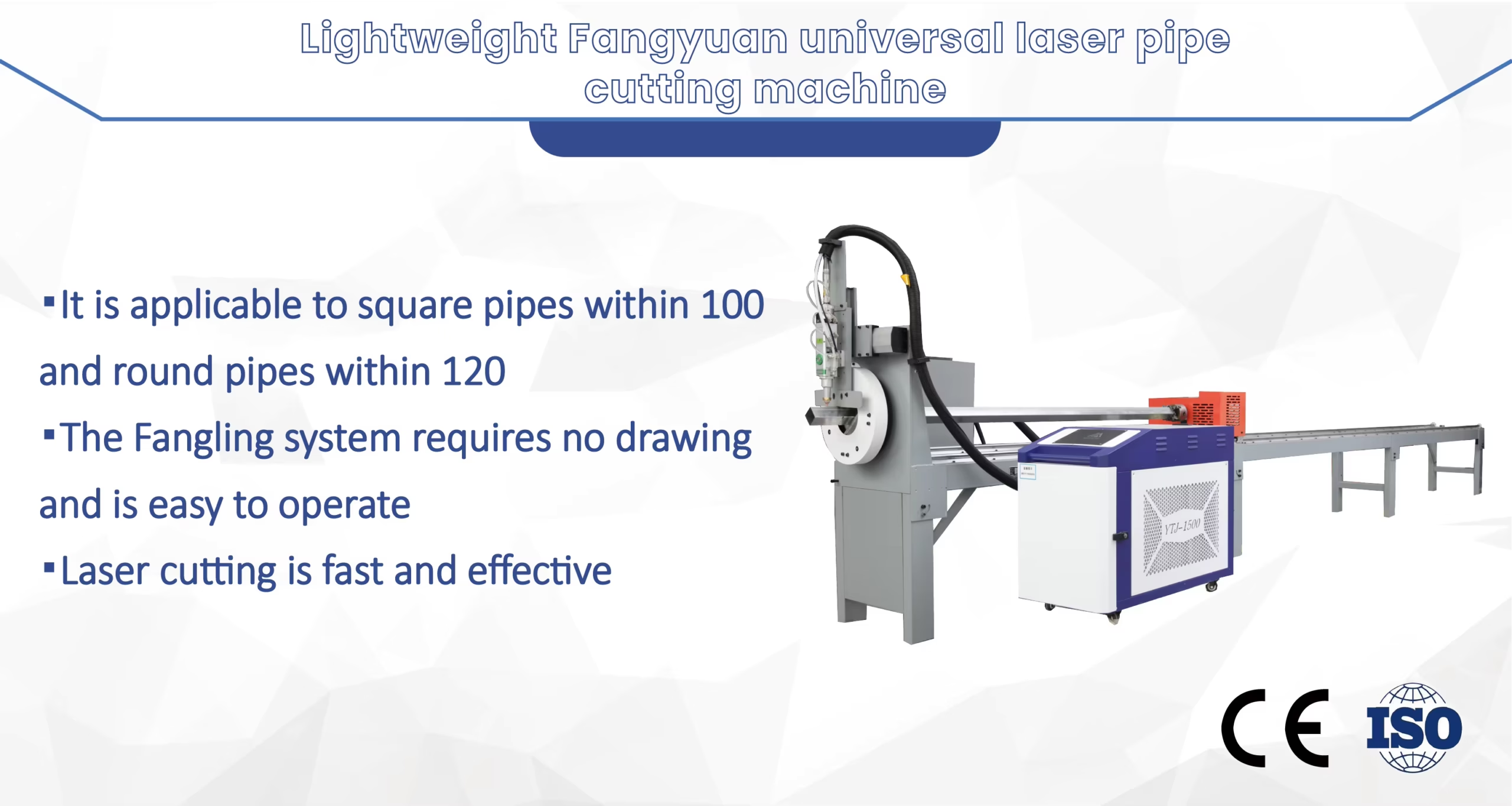
Operational Excellence: Parameters for 12kW Cutting
To maximize the ROI of a 12kW laser cutting machine in an industrial setting like Puebla, operators must master the relationship between power, speed, and gas pressure. Engineering a perfect cut in 12mm aluminum alloy requires a different approach than 2mm sheet metal.
Assist Gas Selection
While nitrogen is the gold standard for aluminum, some shops in Puebla are moving toward high-pressure compressed air to reduce operational costs. With 12kW of power, the machine can cut through 3mm to 8mm aluminum using air at speeds that rival nitrogen, with only a slight increase in surface oxidation. For thicker plates (15mm and above), nitrogen remains essential to maintain the cooling effect and prevent the “dross” or “icicles” that typically form at the bottom of the cut.
Focus Position and Nozzle Geometry
For aluminum alloys, the focus position is typically set “negative,” meaning the focal point of the beam is located inside or even at the bottom of the material. This creates a wider kerf at the bottom, allowing the assist gas to clear the melt more effectively. A 12kW system usually utilizes double-layer nozzles or “high-speed” nozzles that stabilize the gas flow, reducing turbulence and ensuring that the laser cutting process remains steady even at speeds exceeding 40 meters per minute on thin gauges.
Economic Impact on the Puebla Manufacturing Hub
The investment in a 12kW fiber laser cutting machine is significant, but the throughput gains for a Puebla-based facility are often transformative. In a region where labor costs are rising and the demand for “just-in-time” delivery is the norm, the ability to cut three times faster than a 4kW machine provides a massive advantage.
Reducing Secondary Operations
One of the hidden costs in metal fabrication is secondary processing—grinding, de-burring, and cleaning. Because the 12kW laser produces such a high-quality edge on aluminum, these steps are often eliminated. For the automotive suppliers in the region, this means parts can move directly from the laser table to the robotic welding cell, significantly shortening the production cycle and reducing the floor space required for work-in-progress (WIP).
Energy Efficiency and Sustainability
Despite the high power output, 12kW fiber lasers are remarkably efficient. They possess a wall-plug efficiency of roughly 35% to 40%, compared to less than 10% for CO2 lasers. In Puebla, where industrial electricity rates can fluctuate, the lower energy consumption per part is a vital factor in long-term profitability. Furthermore, the lack of consumable gases (like the helium/CO2 mix used in older resonators) reduces the environmental footprint of the facility.
Maintenance and Longevity in Industrial Environments
The environment in Puebla can be dusty, and temperatures can vary. A 12kW laser cutting machine requires a robust maintenance schedule to ensure its longevity. The most critical component is the chiller system, which must dissipate the heat generated by the 12,000-watt source and the cutting head optics.
Optics Care and Piercing Technology
At 12kW, even a tiny speck of dust on the protective window can absorb enough energy to shatter the lens. Operators must be trained in “clean room” protocols when changing consumables. Additionally, the use of “Flash Piercing” or “Frequency Modulation Piercing” is essential for thick aluminum. These techniques allow the 12kW beam to punch through the plate in milliseconds, preventing the heat buildup that often causes “crater” formation during the start of a cut.
Conclusion: The Future of Metal Fabrication in Puebla
The integration of 12kW fiber laser cutting technology is a defining moment for the industrial sector in Puebla. As aluminum alloys continue to replace steel in various high-tech applications, the ability to process these materials with speed, precision, and efficiency will dictate which companies lead the market. By harnessing the power of a 12kW source, local manufacturers can transition from simple job shops to high-volume production powerhouses, capable of meeting the most stringent global standards.
Whether it is for the intricate components of an electric vehicle’s powertrain or the structural frames used in Puebla’s burgeoning construction sector, the 12kW fiber laser stands as the ultimate tool for modern aluminum fabrication. It provides the perfect balance of raw power and delicate control, ensuring that the “Made in Mexico” label continues to be synonymous with engineering excellence.