Introduction to 3kW Precision Laser Systems in Modern Metallurgy
The industrial landscape of Leon has undergone a significant transformation over the last decade, transitioning from traditional manufacturing methods to high-precision, automated solutions. At the forefront of this evolution is the 3kW precision laser system, a tool that has redefined the capabilities of local fabricators, particularly when dealing with non-ferrous alloys such as brass. As a material, brass presents unique challenges due to its high thermal conductivity and reflectivity. However, the advent of high-power fiber laser technology has provided engineers with the means to achieve intricate geometries and tight tolerances that were previously unattainable with mechanical punching or CO2 laser systems.
For facilities in Leon focusing on automotive components, decorative hardware, and electrical connectors, the 3kW power rating represents an ideal equilibrium between capital investment and operational throughput. This power level allows for high-speed laser cutting of brass sheets up to 8mm or 10mm in thickness, ensuring that production lines remain agile and responsive to the fluctuating demands of the global supply chain. This guide explores the technical nuances of utilizing a 3kW system for brass fabrication and the strategic advantages it offers to the Leon industrial sector.
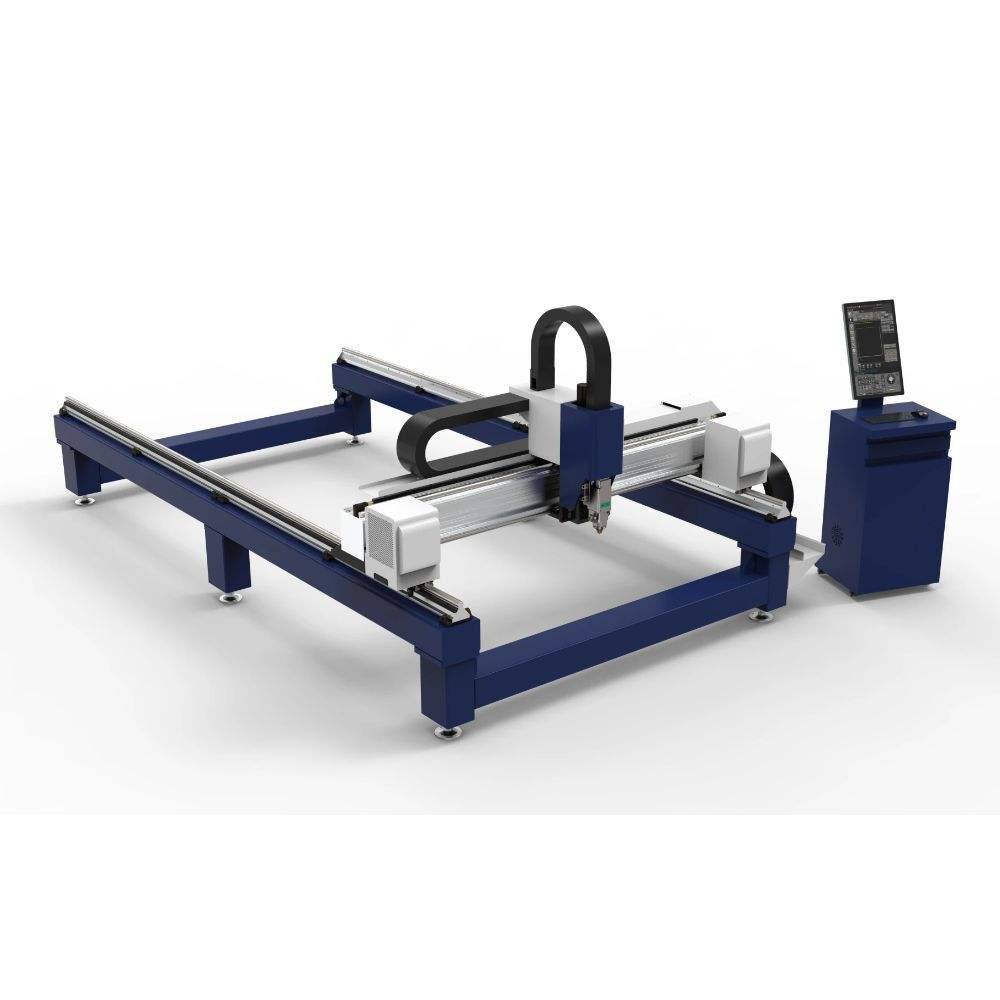
 laser cutting machine for Plate and Tube” style=”width: 100%; max-width: 800px; height: auto; margin: 20px 0;”>
The Physics of Fiber Laser Interaction with Brass
Overcoming Material Reflectivity
Brass is an alloy of copper and zinc, both of which are known for their high reflectivity in the infrared spectrum. In the early days of laser cutting, CO2 lasers struggled with brass because the 10.6-micrometer wavelength was largely reflected off the material’s surface, potentially damaging the resonator. Fiber lasers, operating at a wavelength of approximately 1.07 micrometers, are much more readily absorbed by yellow metals. A 3kW fiber laser provides sufficient energy density to quickly transition the material from a solid to a molten state, thereby increasing the absorption rate and stabilizing the cutting process.
Thermal Conductivity and Heat Management
One of the primary engineering challenges in Leon’s fabrication shops is managing the heat-affected zone (HAZ). Brass conducts heat away from the incision point rapidly. If the laser cutting speed is too slow, the heat dissipates into the surrounding material, causing warping or dross accumulation on the underside of the workpiece. The 3kW power source allows for high feed rates, which ensures that the energy is concentrated at the kerf. This localized heat application results in a cleaner edge and preserves the structural integrity of the component, which is critical for precision engineering applications.
Technical Specifications of the 3kW Precision System
A 3kW precision laser system is not merely defined by its power output but by the integration of its motion control, beam delivery, and software environment. In the context of Leon’s manufacturing standards, these systems are typically equipped with high-performance linear motors and CNC controllers capable of micron-level positioning. The 3kW source, often a solid-state fiber resonator, offers a beam quality (M²) that allows for a very small spot size, concentrating the 3000 watts of power into a diameter of less than 100 microns.
Beam Delivery and Focusing Optics
For brass fabrication, the focusing head must be equipped with specialized coatings to handle potential back-reflections. Modern 3kW systems utilize “back-reflection isolators” that protect the fiber source from reflected photons. Furthermore, the use of auto-focusing heads allows the system to dynamically adjust the focal point based on the material thickness and real-time sensor feedback. This is particularly useful in Leon’s workshops where material batches may have slight variations in flatness or alloy composition.
Optimizing Laser Cutting Parameters for Brass
Gas Selection: Nitrogen vs. Oxygen
The choice of assist gas is a critical variable in 3kW laser cutting. For brass, Nitrogen is almost universally preferred. Nitrogen acts as a shielding gas, blowing the molten metal out of the kerf while preventing oxidation. This results in a “bright” finish on the cut edge, which is essential for decorative brass items produced in Leon’s artisanal and architectural sectors. While Oxygen can be used to increase cutting speeds in thicker sections by inducing an exothermic reaction, it often leaves a dark oxide layer that requires secondary cleaning, thereby increasing labor costs.
Nozzle Geometry and Stand-off Distance
Precision in laser cutting is heavily dependent on the aerodynamics of the assist gas. For a 3kW system, using a double-layer nozzle is often recommended for brass. This configuration stabilizes the gas flow and protects the protective window from spatter. Maintaining a consistent stand-off distance—typically between 0.5mm and 1.0mm—is vital. In Leon’s high-precision environments, capacitive height sensors are used to maintain this distance with sub-millimeter accuracy, even when cutting thin brass foils that may vibrate during the process.
Industrial Applications in Leon
Automotive and Aerospace Components
Leon has established itself as a hub for automotive manufacturing. Brass components, such as bushings, radiator cores, and specialized fasteners, require the high repeatability offered by 3kW laser cutting. The ability to switch between different thicknesses of brass without extensive re-tooling allows local suppliers to provide “just-in-time” delivery to larger assembly plants. The precision of the 3kW laser ensures that complex hole patterns and slots meet the stringent ISO standards required by the automotive industry.
Decorative and Architectural Hardware
Beyond heavy industry, Leon is home to a vibrant sector of architectural hardware and interior design. Brass is a preferred material for luxury fittings due to its aesthetic appeal and corrosion resistance. A 3kW precision laser allows designers to translate intricate CAD patterns into physical reality. Whether it is custom signage, ornamental screens, or furniture inlays, the laser cutting process delivers smooth edges that require minimal polishing, significantly reducing the time-to-market for bespoke products.
Maintenance and Operational Longevity
Chiller and Cooling Requirements
A 3kW fiber laser generates significant heat within the resonator and the cutting head. In the climate of Leon, a robust industrial chiller is mandatory. The chiller must maintain the coolant temperature within a narrow range (usually +/- 1 degree Celsius) to prevent thermal drift in the laser beam. Engineers must conduct weekly checks on the conductivity of the cooling water and ensure that the heat exchangers are free of dust and debris, which can be prevalent in industrial zones.
Optical Path Integrity
The integrity of the optical path is paramount for precision laser cutting. Even a microscopic dust particle on the protective window can absorb laser energy, leading to “thermal lensing” or even the destruction of the lens. Leon-based operators are trained to perform daily inspections of the cutting head optics in a clean-room environment or a pressurized cabinet. By maintaining a pristine optical path, the 3kW system can maintain its precision over thousands of operational hours.
The Future of Manufacturing in Leon
As Leon continues to integrate Industry 4.0 principles, the role of 3kW precision laser systems will only expand. These machines are increasingly being connected to cloud-based monitoring systems that track gas consumption, power usage, and cutting efficiency in real-time. This data-driven approach allows factory managers in Leon to optimize their laser cutting schedules and predict maintenance needs before downtime occurs.
The transition to 3kW fiber technology represents a commitment to quality and efficiency. For the brass fabrication industry, this means less waste, higher precision, and the ability to compete on a global stage. As the technology becomes more accessible, we expect to see an even greater diversity of applications, from micro-electronics to large-scale industrial infrastructure, all benefiting from the power and precision of the fiber laser.
Conclusion
The 3kW precision laser system is a cornerstone of modern manufacturing for any facility dealing with brass in Leon. By understanding the interaction between the fiber laser wavelength and non-ferrous alloys, and by meticulously controlling parameters such as gas pressure and focal position, engineers can achieve unparalleled results. As the region continues to grow as a manufacturing powerhouse, the continued adoption of advanced laser cutting technology will be the catalyst for innovation and economic resilience.













